Published Research · 2024
How Modern Search Really Understands Your Pages
Co-authored research on how today's search engines read meaning, not just keywords, and why that changes what content actually wins.
Not a checklist, not a black box. Here's who I am, how I think, and the private toolkit that backs every engagement.

I'm Anup Luintel, a Senior SEO Strategist based in Kathmandu, Nepal. I trained as an engineer, and that's how I approach your business: as a system to understand and improve, not a checklist to tick off.
Over the last 5+ years I've grown from intern to senior strategist, working with 150+ businesses across 50+ niches. My focus is simple: make your site the trusted, obvious choice when your customers search, so the right people find you and buy.
I also build my own software (apps, plugins and automations) to do the work faster and more reliably. That means you get sharper results, quicker, without paying agency overhead for it.
Learned the fundamentals hands-on: keywords, on-page basics, and how search really works.
Ran client campaigns end to end, from technical fixes to link building.
Turned data into decisions and started building automation workflows.
Led bigger strategies and started building custom tools to do the work faster.
150+ businesses grown, end-to-end strategy, and a fleet of self-built tools running on my own SEO database.
Search works differently in every market: different words, different competitors, different trust signals. I've done this work for businesses in each of these.
ImakeGooglesendyoucustomers,notjusttrafficyoucannotbank.
Most sites publish scattered pages and hope. I start by mapping the whole topic: every page, how they connect, and which ones earn their place, so Google sees one coherent authority instead of noise.
Published research and real, verified results: the proof behind how I work.
Co-authored research on how today's search engines read meaning, not just keywords, and why that changes what content actually wins.
Co-authored research explaining how a search gets interpreted and expanded behind the scenes, and how to make your pages the answer.
16 months of real data across ~130,000 pages: 1.47 billion views and 21.2 million clicks in health and medical, the strictest category Google judges.
Before a word is written, I decide which pages are actually worth having, so you invest in pages that can rank and bring customers, not clutter that dilutes your site.
Content structured so search engines can lift the exact answer out of your page. That's the difference between being found and being skipped.
Every important page leads with the answer your customer came for. No filler, no warm-up. The thing they searched for is right there.
Pages engineered to be the snippet Google boxes at the top and the source AI assistants quote, which is where the clicks increasingly go.
Cover a topic properly and you outrank sites ten times your size. Fifteen focused pages beat a hundred-and-fifty shallow ones.
My own tools handle the heavy lifting the smart way, so you get enterprise-level work without an enterprise-level bill.
Software I built myself (web apps, plugins and automations) so your work gets done faster, sharper, and without agency overhead.
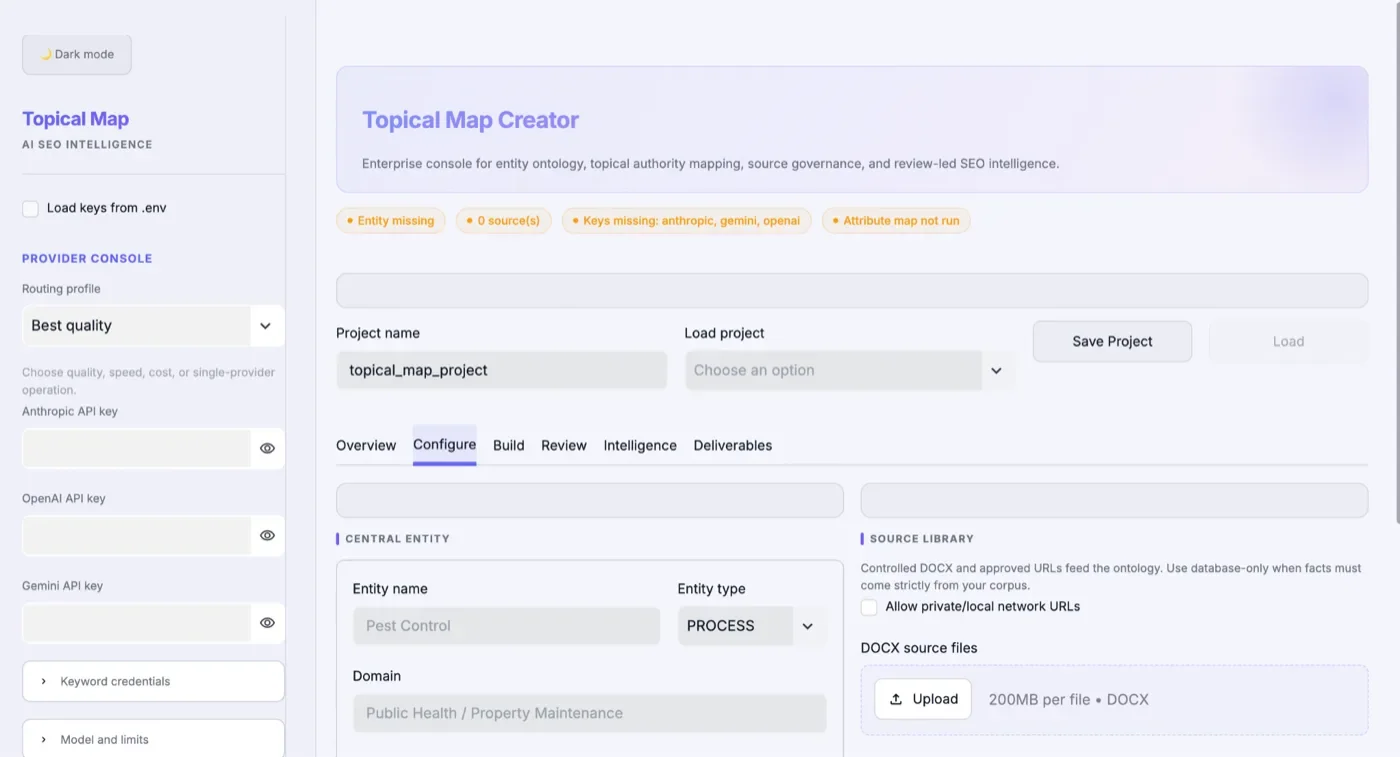 Web App
Maps out every page your site should have to own a topic in your market, so nothing your customers search for gets missed.
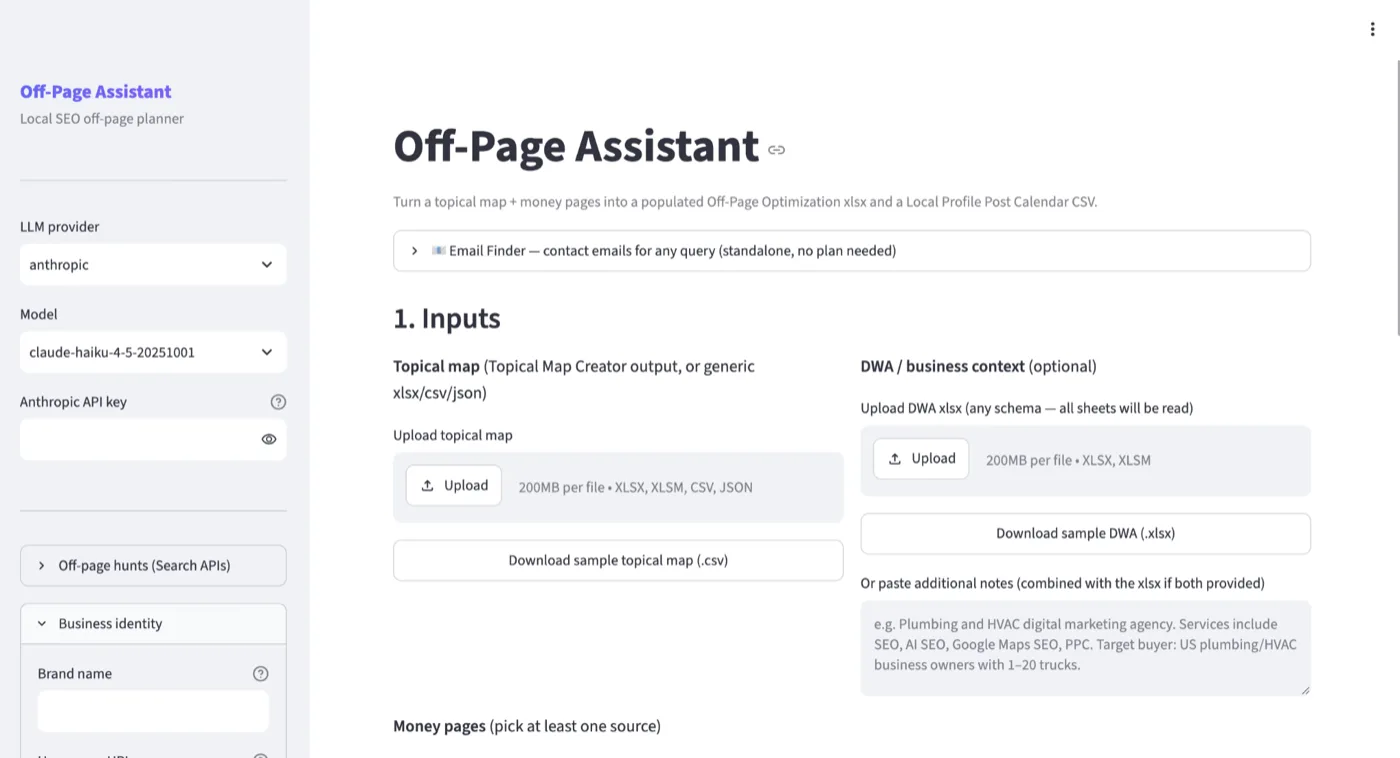 Web App
Turns that plan into a ready-to-run promotion and social schedule that builds your brand's authority across the web.
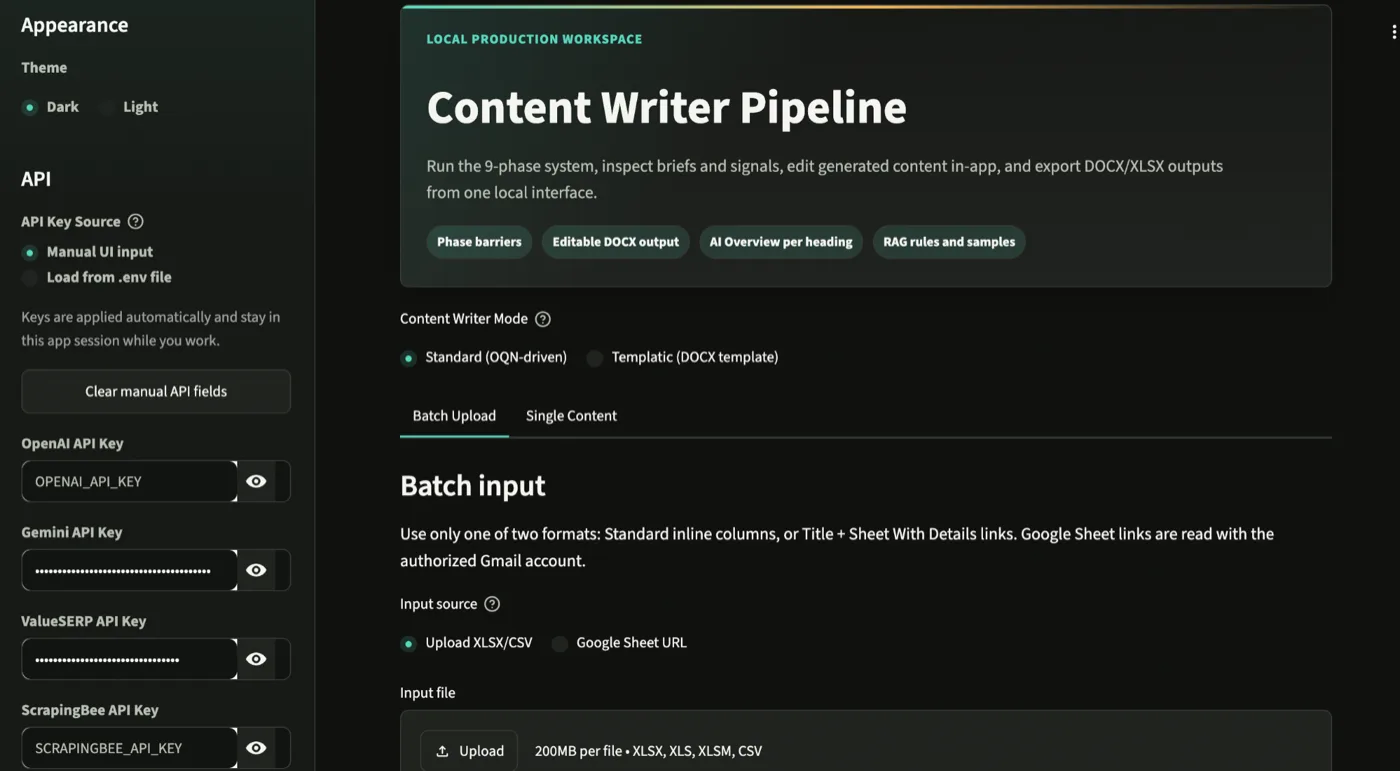 Web App
A 10-stage writing system that researches your competitors and produces genuinely useful pages, not thin, generic filler.
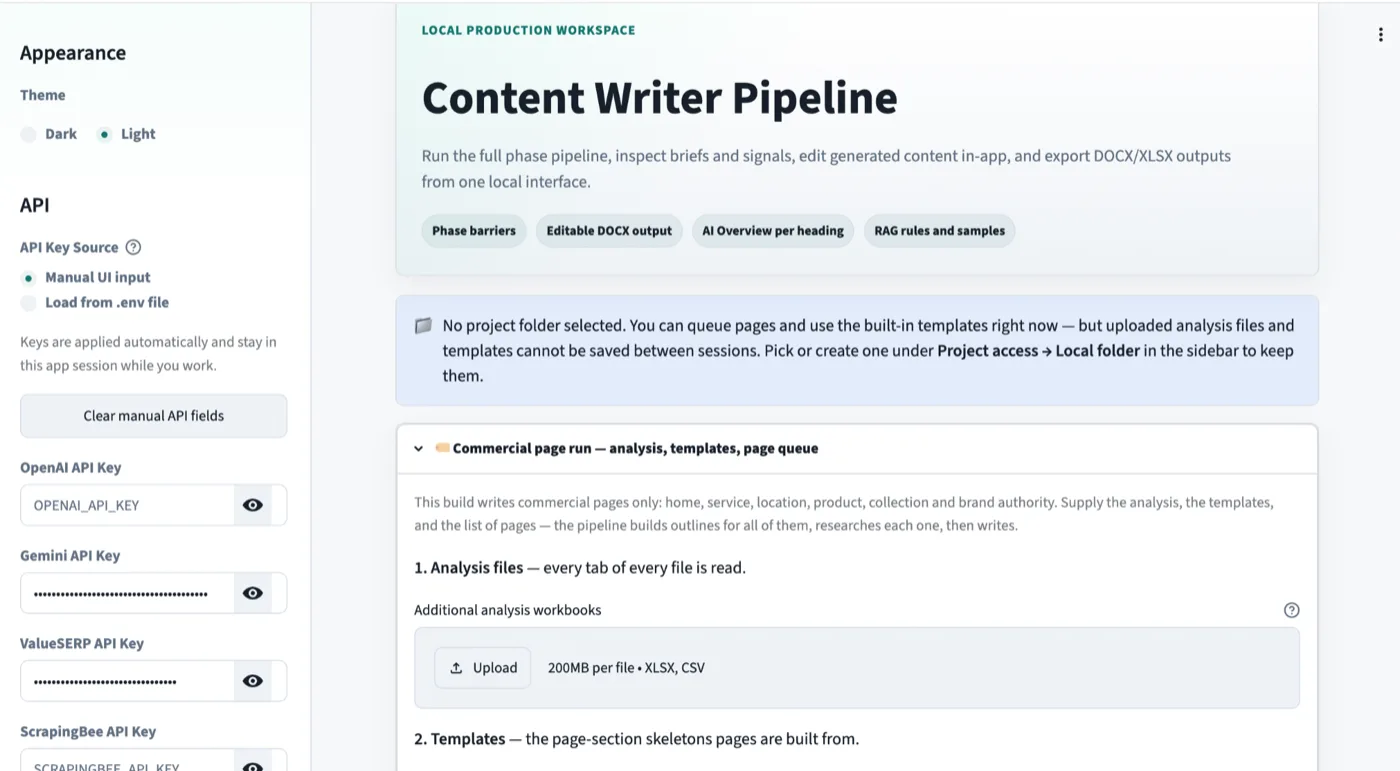 Web App
Purpose-built for the pages that sell (service, location and home pages), with every claim fact-checked before it ships.
The operating system behind every campaign.
The real test of a method isn't my own results. It's whether other practitioners can pick it up and win with it. These are public credits from their own posts.
“This is one of those SEO posts that looks simple at first, and then makes you rethink how you actually work. A task being marked “done” doesn't necessarily mean the change reached production, or that it produced the intended result. A very practical breakdown of what SEO workflows look like when they leave the neat six-box diagram and meet reality.”
“An SEO recommendation is not really complete just because it exists in an audit or spreadsheet. There needs to be a chain from finding to plan to implementation to live result to verification. Frameworks like this are helping me think more systematically about how individual SEO activities connect to the larger system.”
In his breakdown of three Google patents, he credited Anup with introducing him to semantic SEO, Google patents, and how search works beneath the results, and called him a patient teacher.
Credited Anup's thinking on topical authority and local SEO for how he builds sites search engines trust. For a Reddit strategy that hit 400,000+ views and grew leads from 4 to 30+ a month, he named Anup as the reason Reddit was on his radar. (That case study and result are Yugesh's own.)

I got into SEO from engineering, and the habit stuck: if a process didn't exist, I built one. That's why you get systems and tools instead of a monthly report full of tasks nobody can explain.
Tell me about your site and what you want to grow. I'll take a look and reply personally, usually within one business day.