Weak collection pages
Category pages that can't match a specific search
Someone searches “waterproof hiking boots women's wide fit”. You sell exactly that, filed under a generic Footwear page with no words on it.
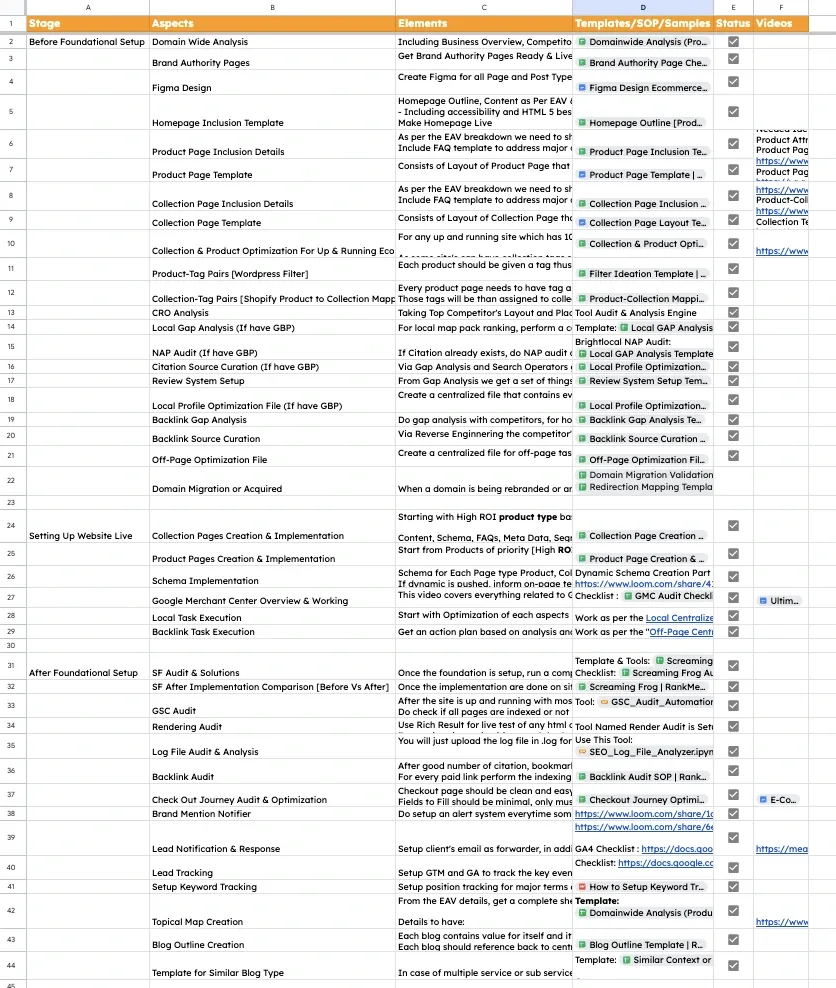
Online stores lose sales in places a normal SEO audit doesn't look: collection pages Google can't match to what people search, product pages carrying the manufacturer's copy-paste, thousands of filter URLs eating Google's attention, and a Merchant Center feed quietly rejected in half your markets. I work from the pages that make money outward: collection and product templates up front, filters and feeds next, blog content last. A shopper ready to buy should see the buy button before they see a lesson.
If your traffic is fine but your orders aren't, start here.
Category pages that can't match a specific search
Someone searches “waterproof hiking boots women's wide fit”. You sell exactly that, filed under a generic Footwear page with no words on it.
The same description as forty other stores
Your product pages use the manufacturer's text. So does everyone else's. Google ranks the one store that wrote something original.
Filter and sort URLs multiplying without limit
Every colour, size and sort order creates a new URL. Google burns its visits on thousands of near-identical pages instead of your products.
Products rejected in Google Shopping
One global returns policy, so your products pass in your home market and quietly fail everywhere else, with no obvious error message.
Each part below is a real piece of the work, with the trade term it goes by and what it means in plain English.
The layout and content every category and product page follows
Templates built from what buyers actually compare in your category, with a FAQ block for the questions that stop a sale. Built once, then rolled out across the catalogue.
Deciding which filter pages deserve to rank
Some filter combinations are real searches worth a page, like “women's wide-fit hiking boots”. Most aren't. Product-to-tag and collection-to-tag mapping decides which combinations get indexable pages and which are kept out of Google.
Getting your products approved in Google Shopping
A twelve-point check of your feed and account: variants fetched, details matching the site, shipping and returns set per country, the store-quality badge and product reviews connected.
Code that puts price, stock and stars in the result
Product, offer, review and breadcrumb markup per template, generated dynamically so it stays in step with price and stock changes.
Finding where buyers drop out
Competitor layouts and your own checkout reviewed step by step. Fewer fields, clear delivery costs, visible returns promise: the things that decide whether a cart becomes an order.
On a product page, the buyer gets priority
Content courses put awareness at the start and buying at the end. That's right for a blog and wrong for a product page. Someone who landed on a product page from a buying search has already decided, so the transactional content leads, the comparison follows, the education comes last. Browsers still find the explainer further down; buyers find the button immediately.
With inclusion checklists your team can reuse.
Which filter combinations get pages, which stay out of Google.
Every feed and policy issue with the fix.
Product, offer, review and breadcrumb, validated.
Where buyers drop out, and what to change.
Domain analysis, brand pages and the product and collection templates.
Priority collections and products built, schema live, Merchant Center connected.
Crawl, Search Console, rendering, log-file and checkout audits once the foundation is live.
More collections, supporting blog content and link work, measured in orders.
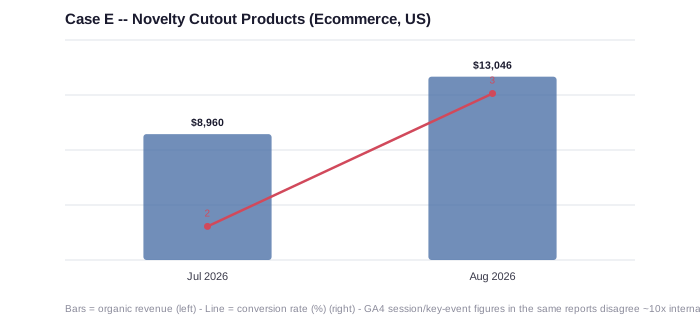
Organic revenue went from $8,960 to $13,046 in a month, up 56.9% on the same month a year earlier. In a separate UK hair-care store, clicks to product pages grew 46% and to collection pages 43% while 110+ thin blog posts were cut.
The honest part: Session and key-event counts in the same reports disagree with each other by about ten times, so only the revenue and order figures are quoted here.
The same service does a different job in each trade. Here is the move it makes in each industry I've written up.
SEO has its own vocabulary. Here's the part of it this service uses, so a report never reads like a foreign language.

Everything on this page comes from how I actually run this work. The checklists, the tools and the results are real. Tell me what's happening on your site and I'll tell you honestly whether this is the right place to start, or whether something else needs fixing before it.
Yes. Shopify and WordPress stores are both covered, including push-to-live tooling for each. The method doesn't change between platforms; the implementation does.
With the collections and products closest to revenue. Templates are built on those, then rolled out across the rest of the catalogue in bulk.
Later. Blog content supports a store, it doesn't carry it. Get the collection and product pages right before adding the guides that feed them.
Crawl, index, render and speed problems found, evidenced and fixed on the live site, then re-checked until they're gone.
See the service Get foundTitles, headings, answers, schema and links reworked page by page, so Google understands each page and buyers act on it.
See the service Get foundService pages that sell, guides that get quoted in AI answers, and a rule book that keeps every page on-brand and free of filler.
See the serviceSend me your site and what you're trying to grow. I'll look at it myself and reply personally, usually within one business day.