Citation building is the work of listing your business on directories, data aggregators and industry sites with one name, address and phone number, written the same way every time. That last part, NAP consistency, is the half most businesses skip, and mismatched NAP weakens local rankings because Google and your customers both see conflicting versions of you.
This post covers what a citation is, why mismatches hurt, the order I build and clean citations in, how to handle duplicates, moves and new phone numbers, what service-area businesses do with a hidden address, and how many citations is enough.
What a citation is
A citation is any online mention of your business name, address and phone number, known in the trade as NAP. Most citations carry your website, hours, categories and a short description too, but those three fields are the ones search engines match on.
Citations come in two shapes:
- Structured citations: a listing with fixed fields, like your profile on Yelp, Bing Places or a trade directory.
- Unstructured citations: a mention inside ordinary text, like a local news story, a sponsor page for a youth sports team or a supplier's list of approved installers.
Structured citations are the ones you control and build. Unstructured ones mostly come from real activity in your area, which is why they are hard to fake and carry weight when they happen.
A citation is not the same thing as a backlink. Plenty of directory listings carry no link to your site at all, and they still confirm your details to anyone, human or crawler, who reads them.
Why NAP consistency matters
NAP consistency means your name, address and phone read the same on every listing. Google's help page on how local ranking works names three factors: relevance, distance and prominence, with prominence described as how well known a business is. Citations feed that picture. When source after source agrees on who you are and where you are, Google has corroboration. When they disagree, it has doubt, and a business Google is unsure about is a hard one to place in the map pack (the block of three businesses on a map above the normal results).
The damage is not only in rankings. A customer who finds your old number on a directory calls a line that no longer rings, and a customer who drives to your old address finds someone else's shop. Neither of them writes to tell you. They just call the next business on the list.
Which mismatches actually matter
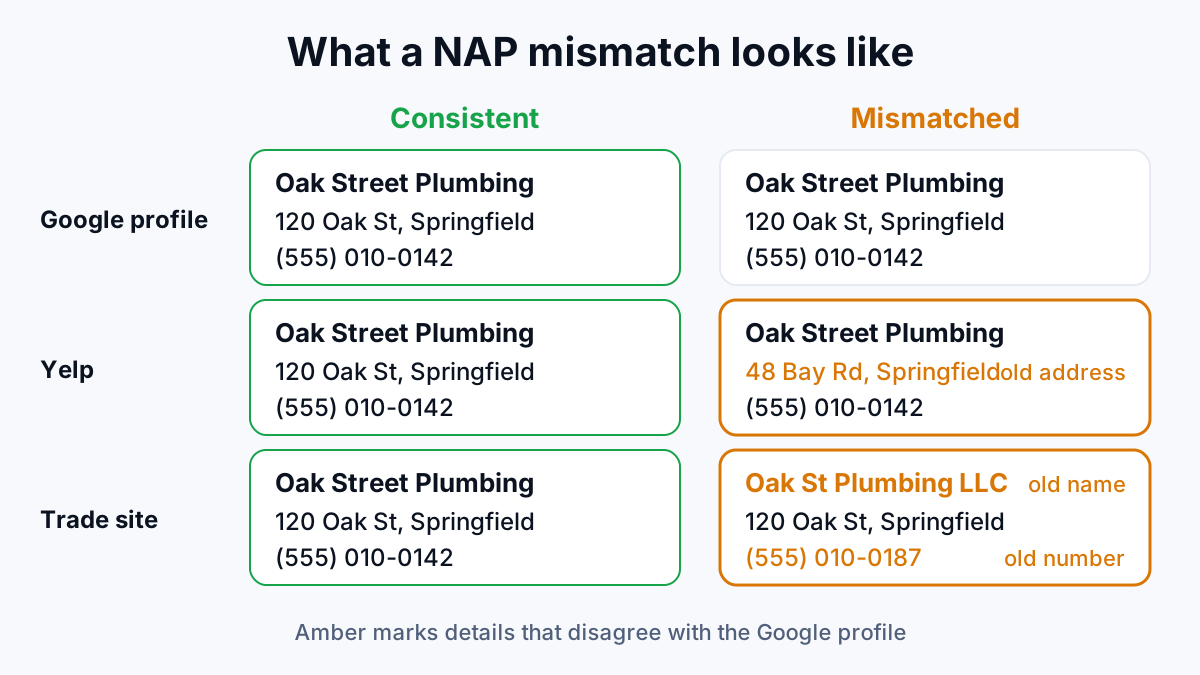
Not every difference is a problem. Search engines read “St” and “Street” as the same thing, and a suite written as “Ste 4” or “#4” is still the same suite. The mismatches worth fixing are the ones that describe a different business:
- An old address from before a move, still live on directories you forgot about.
- An old or wrong phone number, including tracking numbers left over from a past ad campaign.
- A different name: a former brand, a name padded with keywords, or the legal entity name on some sites and the trading name on others.
- A wrong website URL, such as an old domain that no longer loads.
Google's Business Profile guidelines ask that your name match the real-world name you use on your storefront, website and stationery. Use that same name on every citation, and keep keywords out of it. “Smith Plumbing” is a name. “Smith Plumbing 24 Hour Emergency Plumber Tampa” is an invitation for a suspension.
Types of citations
Citation sources fall into five groups. They are not equal, and the order of this table is the order I work in.
| Type | Examples | What it does | When to work on it |
|---|---|---|---|
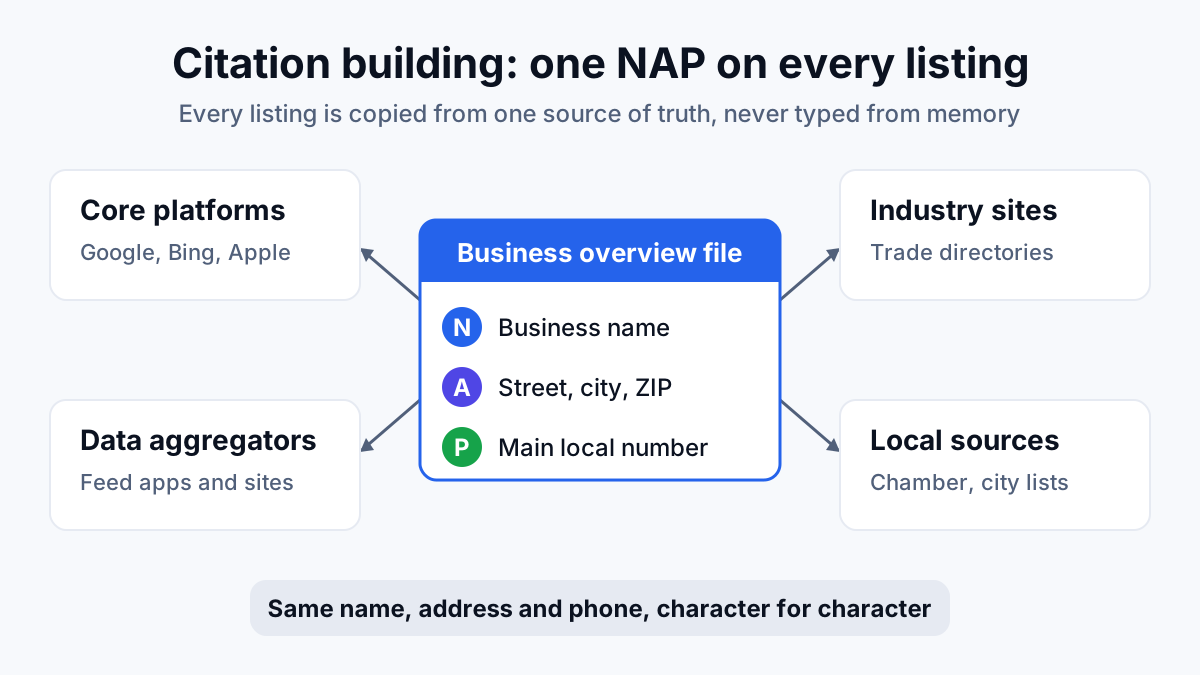
| Core platforms | Google Business Profile, Bing Places, Apple Business Connect, Facebook | The profiles maps, phones and assistants read directly, and the ones most customers actually see. | Step 2, right after the audit |
| Data aggregators | Data Axle, Foursquare and similar business data suppliers | Collect business data and pass it on to smaller directories, apps and navigation tools. | Step 2, alongside the core platforms |
| Major general directories | Yelp, Better Business Bureau, Yellow Pages, Nextdoor | Broad directories that rank for business names and send some calls directly. | Step 3 |
| Industry directories | Houzz or Angi for home services, Healthgrades for doctors, Avvo for lawyers, Tripadvisor for restaurants | Relevance: they tell Google what kind of business you are, and buyers in your trade use them to shortlist. | Step 4 |
| Local directories | Chamber of commerce, city or county business lists, local business associations, sponsor pages | Tie your business to a place. Often harder to get, which is part of their value. | Step 4 |
Aggregators are the group most owners have never heard of, and they explain a lot of mysteries. They collect business data and pass it on to other sites and apps. If an aggregator still holds your old address, it keeps feeding that address to directories you already fixed by hand, and the wrong details come back a few months later as if by magic.
The order to build citations in
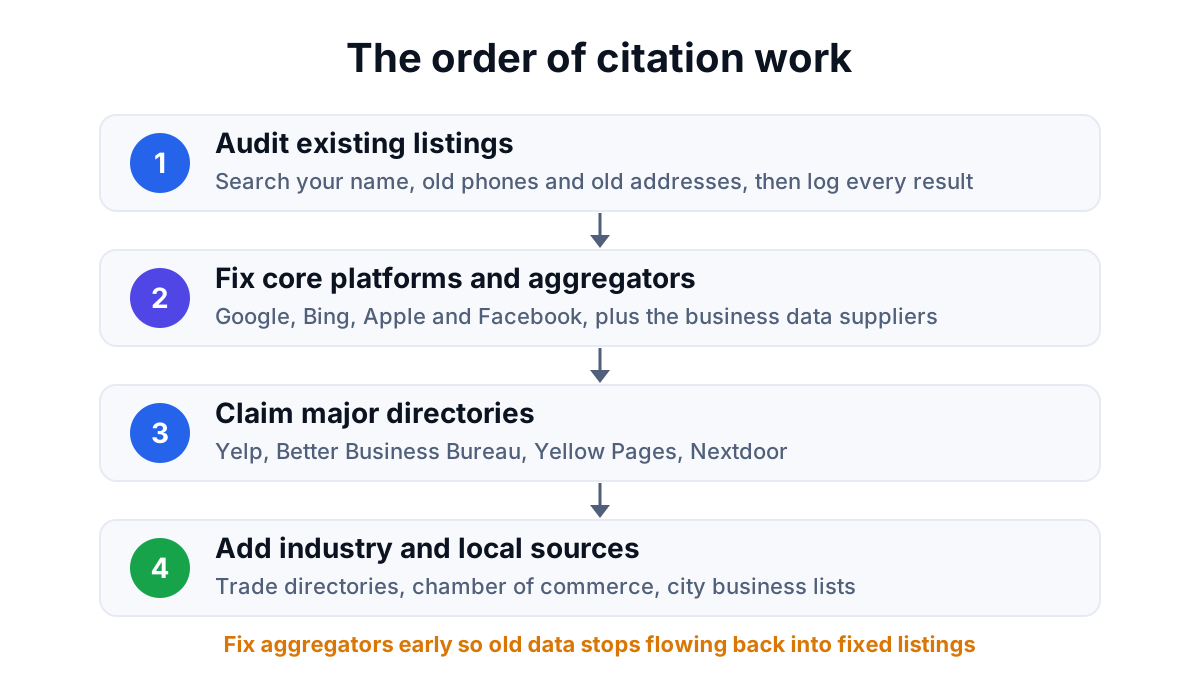
Order matters because each step feeds the next. Fixing small directories before the aggregators is like mopping the floor before you turn off the tap.
Step 1: audit what already exists
Before creating anything, write down the one correct version of your details: exact business name, address in the format the post office uses, main phone number, website URL, hours and primary category. I keep this as a single business overview file, and every listing gets copied from it, never typed from memory.
Then find every listing that already exists. Search your business name, your current phone number and every old phone number and address in quotes, and check the core platforms and major directories by hand. Log each result in a spreadsheet with these columns:
- Source and listing URL
- Status: correct, wrong, duplicate or missing
- Which field is wrong
- Who holds the login (often nobody)
- Date fixed and date checked live
In audits I run, missing listings are rarely the real problem. The real problem is the old address from two moves ago, live on a directory nobody has a login for.
Step 2: fix core platforms and aggregators
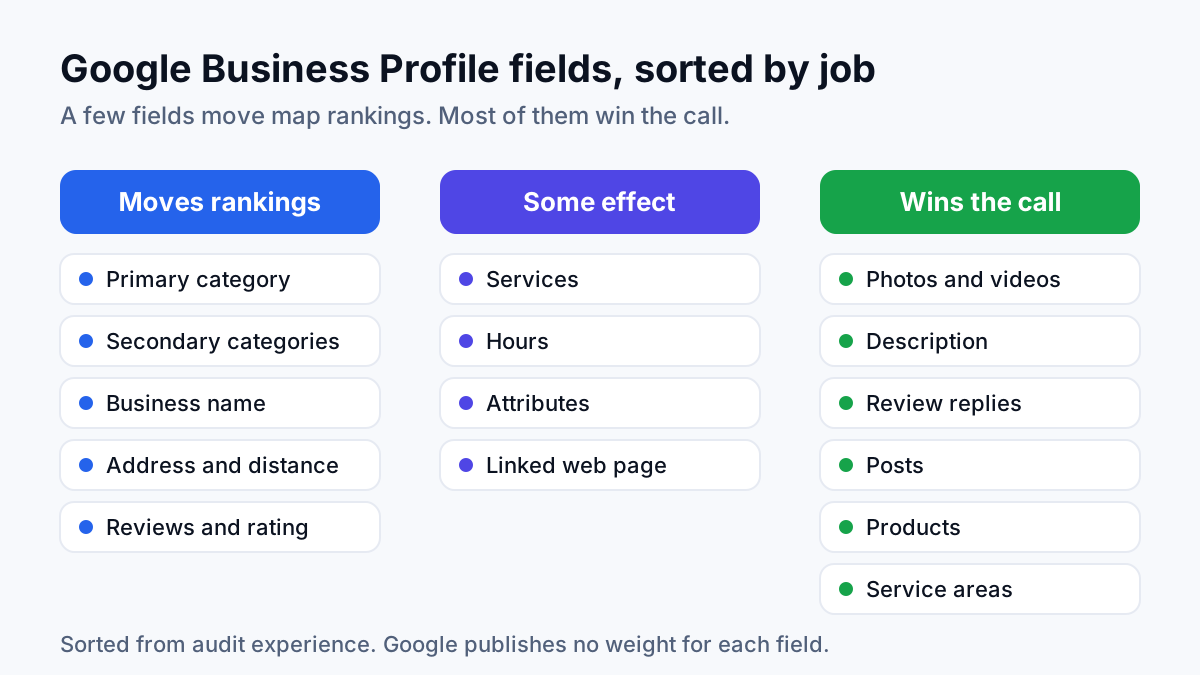
Start with your Google Business Profile, because it is the listing your customers are most likely to see, then Bing Places, Apple Business Connect and Facebook. What to put on the profile itself is covered in the guide to Google Business Profile optimization.
Next, submit or correct your record with the data aggregators in your country. This is the step that stops bad data flowing back in. Aggregator updates take time to travel down to the sites they feed, so do this early and let it work while you handle the rest.
Step 3: claim major directories
Claim and correct the big general directories: Yelp, the Better Business Bureau, Yellow Pages and Nextdoor in the US. Claiming matters as much as correcting. An unclaimed listing has no owner watching it, so a wrong edit from a stranger or a data feed stays there until someone notices.
Step 4: add industry and local directories
Now add the sources that make you relevant: the directories buyers in your trade use, and the local ones that tie you to your town. To find them, search your main service plus your city and note which directories rank, then check where the businesses in the map pack are listed and you aren't. That gap list (sources your competitors have and you don't) is a better citation plan than any generic list of sites.
Fixing duplicates, old addresses and phone changes
Cleanup is where most citation work actually happens. Three situations come up again and again.
Duplicate listings
Two listings for the same business split your reviews and confuse everyone reading them. On Google, report the duplicate through Business Profile support rather than deleting the listing that holds your reviews. On directories, claim both, correct the one with the stronger history and ask the directory to merge or remove the other. Where a directory has no removal process, correct the duplicate so at least it says the right thing.
Moving to a new address
Update the address on your existing Google Business Profile instead of creating a new one, so your reviews and history move with you. Google may ask you to verify the new address. Then update the aggregators, then every listing in your audit sheet, in the same order as a new build. Search the old address in quotes every few weeks until it stops turning up.
Changing your phone number
Keep the old number forwarding to the new one for as long as you can, because old listings, printed flyers and customers' contact lists will hold it long after you update the web. Then update listings in the same order as a move.
Call tracking needs a rule of its own. Keep your main local number on every citation and use tracking numbers on ads and campaign landing pages instead. Google's guidelines ask for a local number over a central call center line whenever possible, and a citation carrying a tracking number is one more version of you in circulation.
Service-area businesses with a hidden address
A service-area business (SAB) goes to its customers, like a plumber, cleaner or mobile mechanic, instead of having customers come to a shop. Google is direct about the address:
“If you're a service-area business, you should hide your business address from customers.” Google, Business Profile guidelines
On the profile, you hide the street address and list the cities or areas you serve instead. Citations are less tidy, because many directories insist on an address. Handle them like this:
- Use the hide address or service area option wherever the directory offers one.
- Where a directory forces a public street address, decide whether you are happy for that address to be public. If not, skip that directory.
- Keep the name, phone number and website identical everywhere. For an SAB, those fields carry the consistency the address can't.
- Use the same city and state on every listing, even where the street is hidden.
- Don't use a PO box or a virtual office to get around it. Google's guidelines rule out both for a Business Profile, and a made-up address on directories contradicts the profile anyway.
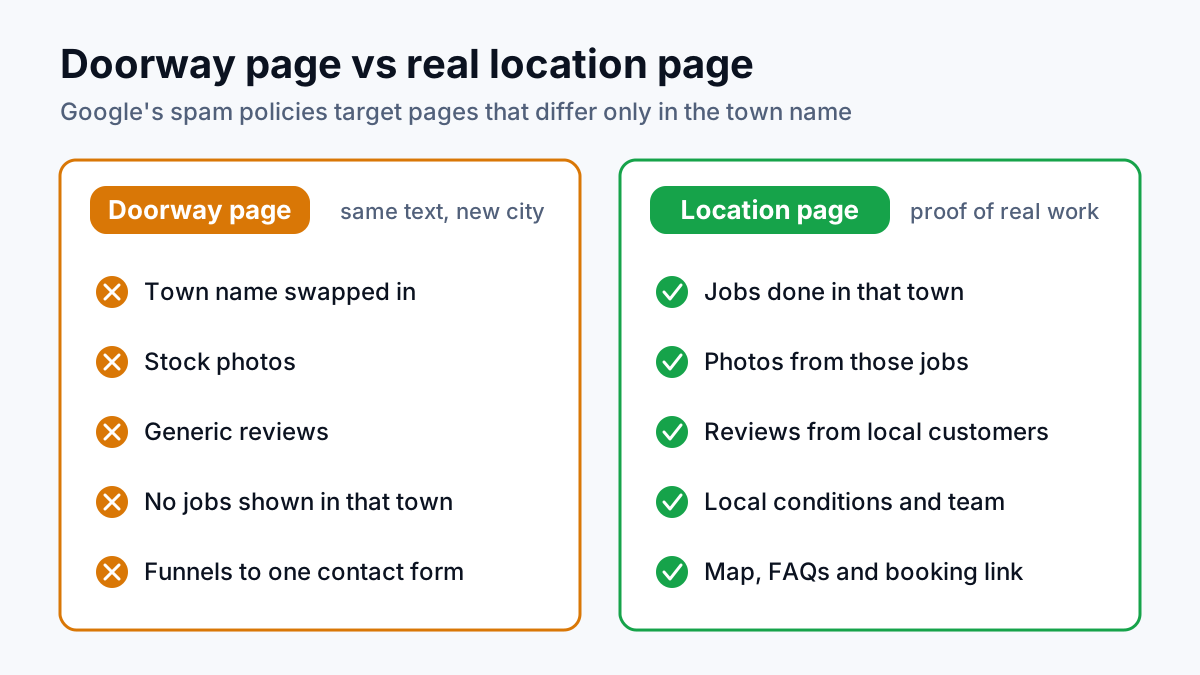
For an SAB, the pages on your own site carry more of the local work. A real page per area you serve, written about that area, is covered in the post on location pages.
How many citations is enough
There is no citation number that unlocks the map pack, and anyone quoting you one is guessing. Accuracy and relevance count for more than volume: a correct listing on the directory your customers actually use does more than a pile of listings on sites nobody opens.
A practical stopping point looks like this:
- Every core platform claimed and correct.
- Your record correct with the main data aggregators.
- The major general directories claimed and matching.
- The industry and local sources your map pack competitors have, matched.
- No known listings left with an old address, old phone or old name.
Past that point, more citations rarely move anything. Your time goes further on reviews, local relevance on your pages and local links, which is where the guide on how to rank higher on Google Maps picks up. Be wary of bulk submission packages that push your details onto a long list of low-quality sites. Each one is another listing to keep accurate, and another place for old data to hide when you move.
Keeping citations accurate over time
Citations drift. Directories change owners, aggregators refresh their data, and the public can suggest edits to your Google profile that sometimes go live without you noticing. A light routine keeps it under control:
- Recheck the core platforms every month, since that is where edits show up and where customers look.
- Search your old addresses and phone numbers a few times a year.
- Update the business overview file before you change anything, then roll the change out from it.
- Keep every login in one password manager owned by the business, not by whoever set the listing up.
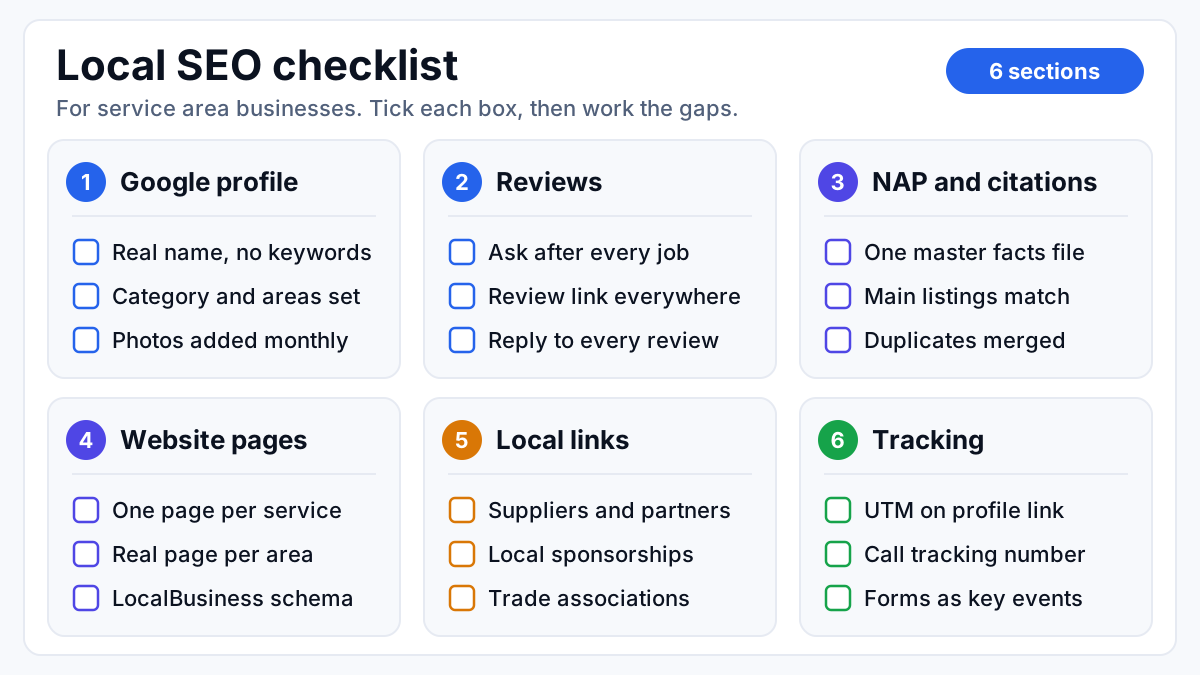
Citation hygiene is one line on a wider local SEO checklist, next to reviews, the profile and your pages.
Where to start
Write your one correct version of the name, address and phone today, then search your old phone number and old address in quotes. What turns up is your cleanup list, and working through it in the order above fixes most citation problems without buying a single new listing.
If you would rather hand the audit, the cleanup and the citation plan to someone who tracks every listing until it is live, that work is part of what I do as a local SEO consultant.