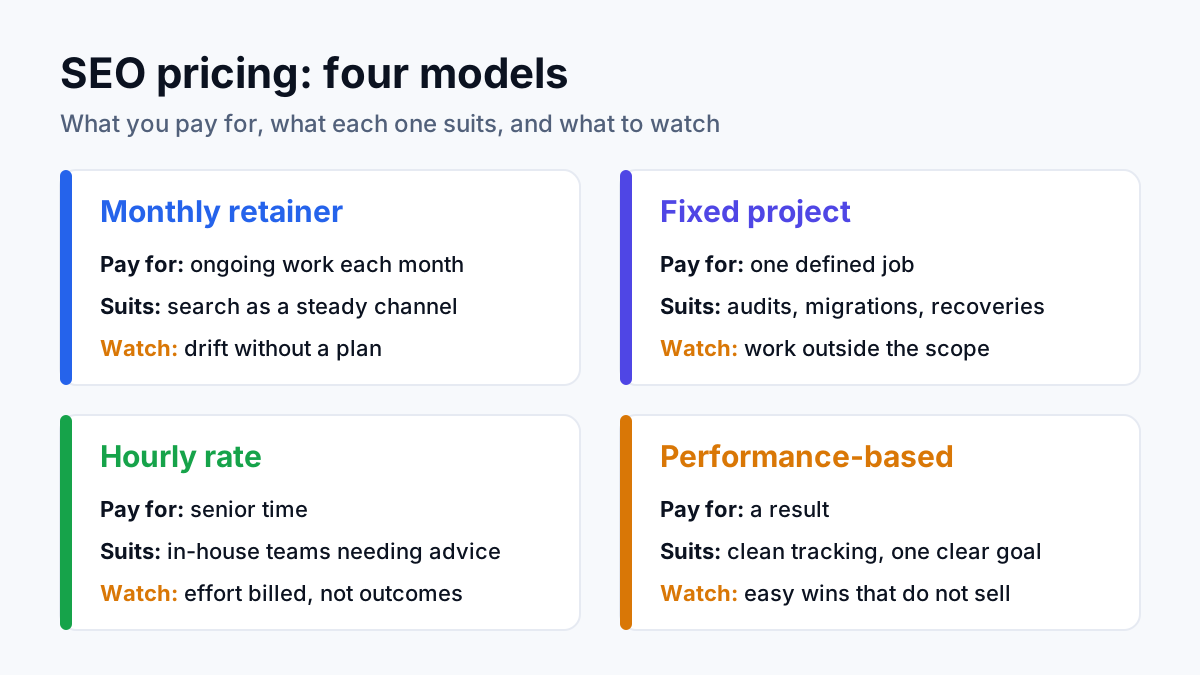
SEO pricing comes in four shapes: a monthly retainer, a fixed-price project, an hourly rate, or a fee tied to results. How much SEO costs under any of them depends on how much work your site needs, and that is set by site size, competition, location count, content volume, technical debt and how many links you have to earn.
Below: what each pricing model suits and where it goes wrong, the six drivers that move the price, how SEO consultant rates work, what cheap SEO leaves out, and a way to size your own budget.
Why an honest SEO quote starts with your site
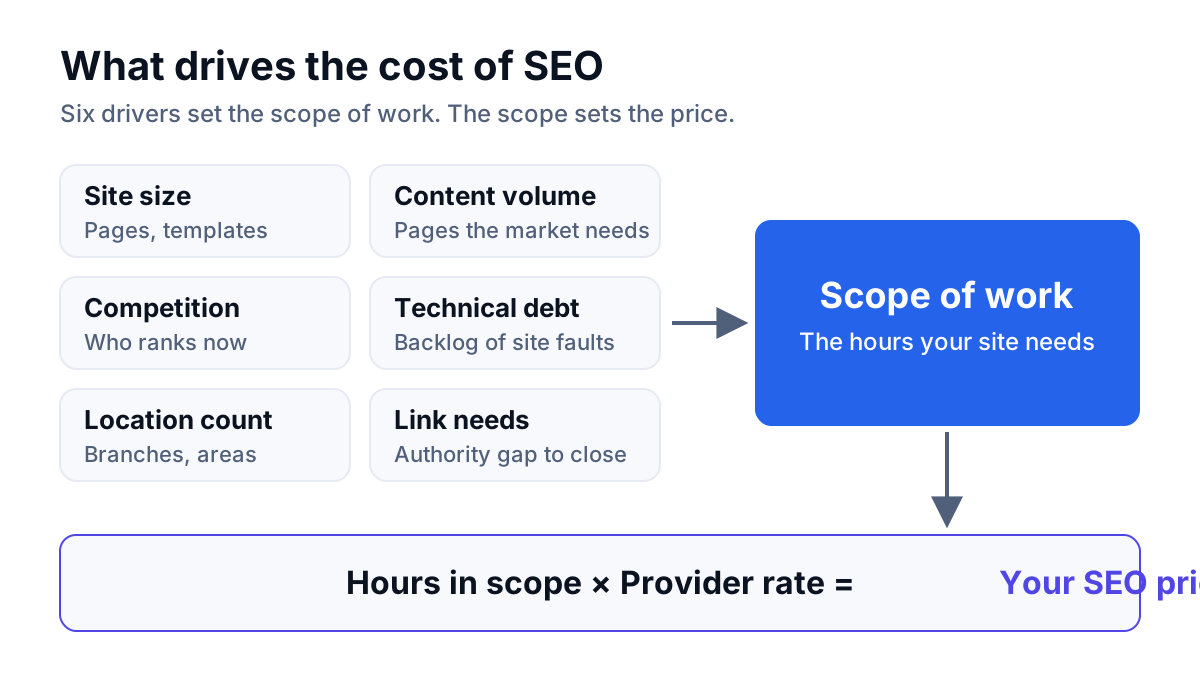
Search for “how much does SEO cost” and you get price tables. They disagree with each other because they answer a different question: what someone charged someone else, for work you cannot see. The SEO cost for your business follows a simpler formula: the hours of work your site needs, times the rate of whoever does it. Two businesses in the same town sometimes need very different amounts of work, so the same provider may quote them very different prices.
That is why every engagement I take on starts with a domain-wide analysis of the business, its market, its competitors and what buyers actually search. It ends in a quarter-by-quarter plan that says which services the site needs, in what order, and which it may skip. The price follows the plan. A quote given before anyone has looked at the site is a guess with a number on it.
The four SEO pricing models
Most SEO is sold in one of four ways. Many providers mix them, for example a fixed-price audit followed by a monthly retainer, so it pays to know what each one buys you.
Monthly retainer
You pay the same fee each month for an agreed body of ongoing work: technical upkeep, new and refreshed pages, link building, reporting. It is the most common model because SEO compounds: pages keep being written, competitors keep moving and Google keeps recrawling. A retainer suits any business that wants search to be a steady channel rather than a one-off fix. The risk is drift. Without a written plan, a retainer turns into a monthly invoice for activity nobody asked for. The terms that stop that (scope, notice period, who owns the accounts) belong in the SEO contract.
Fixed project
You pay one agreed price for a defined piece of work with a finish line: a technical audit, a site migration, a topical map, a batch of location pages, a recovery after a traffic drop. It suits jobs you could describe in a sentence and check when they are done. The risk is at the edges. A fixed price covers what is written in the scope, and anything the audit uncovers outside that scope becomes a new quote. Ask what happens if the work turns up more than expected.
Hourly rate
Here you pay for time: a strategy call, a review of your developer's changes, a second opinion on an agency's plan, training for an in-house marketer. It suits businesses with their own team who need senior judgment in small doses. The catch is that hours measure effort, not outcome. Hourly billing works when you control the agenda and know what you want answered. It works badly as the way to buy ongoing SEO, because nobody has a reason to finish.
Performance-based pricing
Pay-on-results deals charge when an outcome arrives: per ranking reached, per lead, or a share of revenue. It sounds like the safest deal for the buyer. In practice, the result being paid for decides the work that gets done. Pay per ranking and you tend to get rankings for phrases that are easy to rank for, which are rarely the phrases people buy from. Pay per lead and you need airtight tracking and a shared definition of a lead, or every month starts with an argument. The model fits a narrow case: a site with clean tracking, one clear conversion, and a provider willing to put real work in before any money moves.
| Pricing model | You pay for | Suits | Main risk |
|---|---|---|---|
| Monthly retainer | An agreed body of ongoing work each month | Businesses that want search as a steady channel | Drift into activity with no plan behind it |
| Fixed project | A defined job with a finish line | Audits, migrations, topical maps, recoveries | Work outside the written scope becomes a new quote |
| Hourly rate | Time, in calls, reviews or training | In-house teams that need senior judgment in small doses | Effort gets billed whether or not anything changes |
| Performance-based | A result: rankings, leads or a revenue share | Sites with clean tracking and one clear conversion | The metric chosen shapes the work, often toward easy wins |
What drives the cost of SEO
Six things decide how much work a site needs. Each one pushes the price up or down on its own, and a quote that ignores any of them is missing part of the job.
Site size
More pages means more to crawl, audit, fix and keep current. A ten-page service site and a store with thousands of product and category URLs are different jobs, even if both want the same keyword. Size is not only page count; templates matter too. On a large store, one fix to a product template repairs thousands of pages at once, which is why a large site is scoped by its templates and systems, not page by page.
Competition
Who already ranks sets the price of ranking. If the pages on page one for your core searches are thin, a few well-built pages may be enough. If they belong to national brands with years of content and links, you need more pages, more depth and more authority to get a seat. A quick way to judge it yourself: search your three most valuable phrases and look at who holds the top results and how much they have published on the topic.
Location count
Local SEO scales by location. Every branch or service area needs its own Google Business Profile work, reviews, citations (listings of your name, address and phone number, known as NAP, on directories) and a location page that is not a copy of the others. Three branches means three sets of that work, not one job with a longer address list. The breakdown for local work is in local SEO cost.
Content volume
Content drives cost because pages that answer real questions take research, writing, editing and, for health, legal or money topics, a qualified reviewer. The number of pages you need comes from the searches in your market, not from a round number in a proposal. Ask how the page count was worked out. If the answer is “four blog posts a month”, nobody has mapped the topic.
Technical debt
Technical debt is the backlog of problems a site has built up over the years: duplicate URLs, broken redirects, slow templates, pages Google cannot reach, old pages nobody removed. It has to be paid down before new work pays off, and it is easy to underestimate because none of it shows on the front end.
On a health publishing non-profit I work with, a 90-day audit of 3,887 URLs flagged 526 for removal, and 20,000 low-value pages have been removed from the index. That engagement is mid-fix: indexed pages fell from 9,000 to 6,000 in the same window, 108,000 pages are found but not indexed, and Core Web Vitals score 50/100. It is open work, not a finished result, and it shows why sites with a long history need technical SEO scoped before anything else.
Link needs
Links from other sites still act as votes of trust, and the number you need depends on the gap between you and the sites that outrank you. Earning them takes outreach, digital PR, partnerships and content worth citing, month after month, which is why link work tends to live inside a retainer rather than a one-off project.
On a plumbing and HVAC site I worked on, the company gained referring domains and backlinks in every month reported, and its Domain Rating (a third-party authority score from Ahrefs, not a Google metric) climbed from 10 to 38. The two most recent monthly reports on that account cover keyword positions and technical health only, not traffic totals, so the current trend is unconfirmed. The work behind numbers like that is off-page SEO.
SEO consultant rates
An SEO consultant is one senior person who plans the work and often does the specialist parts of it, as opposed to an agency with account managers and a delivery team, or a freelancer hired for one task. What you pay for is judgment: knowing which of the dozens of possible jobs your site needs this quarter, and which to skip. A consultant's rate shows up in three forms, each suited to a different kind of engagement:
- Hourly, for advice. Strategy calls, a review of a developer's changes before launch, a second opinion on another provider's plan, or training for your team. You bring the questions.
- Project, for defined jobs. An audit, a migration plan, a topical map, a recovery. The consultant scopes it, prices it once and hands over a finished deliverable.
- Retainer, for ongoing strategy and execution. A quarterly plan, the monthly work that follows it, and a report that says what changed. Here a consultant's time buys the most, because the person who diagnosed the site keeps steering it.
What you should not pay a consultant rate for is volume work that a junior writer or a tool handles well. A sound arrangement puts the senior hours on diagnosis, planning and review, and prices production work separately. For how to vet the person before any of this, read hiring an SEO consultant.
What cheap SEO usually leaves out
A low monthly price is not a problem in itself. A small site in a quiet market may need little. The problem is a low price for a big job, where the saving comes from work quietly skipped. These are the usual gaps:
- No technical work. Nobody checks whether Google can crawl and index the pages, so the rest of the budget builds on a broken base.
- Templated content. Pages stamped out from one template with the city or product name swapped, close to what Google's spam policies describe as doorway pages.
- Bought links. Cheap link packages come from networks built to sell links. Google's spam policies treat links bought to manipulate rankings as link spam, and cleaning up after them is paid work of its own.
- Rankings with no buyers. Reports full of positions for long phrases nobody searches, or for searches that never lead to a sale.
- No conversion tracking. Nobody measures calls, forms or sales, so nobody knows whether the fee pays for itself.
- Accounts you do not own. Search Console, Analytics and the Google Business Profile set up under the provider's login, which makes leaving expensive.
How to size an SEO budget
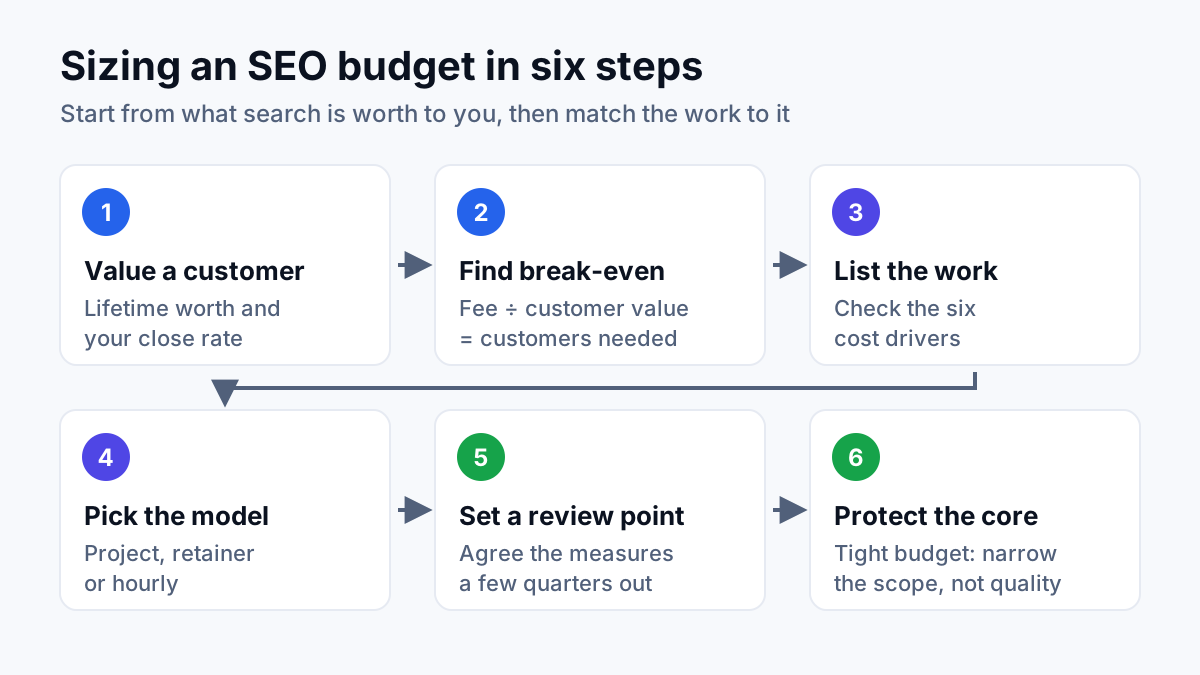
Start from what search is worth to you, then match the work to it. A budget copied from a competitor's spend or picked as a round number says nothing about whether it pays back.
- Put a value on a customer. Use what an average customer is worth over the whole relationship, not one invoice, and the share of enquiries you close.
- Work out the break-even. Divide the monthly fee you are considering by what one customer is worth. That is how many extra customers a month SEO needs to bring in to pay for itself. If that number looks out of reach for your market, the scope or the price is wrong.
- List the work your site needs. Go through the six drivers above and note which apply: a large site, strong competitors, several locations, a content gap, technical debt, a link gap.
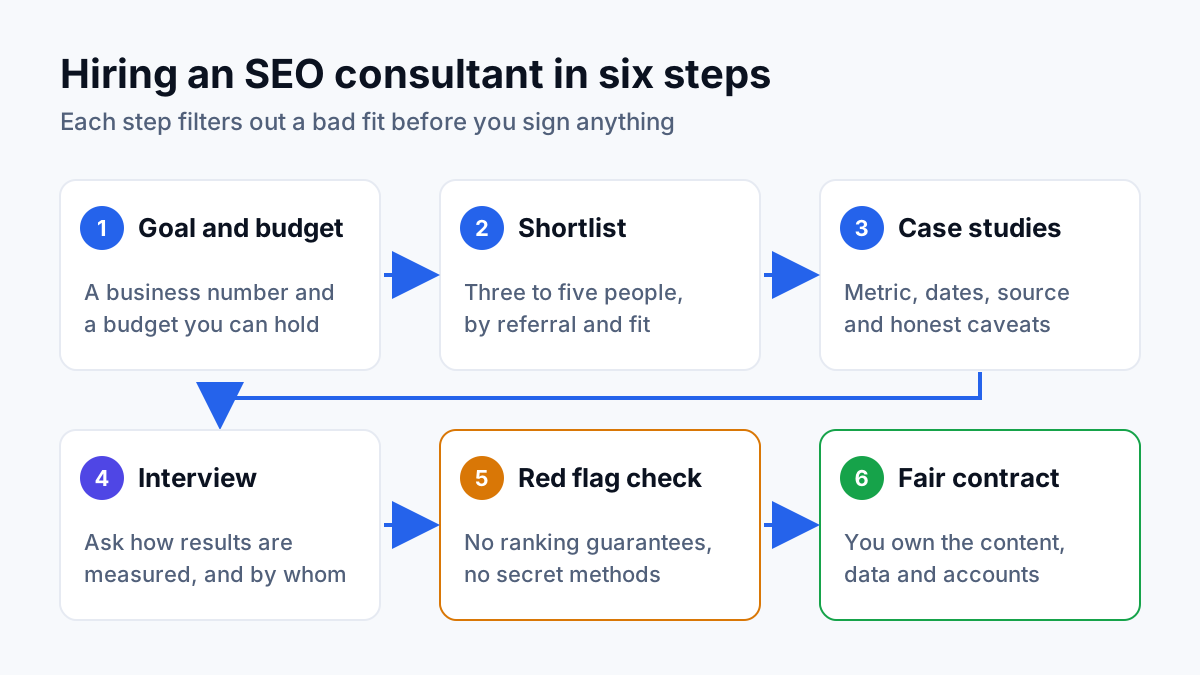
- Match the pricing model to the shape of the work. One-off problems (an audit, a migration, a cleanup) suit a fixed project. Ongoing growth (content, links, local) suits a retainer. Questions from your own team suit hourly.
- Commit for long enough to judge it. SEO builds over months, so set a review point a few quarters out and agree now what will be measured then. The math for judging the return is in SEO ROI.
- Protect the pages closest to money. If the budget is tight, narrow the scope instead of thinning the work: fix the technical basics and the pages that sell before anything else.
For the value side, the calculator on my homepage does the rough version for you. You set three sliders (people searching for what you sell each month, the share of enquiries that become customers, and what a customer is worth), and it compares a site buried on page two or three with one that holds page one across its core topics, then shows the monthly revenue gap between them. Every assumption is printed under the sliders, and the result is an estimate, not a promise.
Your next step: put your own numbers into the cost calculator on my SEO consultant homepage, note the gap it shows, and hold any SEO quote you get against that figure and the break-even from step two.