Most sites need somewhere between four months and a year of SEO work before the results are worth measuring, which is the range Google's own hiring guide gave site owners for years. Where your site lands inside that range depends on how hard your searches are to win, how much history the domain carries, and how much has to be fixed before anything else counts. Below: what moves soonest, what moves slowest, a month-by-month timeline, three real project curves, and how to judge progress before revenue shows.
What Google says about SEO timelines
For years, Google's Do you need an SEO? page told site owners that results typically arrive four months to a year after changes begin. The page has since been rewritten. The current version drops the number and suggests you ask any SEO you interview what results they expect, and in what timeframe. I think that edit is fair: Google cannot see your market, your competitors or your developer's backlog, so any single range was only ever an average.
Google's SEO Starter Guide still explains why the wait exists:
“Some changes might take effect in a few hours, others could take several months.” Google Search Central, SEO Starter Guide
The same guide suggests waiting a few weeks before judging whether a single change worked. Hold both scales in your head: one change is judged in weeks, a whole SEO program in months. The four-months-to-a-year range describes the program, where dozens of changes stack up and Google has to recrawl the site, re-rank its pages and, slowly, start trusting it.
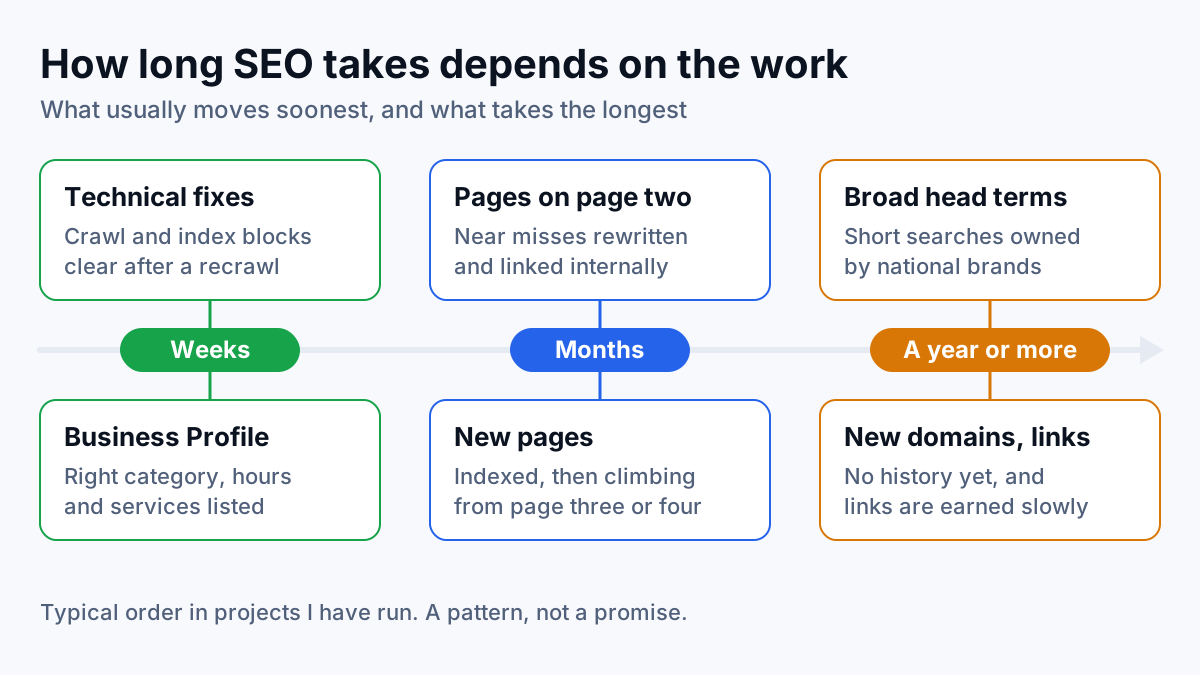
What moves soonest
Speed depends on the kind of work more than on the date you started. Three kinds of change tend to show early, because each removes a problem Google can already see instead of asking Google to trust something new.
Technical fixes that unblock pages
Think of a stray noindex tag (a line of code telling Google to leave a page out of its results), a robots.txt rule blocking a whole folder, or a canonical tag (the tag that tells Google which version of a page is the main one) pointing at the wrong URL. In audits I run, the fastest wins are almost always of this kind: a page the business cares about that Google was told to ignore. Fix it, and the effect arrives as fast as Google recrawls, which Google's recrawl documentation puts at anywhere from a few days to a few weeks. More on this layer in the guide to technical SEO.
Google Business Profile fixes
For local businesses, the map pack (the three map listings above the regular results) often moves before the website does. Google's Business Profile help page says local results are mainly based on relevance, distance and popularity. Distance you cannot change, and popularity (reviews, mentions, links) builds over months. Relevance is the fast lever: the right primary category, the services you really offer, accurate hours and service areas. The steps are in the post on Google Business Profile optimization.
Pages already close to page one
Search Console (Google's reporting tool for site owners) shows which pages already rank at the bottom of page one or on page two. Those pages have Google's attention; they are near misses, not strangers. Rewriting them to answer the search more directly, sharpening the title, and linking to them from stronger pages on your own site asks Google to change its mind, not to start from zero. That is why these pages usually move within a couple of months while brand new pages are still being indexed.
What moves slowest
Slow work shares one trait: it asks Google to trust something it has little evidence about yet.
A brand new domain
A new domain has no crawl history, no links and no one searching its name. Google has to find the pages, index them and then test them against sites with years of record behind them. Expect the early months to show indexing and a trickle of impressions, not leads. The SaaS curve further down is a textbook case.
Competitive head terms
Head terms are the short, broad searches everyone wants: “plumber”, “payroll software”, “personal injury lawyer”. Page one for those usually belongs to national brands, directories and sites with deep link profiles. The realistic route is specific searches before broad ones: the service plus the city, the problem plus the fix, the comparison a buyer runs before choosing. Those rank sooner, bring buyers sooner, and build the authority the head term needs later.
Links and authority
Links from other sites work like references. They are earned slowly, through partners, suppliers, local press, useful data and plain good pages, and there is no safe way to rush them. Google's hiring page warns against SEOs who talk about link popularity schemes, which is the rushed version of this work and the one most likely to cost you rankings instead of earning them.
A month-by-month SEO timeline
Here is the shape a typical engagement follows on an existing site with some history. A new domain runs later on every row, and a site that is already technically clean can skip ahead.
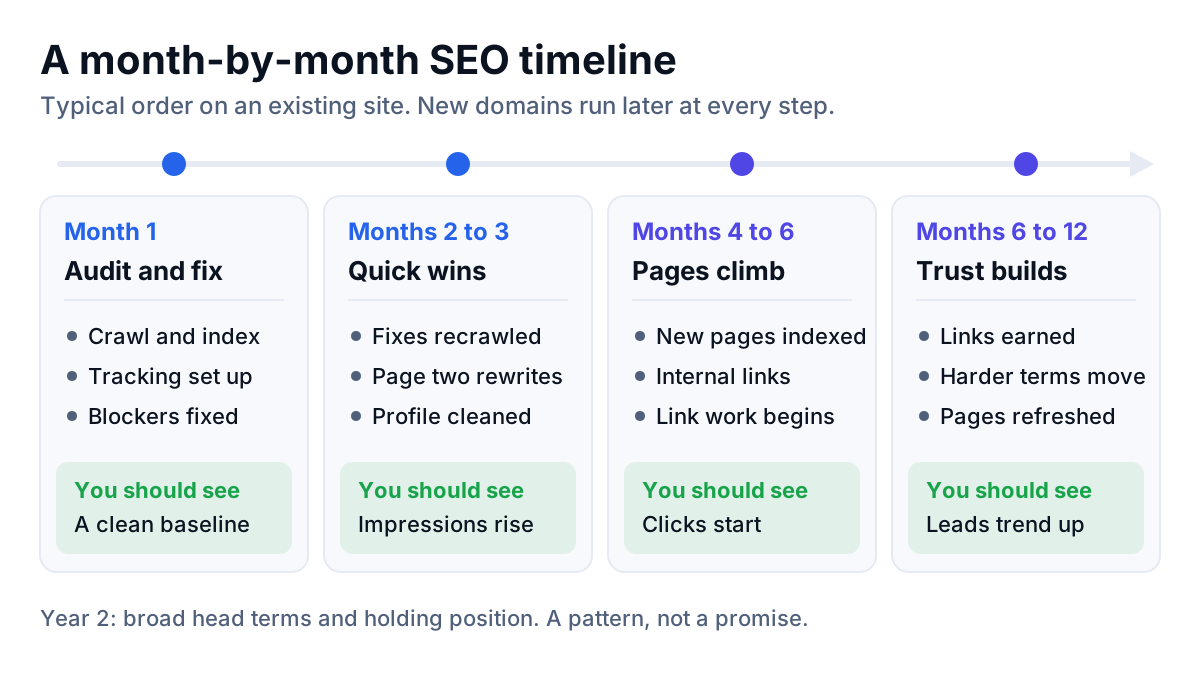
| Phase | What gets done | What you should see |
|---|---|---|
| Month 1 | Audit, crawl and index check, tracking set up, blocking errors fixed | A clean index report and a baseline to measure against |
| Months 2 to 3 | Fixes recrawled, near-miss pages rewritten, Business Profile cleaned up | Impressions rising on existing pages, some position gains |
| Months 4 to 6 | New pages published and indexed, internal links built, link earning begins | Target searches moving up, clicks starting to climb |
| Months 6 to 12 | Links and content build on each other, harder searches get attention | Clicks and leads trending up month over month |
| Year 2 | Broad head terms, holding positions, new services or cities | Revenue you can tie to search with some confidence |
The rows overlap in real projects. Technical work never quite stops, and a strong page published in month two can outrun everything else on the plan.
Timelines from real projects
Three accounts from my own work show how differently the same kind of work plays out. Each comes with its caveat, because a timeline without one is a sales pitch.
- B2B SaaS, built from a standing start. Search Console showed zero impressions and zero clicks for over two months of the observed window. Clicks sat near zero for months, then climbed steadily from spring 2026, adding up to 18.6K organic clicks across a 16-month window. The caveat: over the same period the company's GA4 sessions across every channel fell roughly 75 to 90% from an early-2025 peak, so organic search grew while the rest of the business shrank.
- Managed IT company, Texas. Average Google position went from 41.2 (page four or five, effectively invisible) to 28.3 within about three months, reached 20.7 at its strongest about four and a half months in, and stood at 24.2 about 16 months in. Impressions fell from a mid-2025 spike while position climbed: the site stopped being shown for everything and started ranking for searches that fit. The caveat: total GA4 sessions (all channels) held at roughly 2,200 to 4,200 a month, then collapsed to 112 in August and 27 in September 2026. The cause is unconfirmed, so read this as a track record, not a live account.
- Garage door and gate company, Texas. Search Console clicks went from 44 a month early in the engagement to 161 by mid-2026, about 3.7 times, and kept climbing through August, eight months in. The caveat: a June status audit still rated the money pages weak (copy duplicated across 8 or more pages, no homepage links to them), and the August report contradicts itself on how many leads were qualified.
Three different curves: a slow start that turned steep, an early jump in position that then settled, and steady growth on a site with plenty still unfixed. None of them followed the straight line people picture when they ask how long SEO takes.
What speeds SEO up and what slows it down
The same handful of factors decides where a site lands in the four-months-to-a-year range.
| Factor | Speeds it up | Slows it down |
|---|---|---|
| Site history | An established domain with clean links and some rankings | A new domain, or a record of spammy links or penalties |
| Competition | Specific, local or niche searches | Broad terms owned by national brands and directories |
| Technical state | Pages Google crawls and indexes cleanly | Blocked, duplicated or very slow pages |
| Speed of changes | Approved fixes go live within days | Fixes wait weeks in a developer queue |
| Content | One strong page per search, written for the buyer | Thin pages, copied text, several pages chasing one search |
| Links and mentions | Earned steadily from relevant sites | None at all, or bought in bulk |
| Tracking | Search Console, analytics and call tracking from day one | No baseline, so progress gets argued instead of shown |
In my experience the slowest projects are rarely slow because of Google. They are slow because approved fixes wait weeks to go live.
Duplicate pages deserve their own warning, because they undo progress quietly. On one HVAC account, 9 city pages split across 2 to 4 URLs each were the structural cause behind a month-on-month click drop of about 37%. One city's 80,563 impressions were spread across 2 pages for only 10 clicks in total. Merging each city into one page is slow, unglamorous work, and new content added on top of a structure like that mostly competes with itself.
Then there are Google core updates, the broad changes to ranking systems that Google says it makes several times a year. They can move a timeline in either direction without anyone touching your site, which is one more reason to judge SEO over quarters rather than weeks.
How to judge progress before revenue shows
Revenue is the last signal to move. Buyers research before they call, deals take time to close, and attribution (working out which channel earned a sale) is messy for any business with a phone. The signals before it move earlier and in a fairly fixed order, so judge each month on the signal that should be moving at that stage.
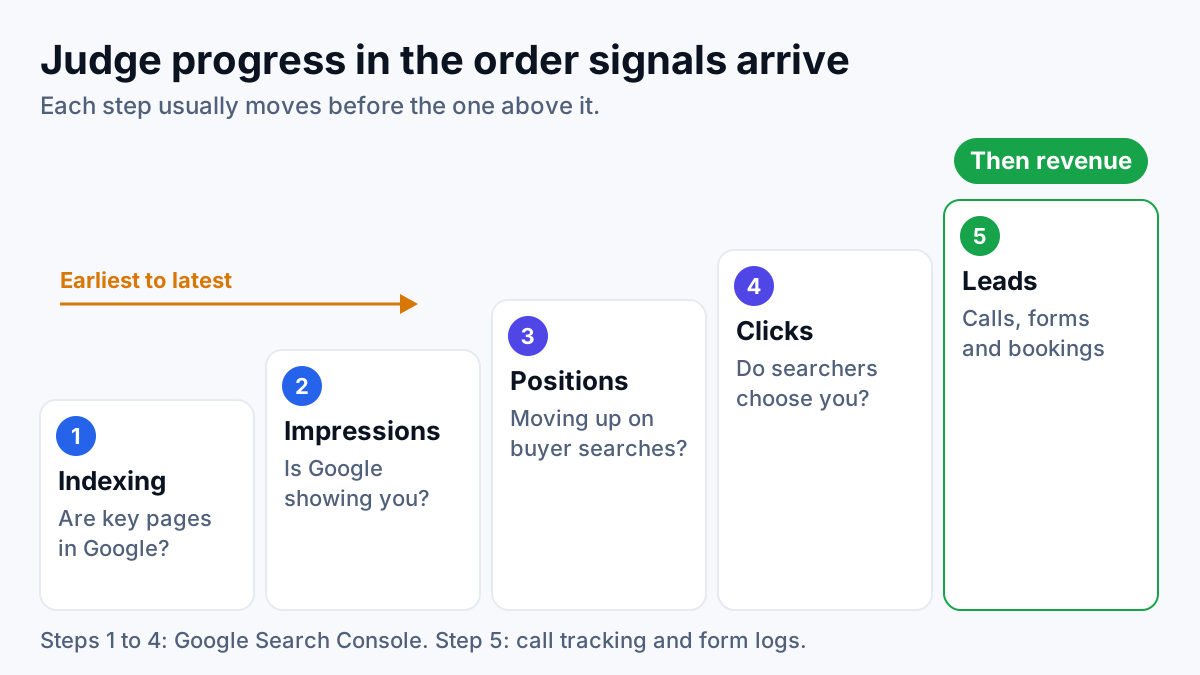
- Indexing. Search Console's page indexing report shows whether the pages you care about are in Google at all. This should look healthy within weeks of the technical fixes.
- Impressions. How often your pages appear in results, clicked or not. Rising impressions on target searches are the earliest sign Google is testing you.
- Positions on target searches. Filter Search Console to the searches that bring buyers. The site-wide average position is unreliable, because every new page starts low and drags it down.
- Clicks. Clicks follow when pages reach page one. If impressions rise and clicks do not, the title and description shown in results need work.
- Leads. Calls, forms and bookings, tracked by source. This is where the search work meets your sales process, and where measuring SEO ROI becomes possible.
Red flags in an SEO timeline
A slow timeline is normal. A timeline with no evidence is not. Watch for these:
- A guaranteed ranking or date. Google's hiring page says plainly that no one can guarantee a top ranking on Google. Anyone promising page one by a date is guessing, or planning something risky.
- No movement on any early signal. On a site that already had some visibility, nothing moving on indexing or impressions by the four-month mark means the plan or the execution needs a hard look.
- Reports that show only site-wide traffic. Useful reporting names the target pages and searches, what moved, what fell and why.
- Changes you cannot see. Google suggests asking whether an SEO will share every change they make to your site, with the reasoning behind it. The answer should be yes.
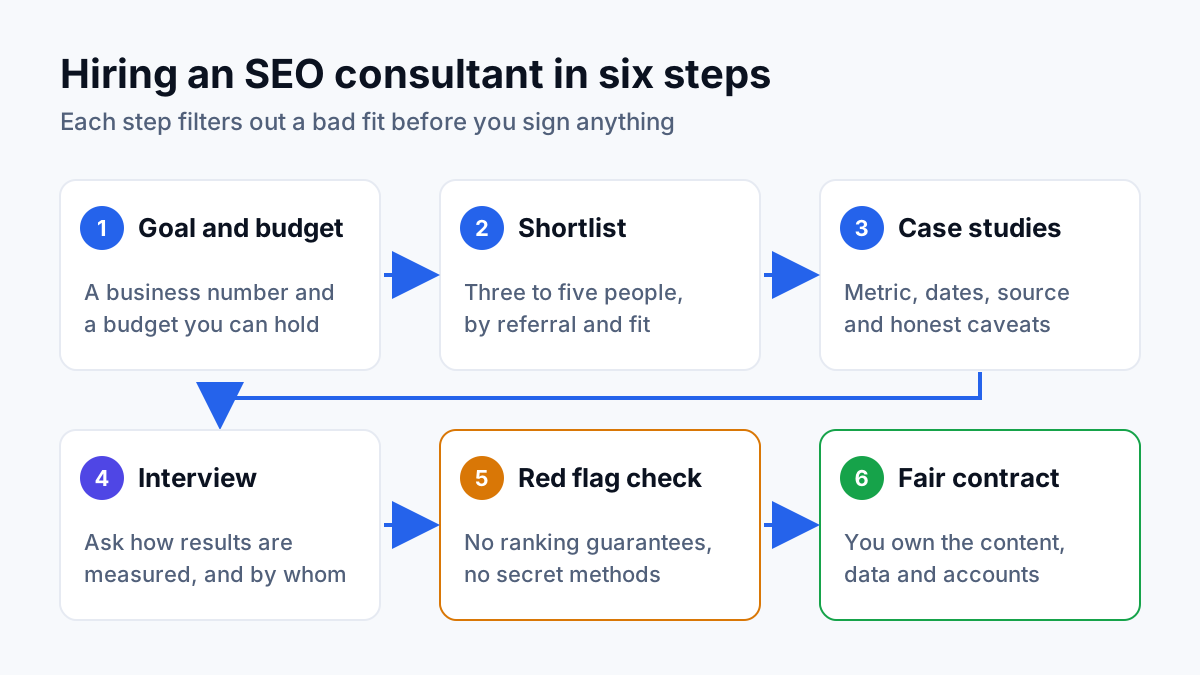
The questions worth asking before you sign are in the guide to hiring an SEO consultant.
Where to start this month
Pull a baseline before any work begins: indexed pages, impressions and positions for your ten most important searches, and how many leads came from search last month. Then start with the fast work (technical fixes, your Business Profile, the pages already near page one) so the early months show real movement while the slow work of new pages and links gets under way. If you want to see the whole sequence, from the places a site leaks customers to a ninety-day build drawn live, it is laid out chapter by chapter on how SEO actually works.