A Google core update is a broad change to Google's main ranking systems, released several times a year, that reassesses how well pages meet search intent and quality. It isn't a penalty, so a site that drops after one rarely recovers through quick technical tweaks. It recovers by making the affected pages more useful than the ones that now outrank them, and the gains usually show at a later update.
This post covers what a core update is, how it differs from spam updates and the old helpful content system, how to confirm one actually hit you, what to change afterwards, and why recovery takes as long as it does.
What is a Google core update?
Google changes its ranking all the time, mostly in small ways nobody announces. Any of those changes is a Google algorithm update. Several times a year, according to Google, it makes a much broader change to its core ranking systems (the main machinery that decides which pages show for a search) and announces it as a core update, named by month and year, such as the March 2024 core update. Google's guidance on core updates gives the purpose plainly: keeping results helpful and reliable as the web, and what people search for, keeps changing.
The useful part is what a core update doesn't do. Google says it isn't aimed at particular sites or pages, and that pages which lose ground haven't broken its spam policies or been given a manual action. Nothing is wrong in the sense of a broken rule. Google has compared it to refreshing a list of favorite films made a few years earlier: some new films now deserve a spot, a few older ones get reassessed, and titles that were never bad still move down.
Rollouts take anywhere from several days to several weeks, and Google lists each one's start and end dates on its Search Status Dashboard. Rankings commonly swing during a rollout, so a reading taken halfway through tells you very little.
How core updates differ from spam updates
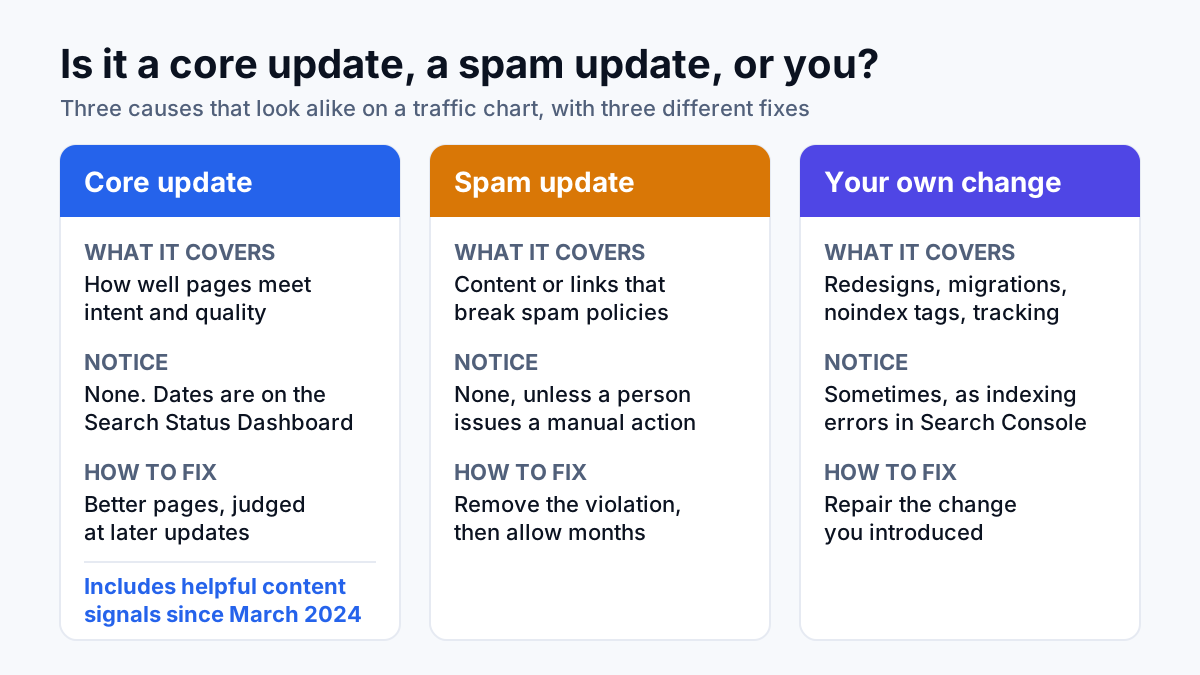
Not every Google update works the same way, and the recovery path depends on which kind reached you. A spam update sharpens Google's systems for catching content and links that break its spam policies: scaled low-value pages, link schemes, hidden text. A core update judges quality relative to everything else competing for the same query. Mixing the two up sends the work in the wrong direction, because one needs something removed and the other needs something made better.
| What changed | What it looks at | Notice in Search Console | What fixes it |
|---|---|---|---|
| Broad core update | How well pages meet intent and quality compared with other results | None; dates are on the Search Status Dashboard | Better pages, reassessed at later updates |
| Spam update | Content or links that break Google's spam policies | None for automated actions | Removing the violation; Google says its systems learn over a period of months |
| Manual action | A policy breach found by a human reviewer at Google | Yes, in the Manual actions report | Fixing the issue, then a reconsideration request |
| Your own change | Redesigns, migrations, noindex tags, broken tracking | Sometimes, as indexing errors | Repairing the change, usually the quickest of the four to reverse |
Google Search Console, the reporting tool Google gives site owners, is where two of these show up. A manual action is a penalty applied by a person at Google after reviewing your site, and it appears in the Manual actions report with a reason. If that report is empty and the drop lines up with an announced core update, you're looking at a reassessment, not a punishment.
The helpful content update, now part of core ranking
In August 2022, Google launched the helpful content update, a system aimed at content written mainly to rank rather than to help a reader. It worked as a site-wide signal: a site with a lot of unhelpful pages could see its good pages held back too, which made it harder to fix than a single-page problem. Improving one article didn't lift the weight on the rest.
In March 2024, Google folded the helpful content system into its core ranking systems and said helpfulness is no longer judged by one single system or signal. In practice, there's no separate helpful content recovery any more: helpfulness is assessed within core updates. The site-level effect hasn't vanished, though. Google says its core systems work mainly at page level but use some site-wide signals too, so a thin section of a site may weigh on pages that are fine on their own.
Google's guidance on creating helpful, reliable content is the practical checklist that came out of this. It asks whether the content offers original information or analysis, whether it covers the topic substantially and completely, whether a reader leaves having learned enough to reach their goal, and whether it was made for an audience that would find it useful if they came to you directly. It settles one myth too: Google says it has no preferred word count.
How to tell if a Google core update hit you
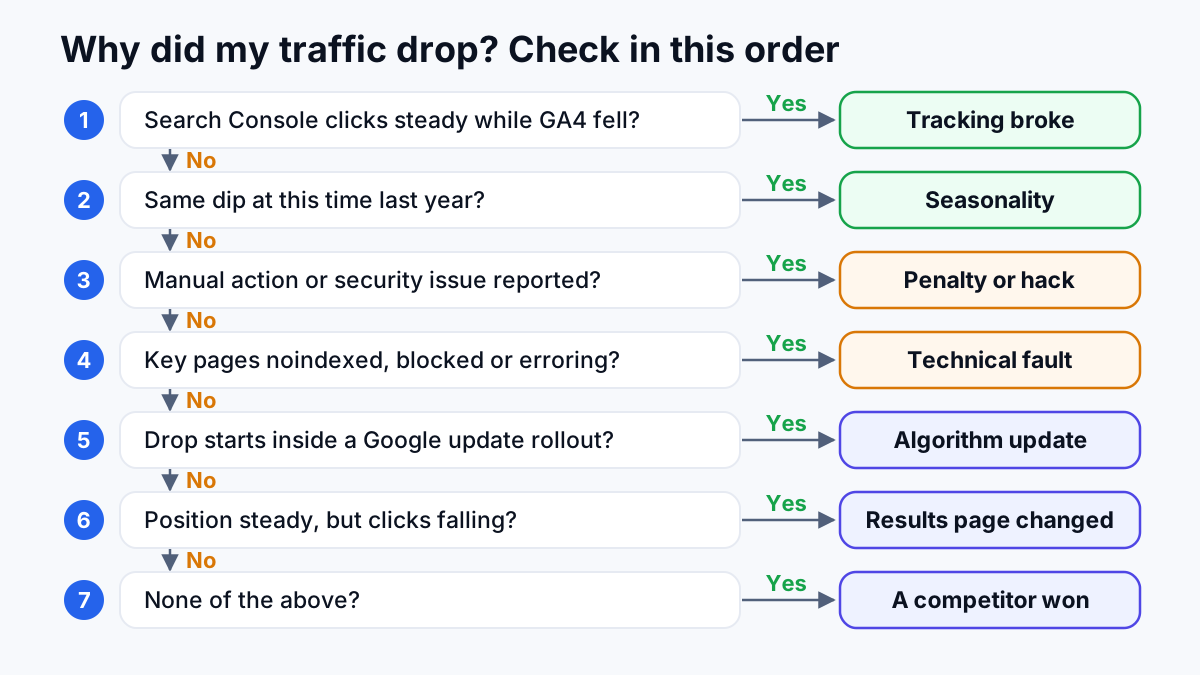
A drop during a core update isn't automatically caused by it. Plenty of traffic losses coincide with an update by accident: a developer pushed a noindex tag (an instruction telling Google not to show a page), a tracking script broke, a season ended. The job is to date the drop precisely and rule out everything else before blaming Google.
- Date the drop in Search Console. Open the Performance report, which shows clicks, impressions and average position from Google search, set the range to the last 16 months, and find the day clicks and impressions started falling. This data comes from Google, not from your analytics tag, so it's the reference when the two disagree.
- Check the Search Status Dashboard. It lists announced ranking updates with their start and end dates. A core update drop begins inside that window, not a week before it.
- Wait for the rollout to finish. Google advises letting the update complete and then leaving at least a full week of data before comparing a period after it with a similar period before it. The Compare option in the Performance report's date filter shows the two side by side.
- Rule out your own changes. Line the date up against your change log: deploys, plugin updates, redesigns, migrations, robots.txt edits, removed pages. The other usual causes are in my guide to why website traffic drops.
- Find the pattern. Open the Pages and Queries tabs and sort by clicks lost. A core update tends to show as positions slipping across many queries on pages of the same kind. A technical fault usually shows as whole URLs or templates disappearing.
- Check the Manual actions report. If it lists an issue, you have a penalty, and the fix is different.
Size matters too. Google's guidance separates a small slip of a position or two, which it says doesn't call for radical changes, from a large fall down the results, which calls for a hard look at the affected content.
What to do after a core update
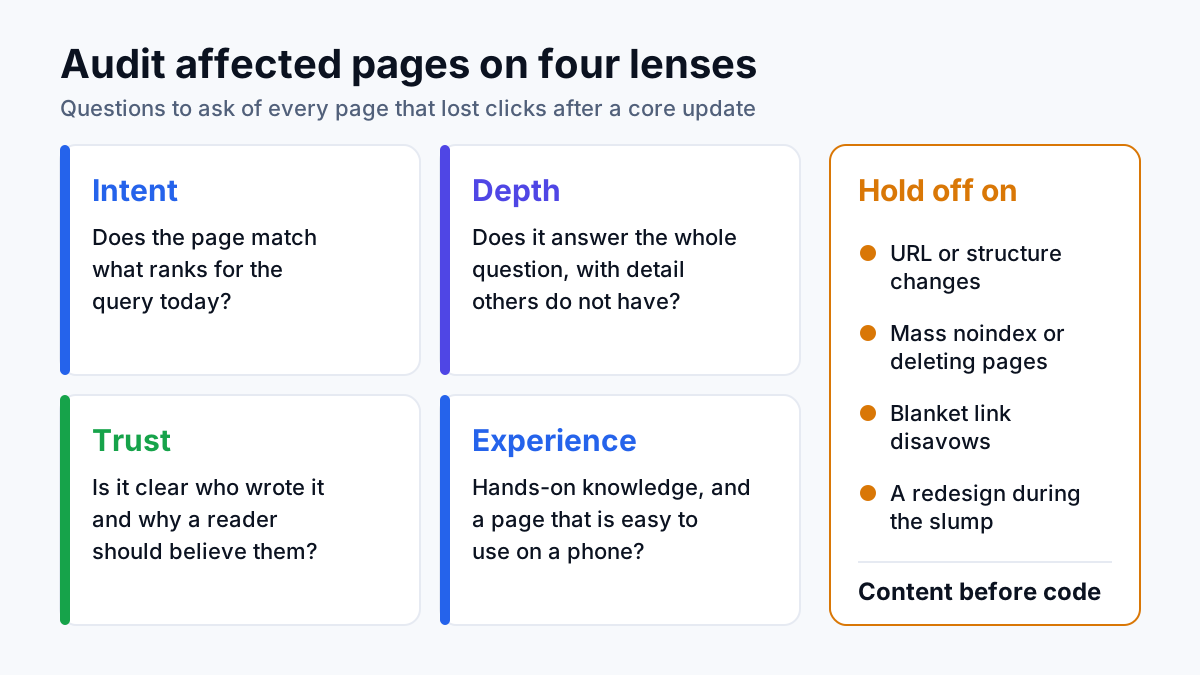
Start with the pages that lost the most clicks, not the whole site. Put each one next to the pages that now outrank it for its main queries, and ask why a searcher would pick them over yours. In audits I run, that side-by-side comparison answers most of the question before any tool comes out. The four lenses below turn Google's self-assessment questions into plain checks.
Search intent
Search intent is the reason behind a query: to learn, to compare, to buy or to find a place nearby. Core updates often reshuffle which kind of page Google treats as the right answer. If a query that used to show service pages now shows guides, or the reverse, your page may be fine and simply the wrong format for it. Judge against what ranks today, not what ranked last year.
Depth
A page that restates what ten other pages say has no reason to outrank them. Look for what's missing: the follow-up questions a buyer asks, prices or ranges you can stand behind, local details, photos of your own work, a clear process. Depth isn't length. It's how little a reader has to go back to Google for afterwards. The page-level basics that carry it are in on-page SEO.
Trust
Google's quality raters work from a framework called E-E-A-T: experience, expertise, authoritativeness and trustworthiness, and Google has said trust matters most of the four. On a business site that means a named author or reviewer with a real bio, dates showing when content was last checked, clear business details, and claims backed by evidence rather than asserted. Anonymous “expert” articles are a weak spot I find often after a drop.
Experience
The word covers two things here. One is the reader's experience of the page: pop-ups in the way, ads pushing the content down, slow loading on a phone. The other is the writer's hands-on experience, the extra E in E-E-A-T: does the page show the writer has actually done the thing, with specifics a desk researcher wouldn't know? Google's self-assessment list asks about both.
Prune what drags the site down
Because some signals work at site level, weak pages cost more than their own traffic. Thin pages, near-duplicates and pages that exist only to catch a keyword each get one of four verdicts: keep, improve, merge into a stronger page, or remove. Merging usually beats deleting, and nothing goes without a reason tied to the diagnosis. Narrow and deep tends to recover faster than wide and shallow.
Changes to avoid after a drop
The instinct after a drop is to change everything at once. That destroys the evidence: when the next update lands, nobody can tell which change helped and which one hurt. Technical health still counts, since a page Google can't crawl can't rank, and technical SEO covers those checks. But a core update judges content, so technical changes rarely fix a core update drop, and some make it worse.
- Changing URLs or site structure. A restructure adds redirect and reindexing risk on top of the drop you already have.
- Mass noindexing or deleting pages. Pruning works when each page has a verdict. A blanket cut removes pages that were still earning.
- Disavowing links wholesale. A core update isn't a link penalty, and a blanket disavow file (a list asking Google to ignore certain links) may throw away links that are helping you.
- Rewriting every page overnight. Fast, shallow rewrites across a site, machine-written ones especially, tend to produce more of the thin content that caused the problem.
- Chasing the theory of the week. Forums will blame word count, schema or a plugin within hours. Test every theory against your own Search Console data.
Doing nothing for two weeks feels irresponsible. It's often the most productive part of the recovery, provided the time goes into collecting data rather than editing.
Not every drop is even permanent. For a stationery store in Australia that I worked with, April 2025 brought a real double-digit fall in users, clicks and sales, and by May the numbers were back to the previous level. A later report shows the store at around 17,000 in monthly organic traffic, against roughly 1,100 to 1,450 a year earlier (Ahrefs estimates plus monthly reports). The honest caveat: those are two snapshots about a year apart, the later report is undated, and the shape of the trend between them isn't documented. The lesson for a fresh drop is simpler. Had the site been rebuilt in a panic that April, nobody could have said what caused May.
Why recovery usually waits for a later update
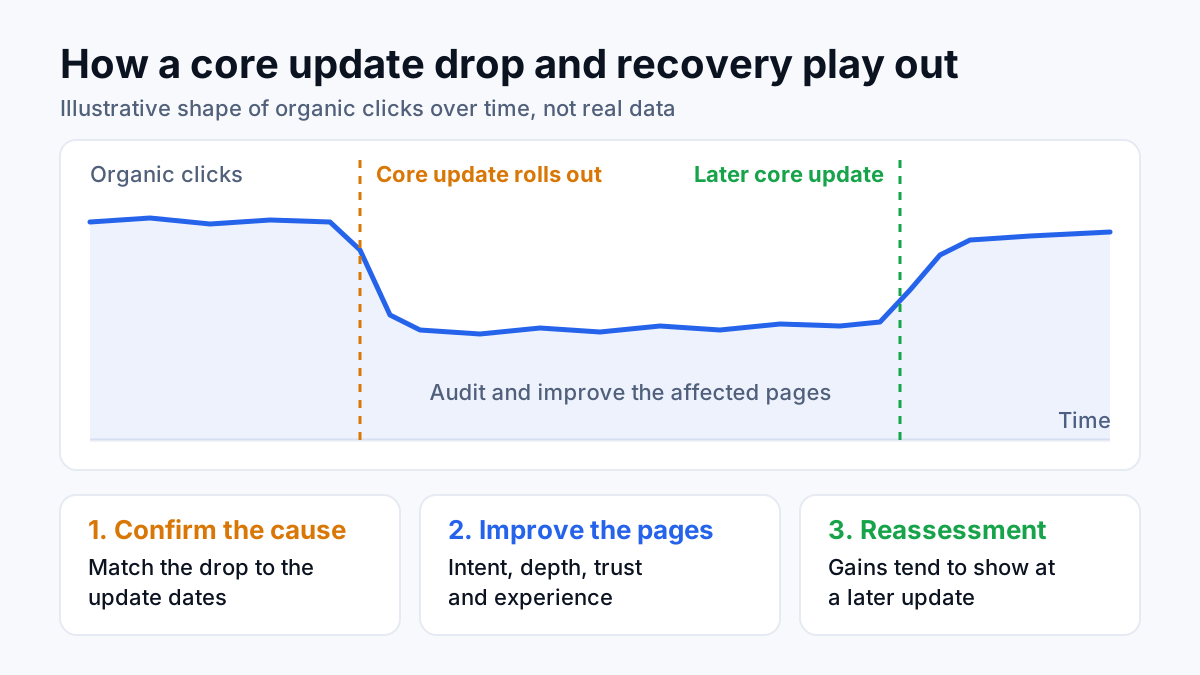
A core update is the moment Google's core systems re-weigh sites broadly. Between those moments, your improved pages get recrawled and measured again, but the big reassessment that moved you down hasn't run a second time. That's why recovery from a core update drop tends to come in steps, and the larger step often lines up with a later update rather than the week after the work is done.
Google's guidance points the same way. Some changes show within days, but it may take months for its systems to recognize that a site now produces helpful content over the long term. Content can improve between core updates too, because Google runs smaller core updates it doesn't announce. And Google is explicit that improvements are no guarantee: no page holds a fixed position, and if more deserving content exists, that content keeps ranking.
Two practical consequences follow. Judge the work by early signals, such as impressions and positions for the improved pages, tracked weekly in Search Console against the pre-drop baseline. And plan in months, not weeks; how long SEO takes explains why that's normal for organic work generally. Not every site comes back, either. The sites that never recovered in my portfolio were ones where the business model itself was too thin to fix cosmetically, with pages built only to catch clicks. That's worth knowing before paying for a recovery.
Your next step after a core update drop
Export the pages that lost the most clicks since the update, confirm the dates against the Search Status Dashboard, and run each page through the four lenses above before changing anything technical. If you'd rather have that diagnosis done for you, this is how I run traffic recovery after a Google update: the drop gets dated and evidenced, then weak pages are pruned, trust signals strengthened and structure repaired, in that order, with Search Console tracked weekly against the baseline.