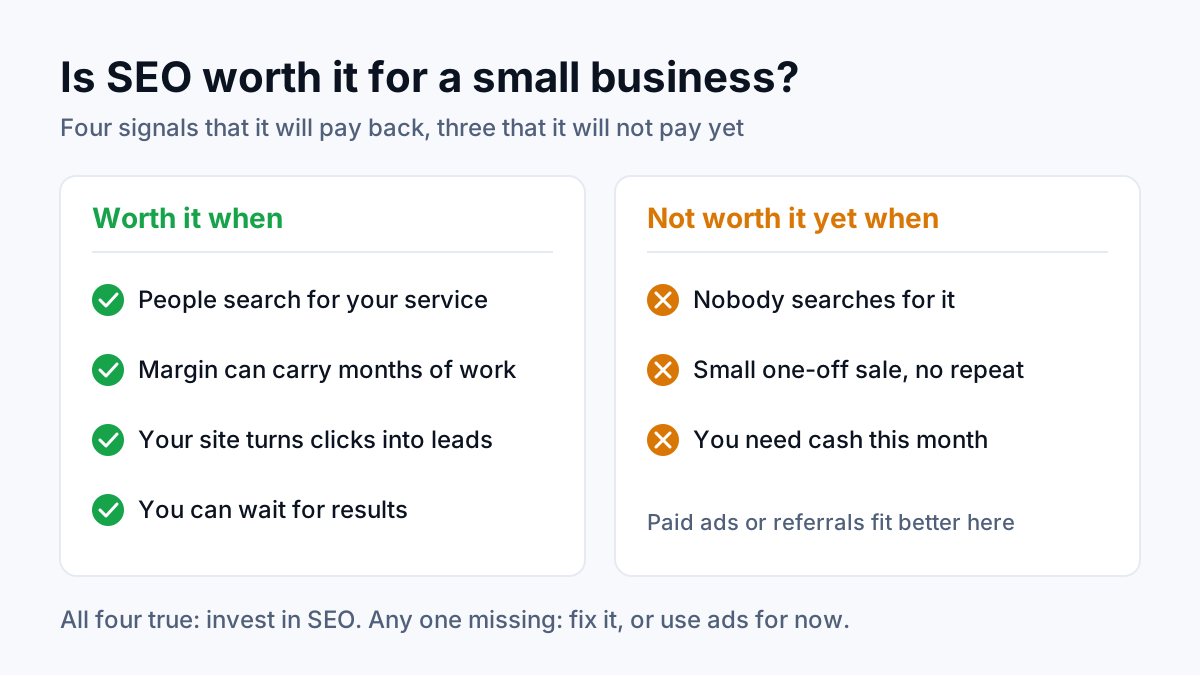
SEO is worth it for a small business when four things are true: people already search for the service, the margin on each customer can carry a few months of work before results arrive, the website turns readers into calls or orders, and the owner can wait. When nobody searches for what you sell, when each sale is small and never repeats, or when the business needs cash this month, paid ads or referrals usually fit better.
Below are the four conditions, the three cases where I tell owners to spend the money elsewhere, a short comparison with paid ads, and a yes/no checklist you can run before you sign anything.
The four conditions that make SEO pay
SEO (search engine optimization) is the work of getting a website shown in Google's unpaid results, called organic results, for the searches your customers type. It pays back through one chain: someone searches, finds you, and buys. Each condition below protects one link in that chain, and a break in any of them stops the money.
People already search for what you sell
SEO captures demand; it does not create it. If homeowners in your area type “water heater replacement” or “emergency plumber” every week, there is a queue of buyers, and the job is to put your site at the front of it. The number of people typing a phrase each month is called search volume. For a local business the question is simpler: do people near you search for this service at all?
You can check without buying a tool. Type your service and town into Google and read the autocomplete suggestions. If your site is live, the Performance report in Google Search Console (Google's own reporting tool for site owners) lists the searches you already appear for. A plumbing client of mine grew on comparison searches about water heater brands, not on its own name or “plumber near me”, and organic revenue rose 37% in one month, from $15.9K to $21.8K. The honest footnote: the earlier month's figure is worked back from the report's stated percentage change, and total account revenue dipped 4% in the same month organic grew.
Your margin can carry months before results
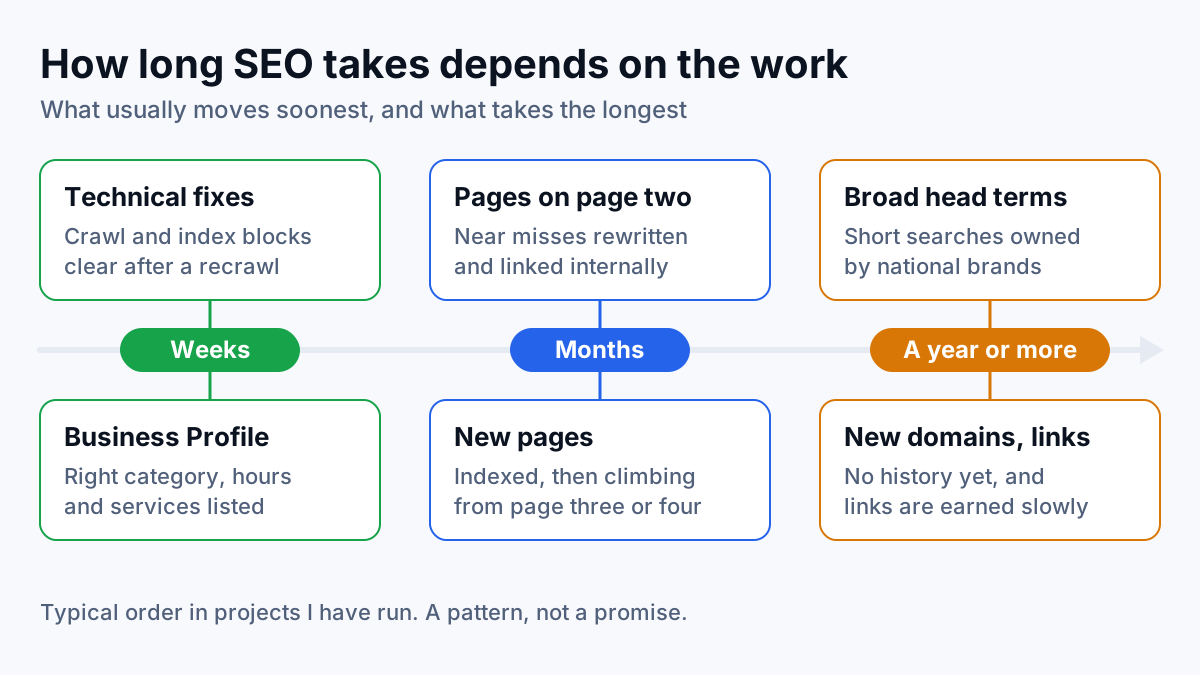
SEO is paid for up front and earns later. Google's own guide for site owners, Do you need an SEO?, long stated that in most cases an SEO needs four months to a year to put improvements in place and then see potential benefit. For that whole stretch the business pays without a matching return, so the profit on each new customer has to be large enough to make the wait worth it.
Here is the break-even math in words. Plug in your own numbers:
- Multiply the monthly SEO fee by the number of months you expect to wait. That is the amount you must be able to spend before anything comes back.
- Work out the gross profit on one new customer, counting the repeat jobs and referrals a typical customer brings. That figure is your customer lifetime value.
- Divide the monthly fee by the lifetime value. The answer is how many extra customers a month SEO has to bring in, once it works, to pay for itself.
If the answer is a handful of customers and each job is worth a lot, the math is easy. If it runs to dozens of small orders a month, SEO has a steep hill to climb. No fee to plug in yet? The guide to what SEO costs covers the pricing models and what moves them.
Your site turns readers into leads
Rankings bring readers. The page then has to turn them into a call, a form or an order, and the share who take that step is the conversion rate. SEO adds readers; it does not fix the rate, so whatever share converts today is roughly the share that converts after the rankings arrive. A page with no phone number above the fold (the part of the screen you see before scrolling), no price signal and no proof you have done the job before will waste the traffic it earns.
A garage door and gate company I worked with shows the gap. Search Console clicks went from 44 a month early in the engagement to 161 by mid-2026, which is real movement. The same status audit rated its money pages (the service pages that bring in paid work) weak, with copy duplicated across 8 or more pages and no links to them from the homepage, and the August report contradicts itself on whether its form submissions were real leads or spam. More clicks alone do not answer “is it worth it”; the pages that take the enquiry decide that.
You can wait without the business depending on it
This last condition is about cash flow, not marketing. SEO results tend to arrive slowly and then build, so the business has to keep running on its current sources of work while the site climbs. A software company I worked with started with almost no search visibility: clicks sat near zero for months, then climbed steadily from spring 2026, reaching 18.6K organic clicks across a 16-month Search Console window. The caveat is that Search Console measures visibility, not trials or revenue, and over the same period the company's total traffic across all channels fell sharply. Even so, an owner who needed a return by month three would have cancelled during the flat stretch.
When SEO is not worth it for a small business
Three situations make me tell an owner to put the money somewhere else. None of them are permanent, and each has a better channel for now.
Nobody searches for the service
If your product is new enough that buyers have no word for it yet, or your customers are a few dozen companies you could name, search demand is close to zero and SEO has nothing to capture. I have yet to see a title tag make anyone want something they had never heard of. Direct outreach, partnerships, trade events and social ads that put the product in front of people are the better spend until buyers start searching for it by name.
A small one-off sale with no repeat business
One-off sales are fine when each one is large: a roof replacement happens once and still carries plenty of marketing cost. The trouble starts when the sale is small, the customer never comes back and rarely refers anyone. Every customer then has to be won from scratch at a thin margin, and the break-even count from the math above climbs past what a small site can realistically rank for. Marketplaces, tightly targeted ads or a partner who already has the customers tend to work better here.
You need cash this month
If payroll depends on new jobs in the next few weeks, SEO is the wrong tool for that problem. Nothing I change on a page gets crawled (read by Google's bot), ranked and clicked on a deadline, and anyone who promises a ranking by a date is guessing. Paid search ads, or Google's Local Services Ads for trades, put you in front of buyers the day the campaign goes live. Run those for the cash, and start SEO when the business can afford to wait.
SEO vs PPC for a small business
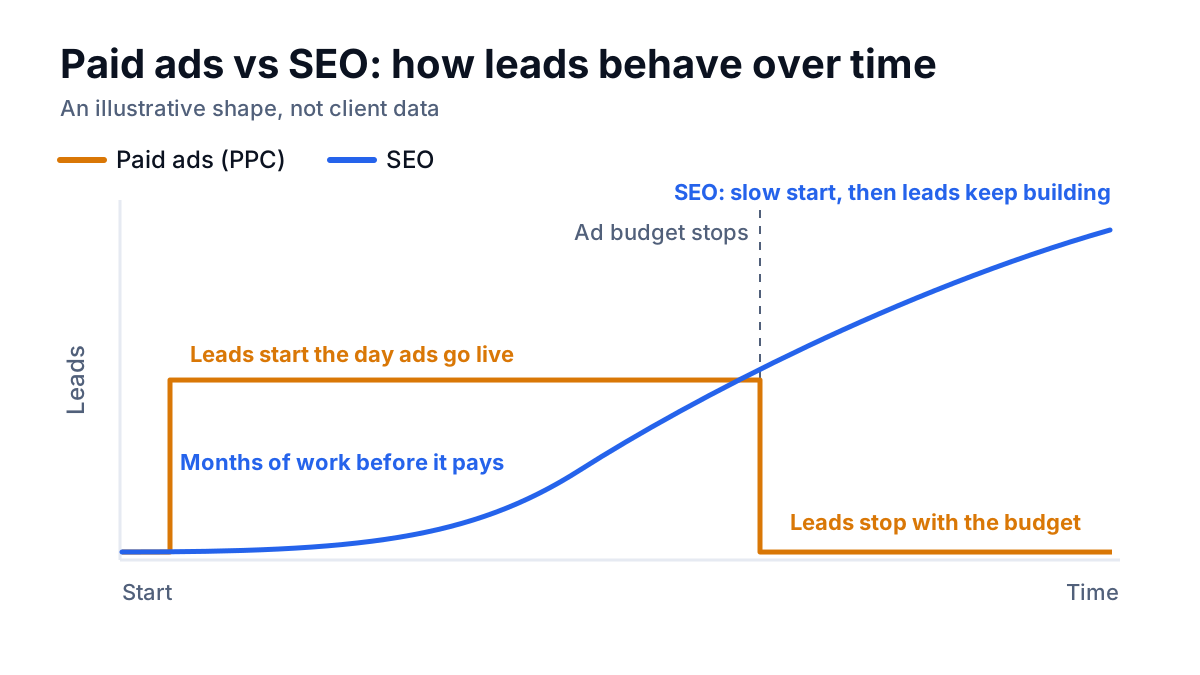
PPC stands for pay per click: ads, such as Google Ads, where you pay each time someone clicks. PPC buys attention today; SEO builds a position that does not charge you per click. Plenty of small businesses run both, with ads covering the months SEO needs to start.
| Factor | PPC (paid ads) | SEO |
|---|---|---|
| How you pay | Per click or per lead, for as long as the ads run | A monthly or project fee for the work, with no charge per click |
| When leads start | The day the campaign goes live | Usually after several months; Google's guide long cited four months to a year |
| When you stop paying | Leads stop the same day | Rankings tend to hold for a while, then fade without upkeep |
| What it teaches you | Which searches and offers convert, quickly | Which pages earn trust and leads over time |
| Suits | Urgent cash, launches, testing an offer | Steady demand, owners who can wait, customers who come back |
The benefit of SEO shows up in cost per lead over time. The fee stays roughly flat while the number of leads can grow, so each lead tends to get cheaper as the site climbs. With ads you keep paying the auction price for every click, no matter how long you have advertised. To test that on your own figures, the guide on how to measure SEO ROI counts booked jobs and orders rather than rankings, and how long SEO takes sets out what the months in between look like.
A yes/no checklist before you pay for SEO
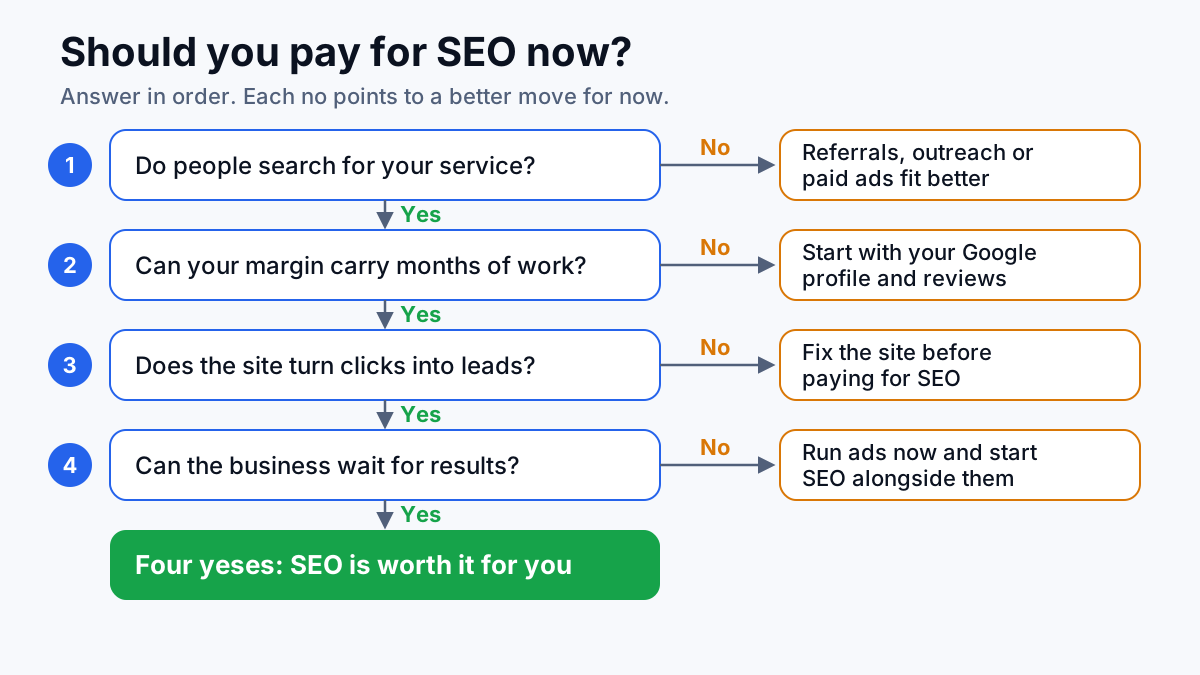
These are the four questions I ask before I quote. Answer them in order, because each one assumes the one before it is a yes.
- Do people search for your service where you sell it? Yes if autocomplete, Search Console or a keyword tool shows real searches. No if the only people who know the term are your competitors.
- Can your margin carry the wait? Yes if the break-even count from the math above is a number of customers you win in a normal month. No if it is far beyond that.
- Does your site turn clicks into leads today? Yes if the people who land on it now call, book or buy at a rate you are happy with. No if you cannot tell, or if paid clicks to the same pages rarely become leads.
- Can the business wait for results? Yes if current work covers the bills for the months ahead. No if the next few weeks of sales decide whether you make payroll.
Four yeses means SEO is worth it, and the next question is where to start, which the guide to SEO for small business answers in order of payback. A no on question one means spend elsewhere. A no on question three means fix the site before paying for traffic. A no on question two or four means start with the low-cost local basics and run the checklist again when your margin or cash position changes.
What to do next
Run the four questions with your own numbers this week. The search check takes ten minutes, and the break-even math takes a calculator and your last few months of sales. If every answer is yes and you want the search demand and the site checked before you commit to a retainer, that review is what an independent SEO consultant should do before quoting. If any answer is no, the checklist has done its job: you know where the money should go instead.