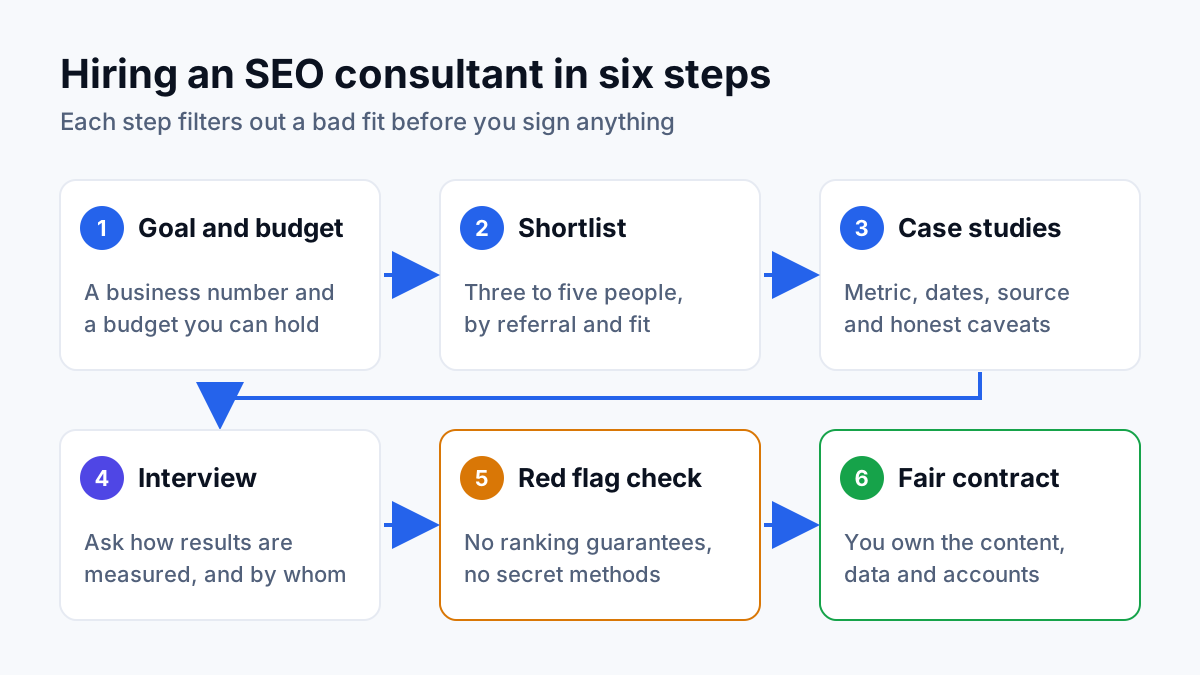
Hiring an SEO consultant well comes down to four moves: set the business goal and budget before you talk to anyone, check case studies for real numbers with honest caveats, ask exactly how results will be measured, and refuse anyone who guarantees rankings. Get those right and most bad hires filter themselves out.
This guide takes each step in order: building a shortlist, reading a case study, the interview questions worth asking, the red flags Google itself warns about, how a consultant compares with an agency or an in-house hire, and what a fair contract covers.
Set the goal and budget before you talk to anyone
Most wasted retainers I get asked to review started with a brief that said "we need SEO" and nothing else. A consultant can justify almost any activity against a brief like that, which is exactly the problem: three months later you have no way to judge the work.
Write the goal as a business number
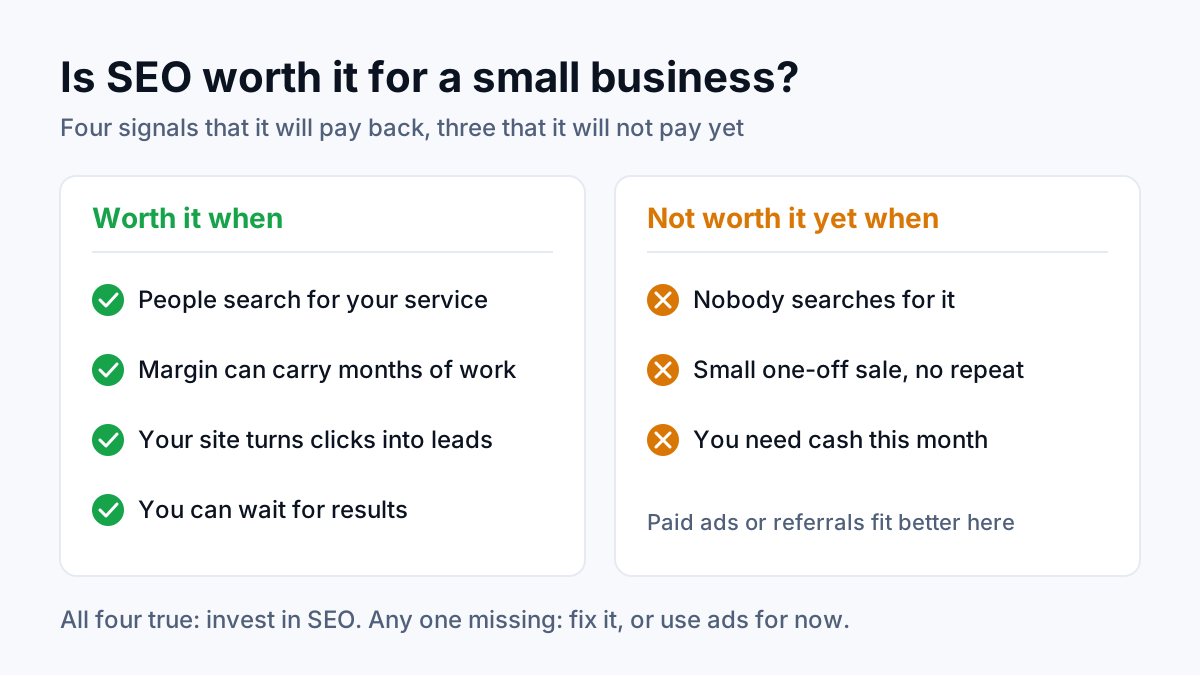
Rankings and traffic are means, not ends. Write the goal as the outcome you would pay for: more booked jobs from Google in two service areas, more demo requests from comparison searches, more orders from one product category. Then note where that number lives today (your CRM, call tracking, GA4 conversions), because a consultant who cannot see it cannot move it on purpose. That same number is what you will use later to work out SEO ROI.
Set a budget you can hold long enough
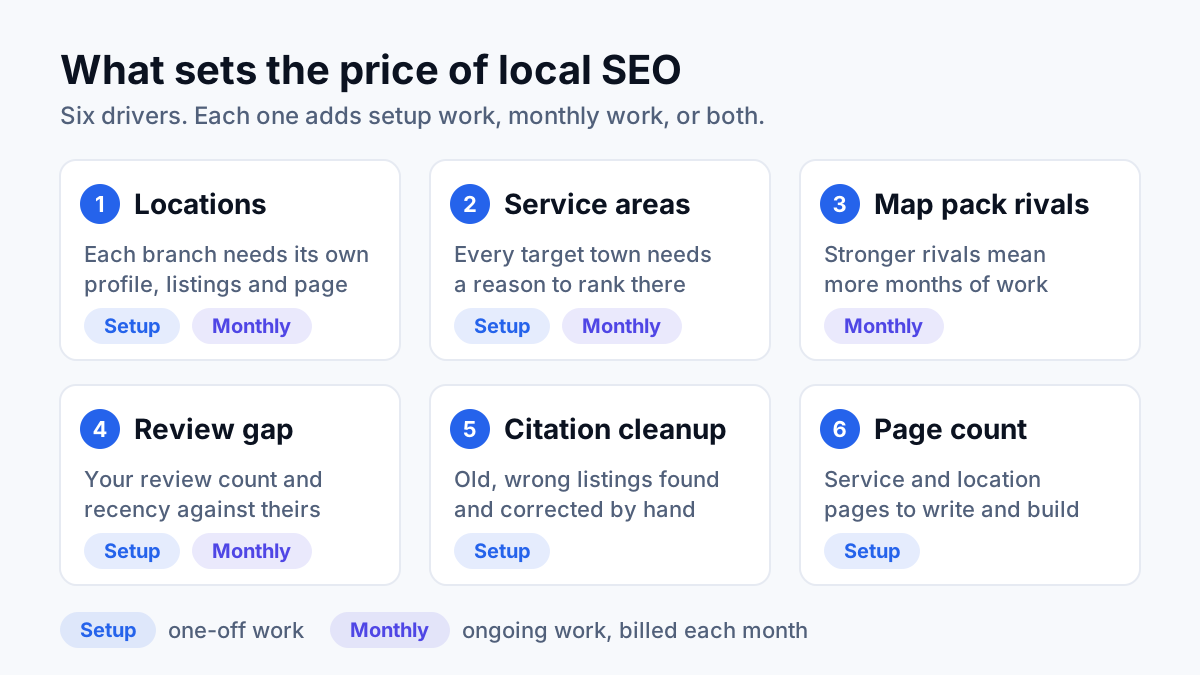
SEO is priced on scope, not from a menu. The drivers are the size of the site, how many locations or markets you target, how hard the competition is, and whether content writing, link earning and development work are included in the fee or billed on top. I break those drivers down in what SEO costs.
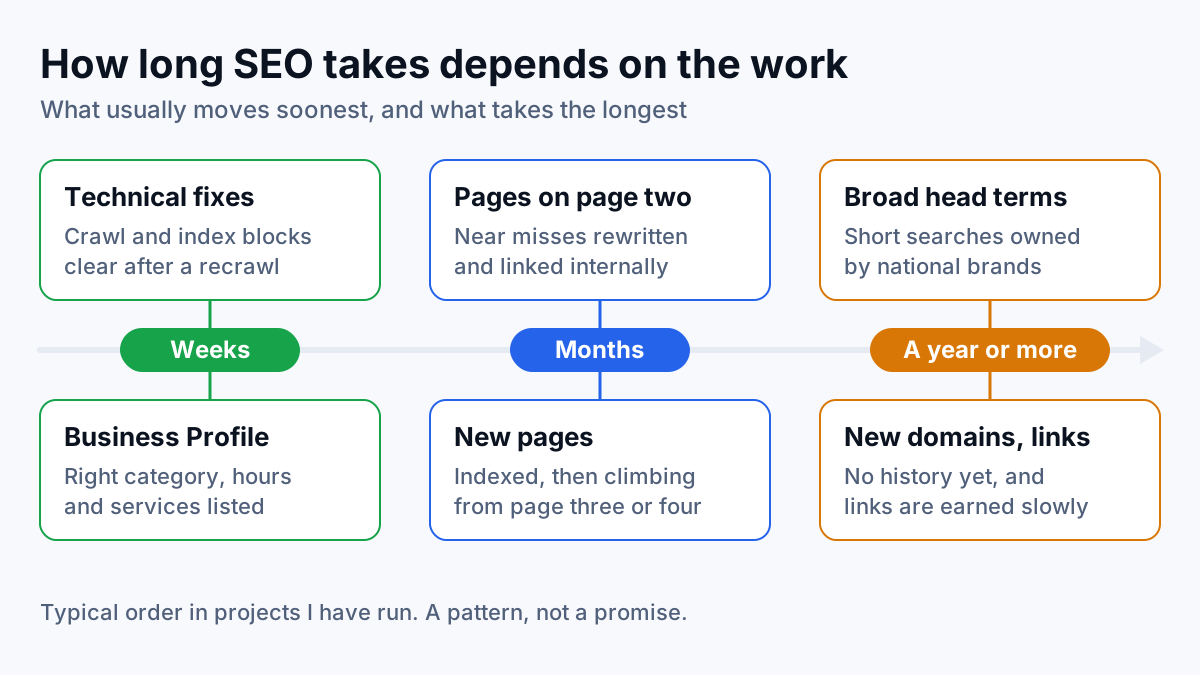
The other half of the budget is time. Money that runs out before the work has had a chance to land buys an audit and a plan, not results, so size it against how long SEO takes for a site in your position. Timing matters too: Google's own hiring guidance says a site redesign or a new site launch is a good moment to bring someone in, and the earlier the better.
Build a shortlist of three to five
Three to five candidates is enough to compare answers without turning hiring into a second job. Good sources are referrals from businesses in your own trade, people who publish their process and results openly, and specialists who already write about your kind of business. The weakest source is the cold email promising page one, which Google's guidance warns about by name.
Filter the list on five points before you book a single call:
- Market fit. Have they worked on sites like yours: a local service business, a SaaS product, an online store? The work differs more than most owners expect.
- Who does the work. The person on the sales call and the person working on your site are often different people. Ask by name.
- Technical range. Can they read your CMS, templates and analytics setup, or will every fix need a developer and a ticket?
- Communication. How often will you hear from them, and in what form? A monthly PDF with no explanation is not communication.
- Time zone and response times. Remote work runs smoothly when overlap hours and reply times are agreed up front.
What to check in an SEO consultant's case studies
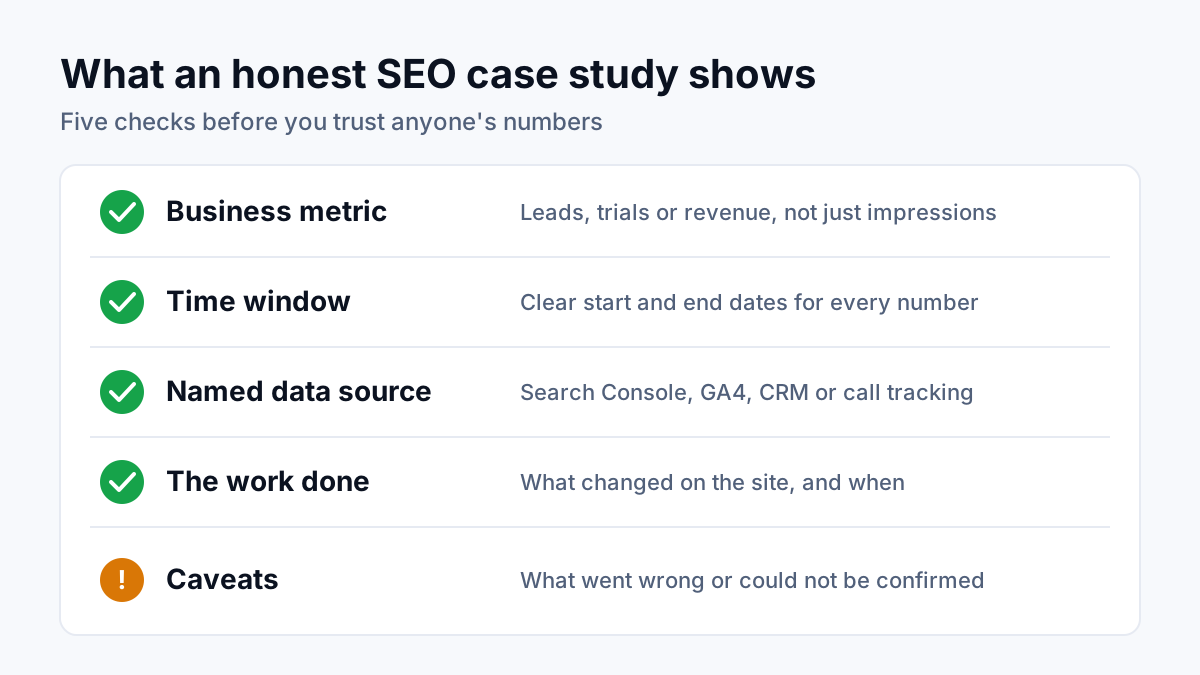
A case study is the closest thing you get to a test drive, so read it like an auditor. Five things separate a real one from a brochure:
- The metric matches a business goal. Leads, booked jobs, trials or revenue from organic search. Impressions and "keywords ranked" on their own are vanity numbers.
- There is a time window. A percentage with no start and end date tells you nothing.
- The data source is named. Search Console, GA4, a CRM or call tracking. Third-party tool estimates are guesses about your traffic, not measurements of it.
- The work is described. What was actually done: technical fixes, new pages, rewritten pages, links earned. Results with no work attached could be seasonality.
- The caveats are there. Real projects have a month that went wrong, a metric that fell or a tracking gap. A case study with no bad news has been edited for sales.
What an honest case study looks like
Here is one from my own work, written the way I publish it. On a plumbing and water heater site in California, organic revenue rose 37% in one month, from $15.9K to $21.8K, and technical site health went from 83% to 95%. The caveat travels with it: the July figure is worked back from the report's stated percentage change, not pulled independently, total account revenue dipped 4% the same month organic grew, and the short brand-name search lost 61% of its clicks.
That caveat is the part to look for in anyone's case studies. It shows the person reads their own data critically, which is the same habit they will bring to your reports. You can see how I present the rest on my case studies page.
Questions to ask an SEO consultant before you hire
Google publishes a short list of questions for anyone hiring an SEO on its Do you need an SEO? page: examples of past work, whether they follow Google's guidelines, what results to expect and in what timeframe, experience in your industry and location, and how they will tell you about changes. The table below is the longer version I would use, with what a good answer sounds like.
| Question to ask | What a good answer sounds like |
|---|---|
| What would you work on in the opening 90 days, and why in that order? | A ranked list tied to your goal, with the reasoning. Not "a full audit" and nothing after it. |
| How will you measure success? | Named metrics from Search Console, GA4 or your CRM, reported against the goal you set, not rankings alone. |
| What results do you expect, and by when? | A range with its assumptions and the things that could slow it down. No promised position or date. |
| Do you follow Google's spam policies? | Yes, with a clear view of which tactics they refuse and why. |
| Can you show me work on a site like mine? | A relevant example with dates, data source and caveats, or an honest "not yet, here is the closest one". |
| Who will actually do the work? | Names and roles. If any work is subcontracted, they say so without being asked twice. |
| How do you earn links? | Specific methods such as digital PR, partnerships and content people cite. No packages of links sold by the hundred. |
| Will you tell me every change you make to the site? | Yes, in a change log you can read, with the reason for each change. |
| Who owns the content, accounts and data if we part ways? | You do. Analytics, Search Console and your Business Profile stay in your name, and the content is yours. |
| What do you need from my team? | A realistic list: developer hours, approvals, access and time from whoever knows the product. SEO stalls when this is skipped. |
Listen to how they answer as much as to what they say. A consultant who asks about your margins, your most profitable customers and your competitors before pitching tactics is already doing the job. Google's page makes the same point: a good SEO wants to understand your business before changing your site.
Red flags that should end the conversation
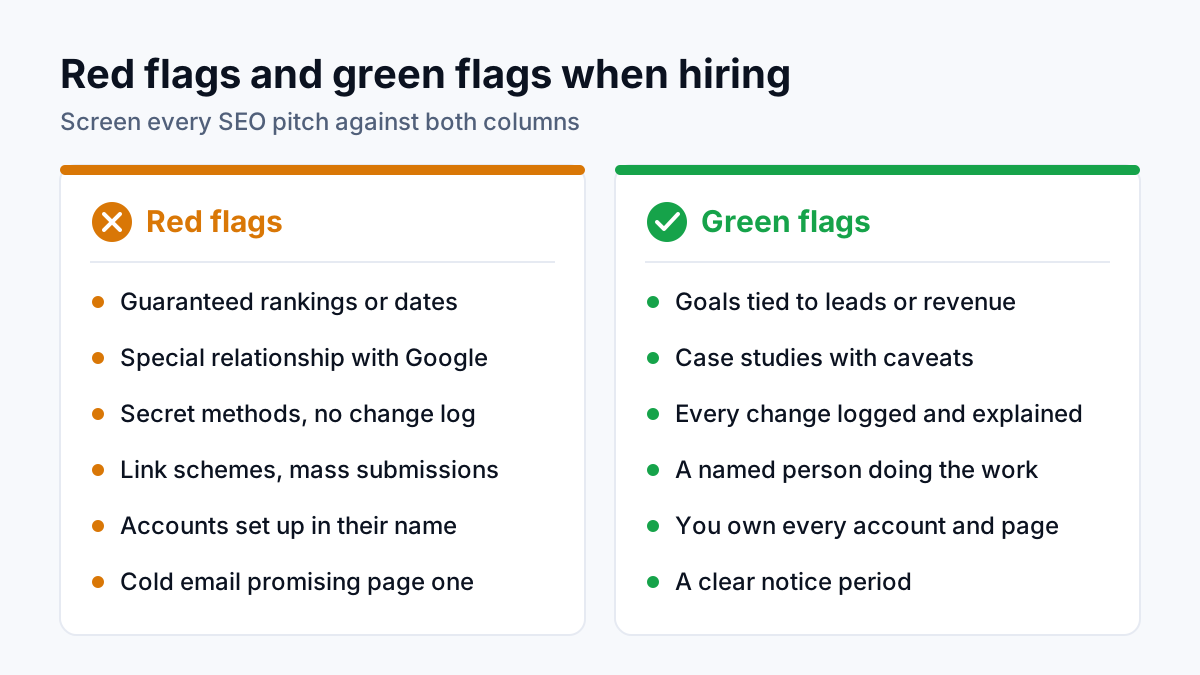
Google's hiring page is blunt about the warning signs, and they match what I find when I clean up after a bad engagement. Paraphrased, it tells you to be wary of anyone who:
- Promises to guarantee a top ranking on Google. Nobody outside Google controls the results, so nobody can promise them.
- Claims a special relationship with Google or sells a "priority submit". If someone really had that relationship, they would probably be working at Google.
- Is secretive about methods or will not clearly explain what they plan to do.
- Talks about link popularity schemes or submitting your site to thousands of search engines.
- Pitches you through an unsolicited email.
- Uses techniques that break Google's spam policies.
The page closes on the point most owners miss, and it is worth reading slowly:
"Ultimately, you are responsible for the actions of any companies you hire." Google Search Central, Do you need an SEO?
Red flags I would add from audits
- Reports that show only rankings. Positions for hand-picked keywords say nothing about leads or revenue.
- Accounts set up in their name. If the consultant owns your Analytics, Search Console or Business Profile, leaving them gets expensive.
- Pages published at scale with no review. Hundreds of near-identical city or keyword pages are doorway pages by another name, and Google's spam policies treat them that way.
- Long lock-in with no exit terms. A consultant confident in the work does not need to trap you in it.
- Owner access requested on day one. An audit needs read access. Google's guide says the same about Search Console: an initial review does not need write access.
SEO consultant vs agency vs in-house
Who does the work, where the knowledge ends up and how much managing you take on: that is how the three options really differ. No single option fits every business, so match it to your site's size, your budget and whether you have people to carry the work.
| Factor | SEO consultant | SEO agency | In-house SEO |
|---|---|---|---|
| Who does the work | The specialist you hired, directly | A team, where the seller and the doer are often different people | Your employee, working only on your site |
| How it is priced | Monthly retainer, fixed project or hourly | Monthly retainer, often in tiered packages | Salary, benefits, tools and training |
| Speed to start | Fast, usually within days | Fast once onboarding is done | Slow, since hiring and ramp-up take months |
| Depth and range | Deep in one specialism, brings in partners for the rest | Many services under one roof | Limited to one person's skills |
| Knowledge of your business | High, one person holds the full picture | Varies with account manager turnover | High, they work inside the business daily |
| Management load on you | Low to moderate | Low, but you manage the relationship | High: goals, reviews and covering gaps |
| Good fit when | You want senior strategy and hands-on work without agency overhead | You need many channels handled together at volume | SEO drives revenue and there is a full-time role's worth of work |
A middle path works well for many owners: a consultant sets the strategy and does the specialist work (the audit, technical fixes, site architecture), while someone in-house writes and publishes. If you are still deciding whether outside help makes sense at all, what an SEO consultant does covers the role in detail.
What a fair SEO contract covers
Contracts are where the promises from the interview turn into things you can check. A fair one covers eight points:
- Scope and deliverables. What gets done each month, in plain terms, and what counts as extra.
- Reporting. How often, which metrics and in what format, tied to the goal you set.
- Ownership. Content, data and accounts belong to you, during the engagement and after it.
- Access. Each tool shared through user permissions, never through your personal login.
- Term and notice. A reasonable notice period and no automatic renewal into a long term.
- Exit and handover. What you receive when it ends: the change log, files and reports, with their access removed.
- No ranking guarantee. A contract that promises positions is the red flag, now in writing.
- Fees and triggers. Payment terms, and exactly what would change the price.
I go through the clauses worth signing, and the ones to strike out, in the guide to SEO contract terms.
Your next step: a one-page hiring brief
Before you contact anyone, write one page: the business goal and where it is measured, the budget and how long you can hold it, your markets, what your team can do in-house, and any deadline such as a redesign. Send the same page to your shortlist, ask the questions above, and compare the answers side by side. The right hire answers in terms of your goal, not their package.
If you want one set of answers to compare against, here is how I work as an independent SEO consultant, from the opening audit to monthly reporting.