An SEO consultant is an independent specialist who audits a website, sets its search strategy and, in most engagements, does the work to win traffic from Google's organic results and from AI answers. In practice that means one person who finds out why the right customers aren't reaching you, decides what to change and in what order, then makes the changes or directs the people who do.
This guide covers what the job includes, the specialties consultants split into, how a consultant differs from an agency, and the signs a business is ready to hire one. I work as an SEO consultant myself, so I'll say where the job stops as well as where it starts.
What is an SEO consultant?
SEO stands for search engine optimization: the work of making your website the result Google chooses to show when someone searches for what you sell. Today that includes AI answers too, such as Google's AI Overviews and ChatGPT, which pull from the same pages and quote the ones that answer clearly.
A consultant is the person you hire from outside the business to own that work. The title covers a range. Some consultants only advise and hand over a plan; others are hands-on and change the site themselves. What they share is expertise sold directly by the person who holds it, and one name accountable for the advice.
It helps to set the role against the two other ways businesses buy SEO. An in-house SEO is an employee who works on one site full time. An agency is a company with a team, usually with an account manager as your contact. A consultant brings experience from many sites without the salary or the layers. In my case that's 200+ projects over 5+ years, across 150+ live business sites in 9 countries, and the value of that is pattern recognition: a problem on one plumbing site has usually turned up on another.
What does an SEO consultant do?
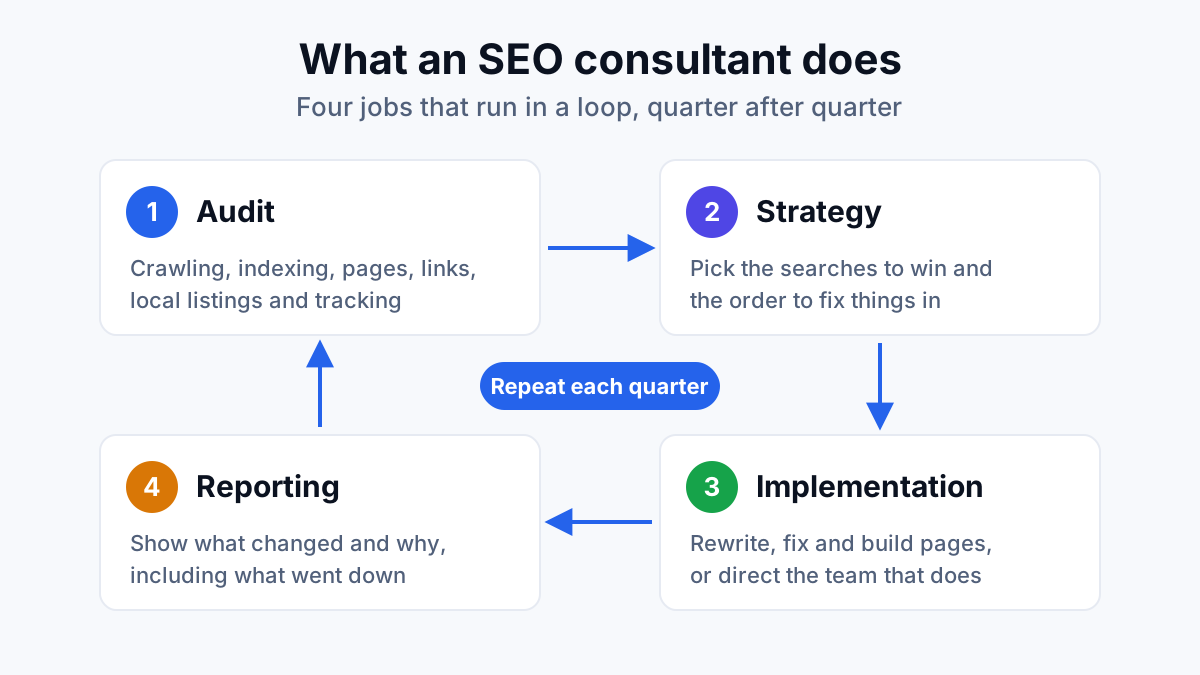
Day to day, the work falls into four jobs that run in a loop: audit, strategy, implementation and reporting. A one-off project might cover only the audit and the plan. A retainer (a fixed monthly fee for ongoing work) runs the whole loop and repeats it each quarter, because rankings, competitors and Google itself keep moving.
Google's own page on hiring an SEO lists much the same scope: reviews of site content and structure, technical advice on hosting and redirects, keyword research, content development and, now, optimizing for generative AI.
The audit
An SEO audit is a structured check of everything that decides whether a site ranks and turns searchers into inquiries. I start with the technical side: can Google's crawler (the program that reads your pages) reach every page that matters, and are those pages in Google's index, the database it pulls results from? Then come the pages themselves, the content against what people search, the links pointing at the site and, for a local business, the Google Business Profile.
| Area | What gets checked | A typical finding |
|---|---|---|
| Technical | Crawling, indexing, site speed, redirects, canonicals | Service pages left out of the index, or two URLs competing for one page |
| On-page | Titles, headings, page copy, internal links | The same copy repeated across every city or service page |
| Content | Which searches have a page, and which don't | Buyers search for a service the site never names |
| Off-page | Links from other sites, brand mentions, reviews | Few links from sites in the same industry or area |
| Local | Google Business Profile, NAP, reviews | A different phone number on half the directory listings |
| Tracking | Search Console, GA4, conversion tracking | Form fills not tracked, so nobody knows which pages bring leads |
Two terms from that table: a canonical is a tag that tells Google which of several similar URLs is the original, and NAP is your business name, address and phone number, which should match everywhere you're listed. If the technical rows read like another language, the guide to technical SEO explains them in plain words.
The strategy
Where the audit lists problems, the strategy decides which of them matter, what should be built that doesn't exist yet, and in what order. That means keyword research (finding the words buyers actually type and how often they type them), mapping each search to one page, and sizing the gap between your site and the ones ranking now.
The output I aim for is a plan a business owner can read: quarter by quarter, with every task given an owner, a dependency and a time estimate. A plan that only says "create quality content" is a wish, not a strategy.
The implementation
Here is where consultants differ most. Some hand over the plan and leave your developer and writers to carry it out. Others, me included, do the work: rewriting pages, fixing technical faults, building location pages, cleaning up redirects, earning links. Most real engagements are a mix, because some changes need your developer's access or your team's knowledge of the product.
Ask which kind you're hiring before you sign. A plan nobody has time to carry out is an expensive thing to keep in a shared drive.
The reporting
Reporting closes the loop and feeds the next audit. A useful monthly report says what work was done, what changed in Google Search Console (Google's own record of how your site shows up in search) and in GA4 (Google Analytics 4), and why. It names the pages that went down as well as the ones that went up. A report full of charts with no sentences is a warning sign, not a deliverable.
Honest reporting sometimes means questioning good news. On a plumbing and HVAC account in California, one of the months with complete Search Console and GA4 data showed new users up 47% and organic traffic roughly tripled. A tripling in one month is large enough that I'd check it wasn't a tracking or attribution change before calling it organic growth. The two most recent reports on that account cover keyword positions and technical health only, so the current trend is unconfirmed, and the report says so.
The main types of SEO consultant
Most consultants lean toward one or two specialties, because the work on a plumbing company's site and the work on a store with thousands of products have little in common. Four come up again and again.
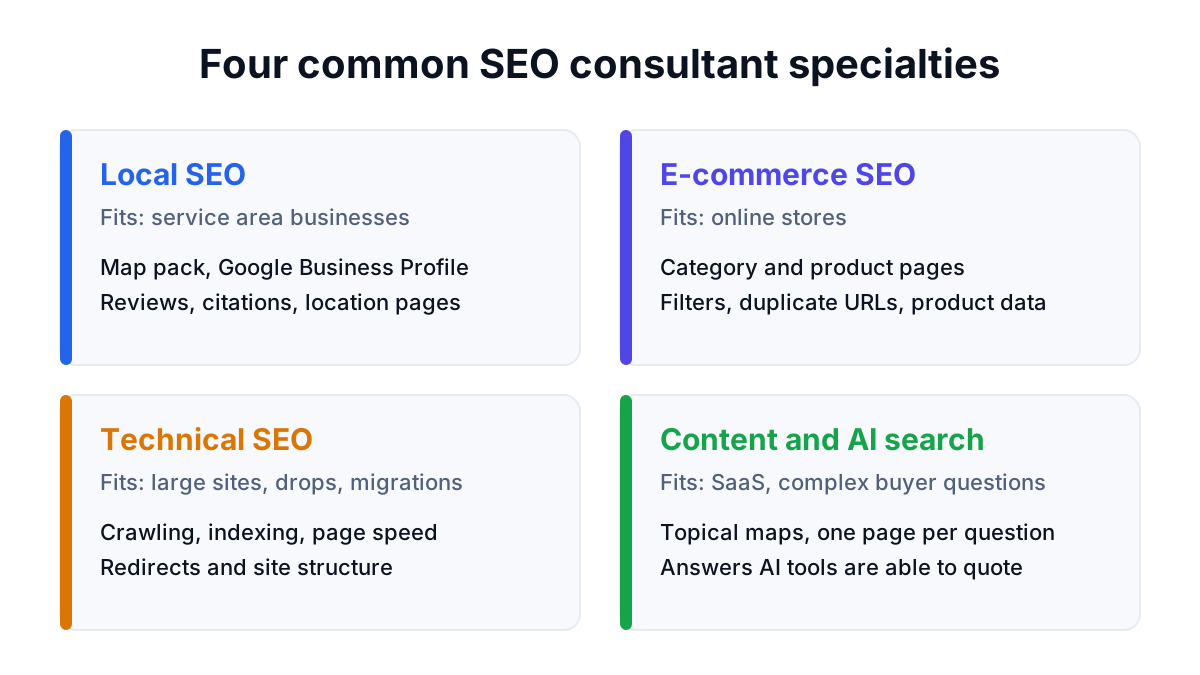
| Specialty | Who it fits | What the work looks like |
|---|---|---|
| Local SEO | Service businesses with a service area: plumbers, HVAC, clinics, law firms | Google Business Profile, the map pack, reviews, citations and location pages |
| E-commerce SEO | Online stores | Category and product pages, filters that spawn duplicate URLs, clean product data |
| Technical SEO | Large sites, sites with a traffic drop, sites being migrated | Crawling, indexing, page speed, redirects and site structure |
| Content and AI search | SaaS companies and any business whose buyers ask complex questions | Topical maps, one page per buyer question, content AI tools are able to quote |
A few of those terms need unpacking. The map pack is the block of three businesses on a map that Google shows for local searches, and for a plumber it often decides the call before anyone scrolls. Citations are listings of your business on directories and review sites. A topical map is a planned set of pages that covers every question in a subject, so Google and AI tools see the site as a full source rather than a single page.
Content and AI search is the newest of the four. AI tools break a question into smaller questions and quote the pages that answer each one directly. A consultant working on this maps every question a buyer asks, then builds or rewrites pages so each one answers clearly, with facts a machine can pull out.
A generalist covers the basics of all four. For most small businesses that's enough; for a large store or a site in the middle of a migration, hire for the specialty.
SEO consultant vs SEO agency
The short version: with a consultant you hire a person, and with an agency you hire a team. A consultant's advice comes straight from the person doing or directing the work, with no account manager in between, and the fee pays for one expert's time rather than a team's overhead. An agency has more hands, which helps when the plan calls for a high volume of content or link building every month, and the work doesn't pause when one person is on vacation. How each one charges is covered in the guide to SEO pricing.
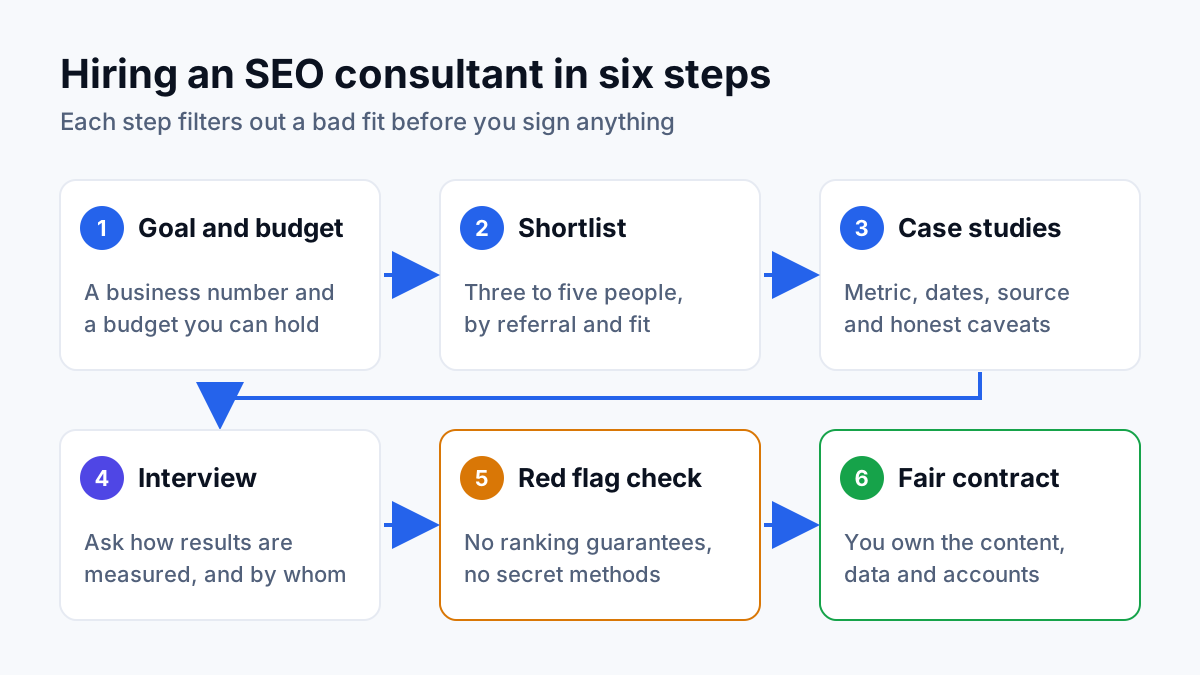
Neither is right for everyone. The choice turns on how much work there is, how much of it needs senior judgment, and who on your side will manage it. The full comparison, with the questions to ask each, is in the guide to hiring an SEO consultant.
When does a business need an SEO consultant?
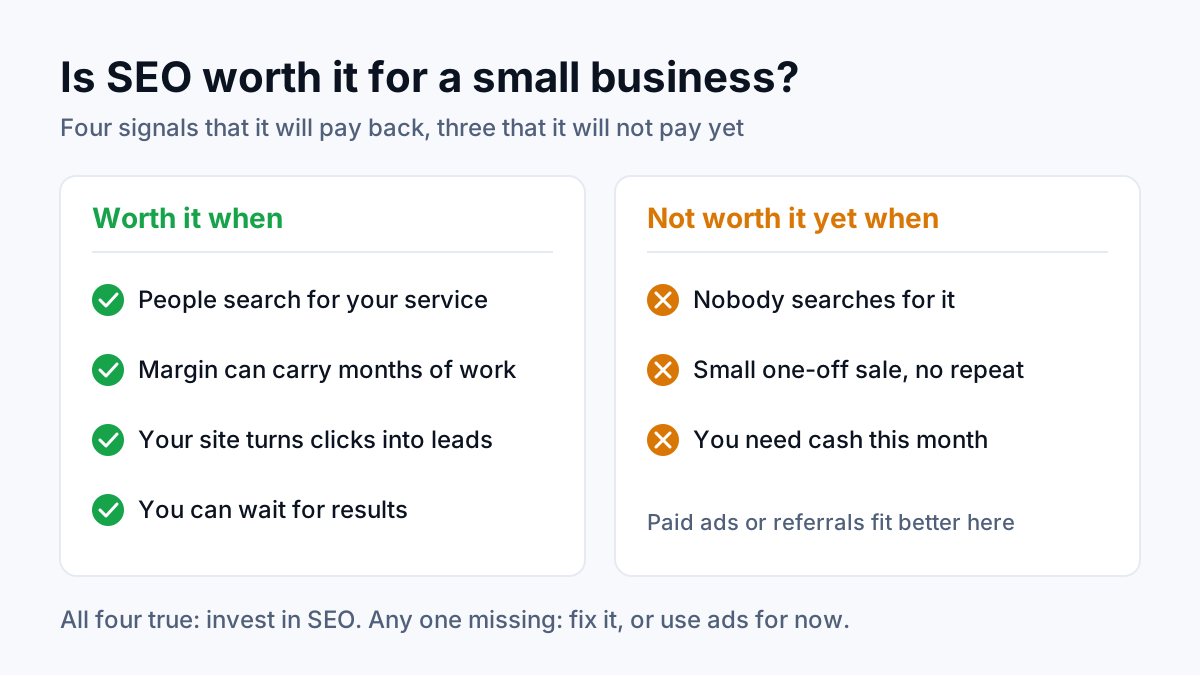
Not every business does, at least not yet. These are the situations where hiring one makes sense, followed by the ones where it's too early.
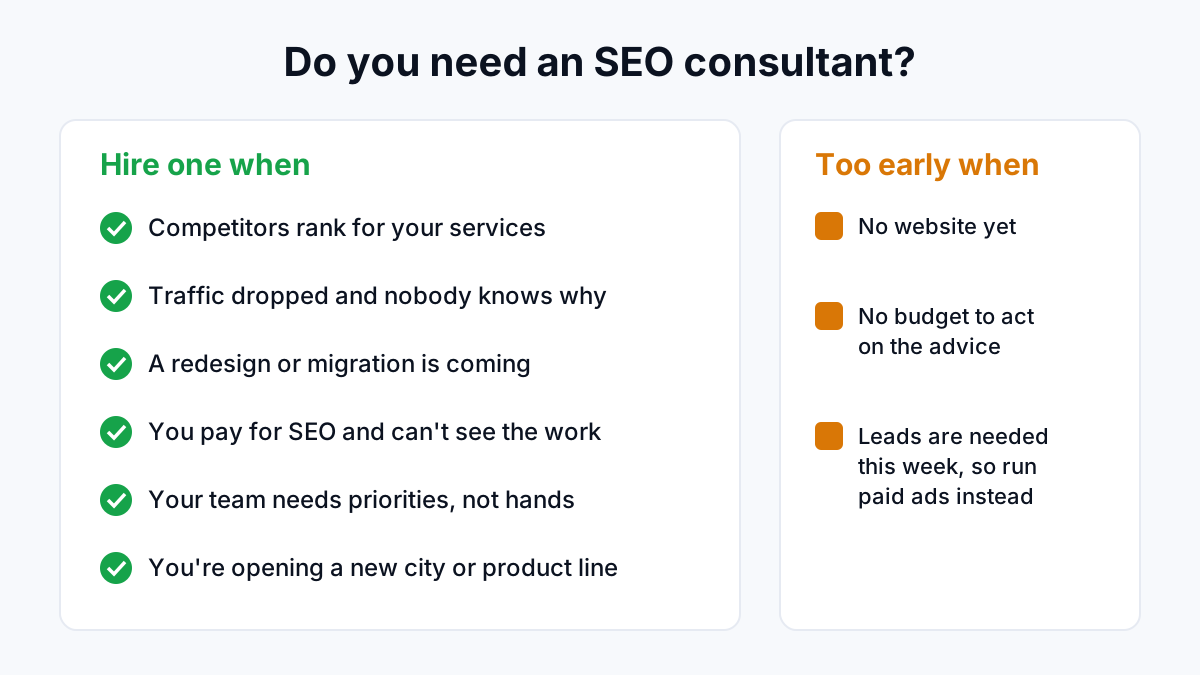
- Search should bring customers, and doesn't. Competitors show up for the services you offer and you don't, or the only search you rank for is your own business name.
- Traffic dropped and nobody knows why. A sudden fall after a Google update, a redesign or a hosting change needs a diagnosis before anyone starts editing pages. The guide to a website traffic drop walks through the checks.
- A redesign or migration is coming. Moving domains or rebuilding a site without a redirect plan (the rules that send old URLs to their new addresses) is a common way to lose rankings you already hold.
- You pay for SEO and can't tell what was done. A consultant can audit the current provider's work alongside the site, then tell you plainly what is worth keeping.
- Your team needs direction, not more hands. An in-house marketer or developer can do the work well if someone sets the priorities and checks the result.
- You're opening a new city or product line. New service areas and new ranges need their pages planned before they're built, not after they fail to rank.
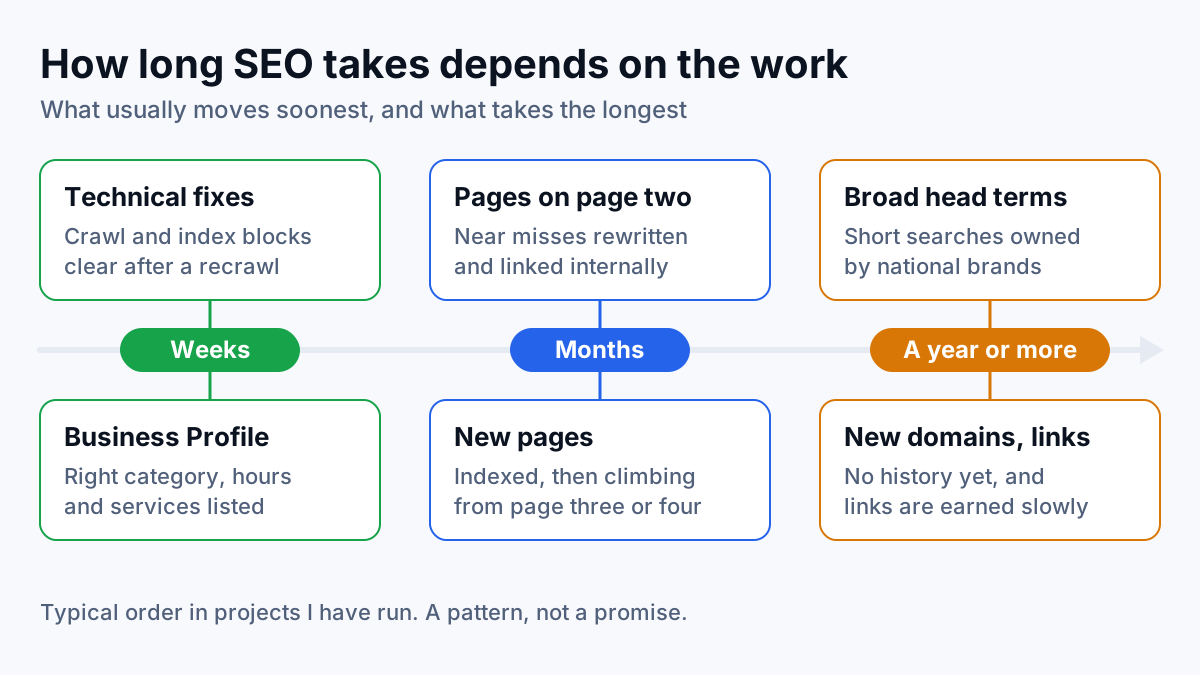
It's too early if there's no website yet, no budget to act on the advice, or a need for leads this week. SEO builds over months, and how long it takes depends on the site's starting point and the competition, so paid ads are the better fit for next week's leads.
What an SEO consultant can't promise
Google decides rankings, and nobody outside Google controls them. A consultant who guarantees a position, a number of leads or a date is either guessing or planning to report on searches nobody makes. Google's hiring page tells site owners to "beware of SEOs that claim to guarantee rankings", and it's a fair filter to apply on any sales call.
What a consultant can promise is a clear plan, the work done as agreed, and reporting that shows what changed, including the things that didn't work. Those three are what to hold them to.
Your next step
Before you hire anyone, open Search Console and note which searches already bring clicks and which pages earn them. Then write down the three services or products you most want to be found for, and search them yourself on a phone, from where your customers are. The gap between those two lists is the brief for any consultant you speak to. If you'd rather hand the audit, the plan and the work to one person, see how I work as an independent SEO consultant.