Local SEO cost depends on how many locations and service areas you cover, how strong the businesses already in your map pack are, and how much cleanup your listings and pages need before new work pays off. Whatever the price, the package should cover your Google Business Profile, reviews, citations, local pages and call tracking.
Below I break down each cost driver, list what a local SEO package should include line by line, separate one-off setup from monthly work, and show what a too-cheap package tends to leave out. You won't find price ranges here: a range quoted without your market in it is a guess.
How local SEO is usually priced
Local SEO is sold in three common shapes. A setup project is a one-off fee for the audit, the profile work, the listing cleanup and the page build. A monthly retainer pays for the work that has to keep happening: review requests, profile posts, links, tracking and reporting. A per-location price scales either of those by the number of branches or areas you want to rank in. Many quotes combine all three, a setup fee followed by a monthly fee per location.
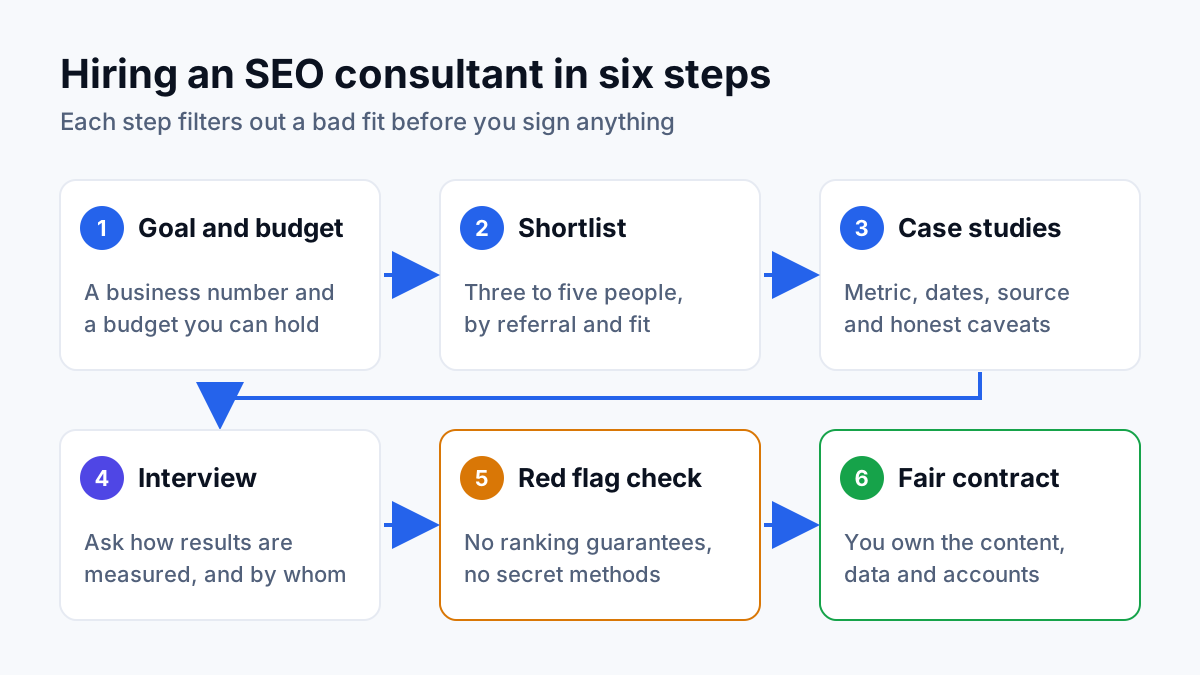
Hourly billing shows up for one-off audits, and pay-for-rankings deals appear now and then (they tend to reward the provider for ranking terms nobody calls from). The general pricing models and their trade-offs are in my post on how much SEO costs. Local work follows the same logic with one difference: the unit of work is a place, not a page.
What drives local SEO cost
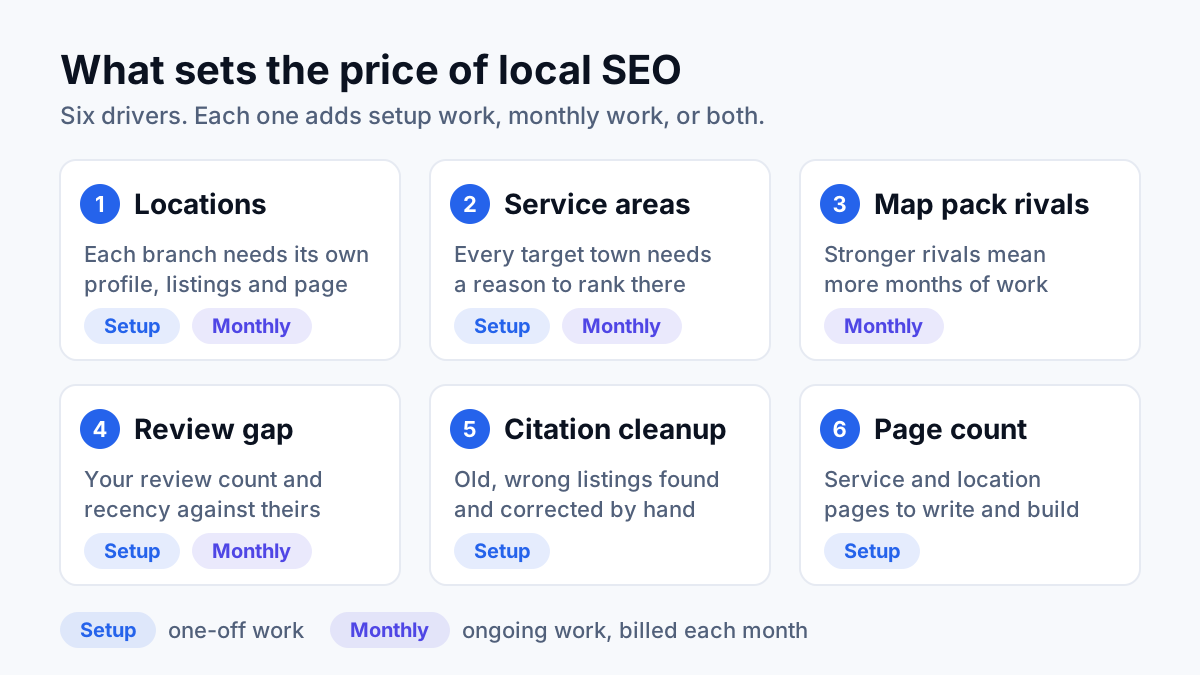
Six things decide how much work a local account needs. Two businesses in the same trade may get very different quotes because of them, so it pays to know which ones apply to you before you read a proposal.
Number of locations
Each physical location has its own Google Business Profile, its own citations, its own reviews and its own location page. That is close to a separate local SEO job per branch, so the price usually scales per location. Added branches tend to cost less than the original one, because the templates, research and site structure get reused, but each still needs its own profile work, listings and review flow.
Service areas
A service-area business (a plumber or pest control company that drives to the customer) may hide its address on Google and list the towns it covers instead. Every town you want to win needs a reason to rank there: service areas set on the profile, reviews from customers in that town, and a page that says something real about the area. Ten target towns mean more work than two, even with one office.
Competitors in the map pack
The map pack is the block of three businesses Google shows on a map above the normal results. How hard it is to get into depends on who is already there. Google's own help page states the rule in one line:
“Local results are mainly based on relevance, distance, and popularity.” Google Business Profile Help, Tips to improve your local ranking on Google
Distance you can't change, and relevance is mostly settled by setup work. Popularity is where the ongoing budget goes: reviews, links, mentions and how well known the business is in its area. If the three businesses holding your map pack have years of reviews and local press behind them, closing the gap takes more months of work than it would in a town where the map pack is thin.
Review volume
Reviews feed that popularity signal, and the same Google help page says more reviews and positive ratings help local ranking. The cost here is the size of the gap. A business with a handful of old reviews against rivals with hundreds of recent ones needs a working review system, not a one-time email to past customers. Nobody can buy that gap closed: bought or fake reviews put the whole profile at risk.
Citation cleanup
A citation is any listing of your business name, address and phone (NAP) on another site: directories, maps apps, industry sites, the local chamber of commerce. If you've moved, changed your number or rebranded, old versions of you are still out there, and Google has to guess which one is real. Cleanup means finding every listing, claiming it where possible and correcting it field by field. In audits I run, this is the item nobody can price until the listings are checked, because a business rarely knows how many old versions of itself exist.
Page count
Local rankings need pages that tie your service to your place: one strong page per core service, and one per area worth targeting. A business that already has those pages needs editing. A business with a five-page site needs them researched, written and built. The count should follow real demand, not the number of towns on a map. A location page only earns its cost if it says something true about that area. Twenty copies of the same page with the town name swapped are twenty pages, not twenty location pages.
What a local SEO package should include, line by line
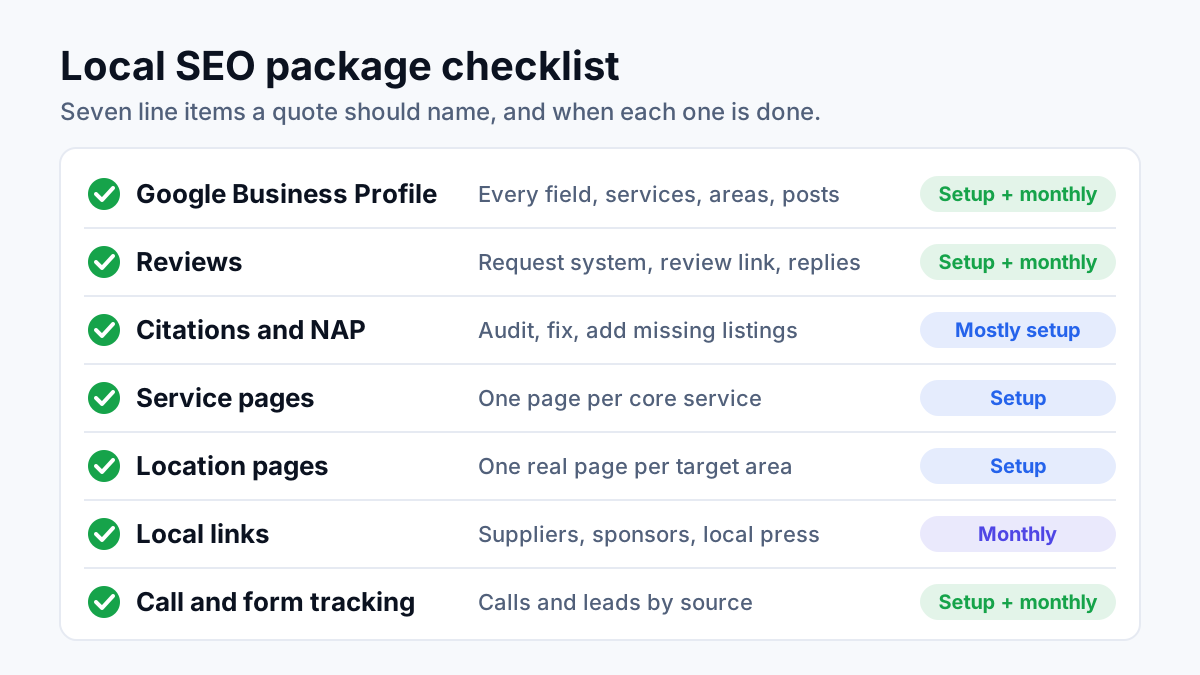
Here is the checklist I'd hold any local SEO quote against, mine included. Each line has a setup part, a monthly part or both, and each one gives you a way to check it was done without taking anyone's word for it.
| Line item | What it covers | Setup or monthly | How you check it |
|---|---|---|---|
| Google Business Profile | Categories, services, service areas, description, photos, hours, appointment link, posts on a calendar | Setup, then monthly posts and updates | Every field filled in; each post links to the matching page on your site |
| Reviews | Request emails sent at the right moment, a direct review link, reply templates, a reply to every review | Setup, then monthly | New reviews arriving each month, and none left unanswered |
| Citations and NAP | Audit of existing listings, fixes to wrong details, new listings on sources your competitors have and you don't | Mostly setup, then a few new ones each month | A sheet listing each source, its status and its live URL |
| Service pages | One page per core service, written for the searches customers actually make | Setup, then updates | Each service has its own URL, not one page listing everything |
| Location pages | One page per area worth targeting, with local detail and local business schema (code that states your business details to Google) | Setup, then new areas when demand justifies them | Each page says something specific to that area |
| Local links | Links and mentions from local sites: suppliers, sponsors, trade associations, local press | Monthly | A list of links earned, with the page each one appears on |
| Call and form tracking | Call tracking on the site and profile, form submissions recorded as leads | Setup, then monthly reporting | Reports show calls and leads by source, not just rankings |
| Reporting | Map pack positions checked from points across your area (not only your office), calls, leads and the work done that month | Monthly | A report you can read in five minutes that ties the work to leads |
The profile and citation lines each carry more detail than a table row holds. My notes on Google Business Profile optimization and citation building go through them field by field. The profile checklist I work from runs to 19 items.
Why call tracking earns its place
Rankings are not revenue. Without call and form tracking, a report tells you where you rank, not whether the phone rang. On a Florida plumbing account I worked on, organic revenue grew three months in a row, from $10,378 to $14,373 to $15,497. Lead volume wasn't a straight line: 43 leads in July fell to 27 in August, even as revenue and booking rate improved that month. A report that counted leads alone would have called August a bad month. Tracking calls, bookings and revenue together is what showed it wasn't.
One-off setup vs ongoing monthly work
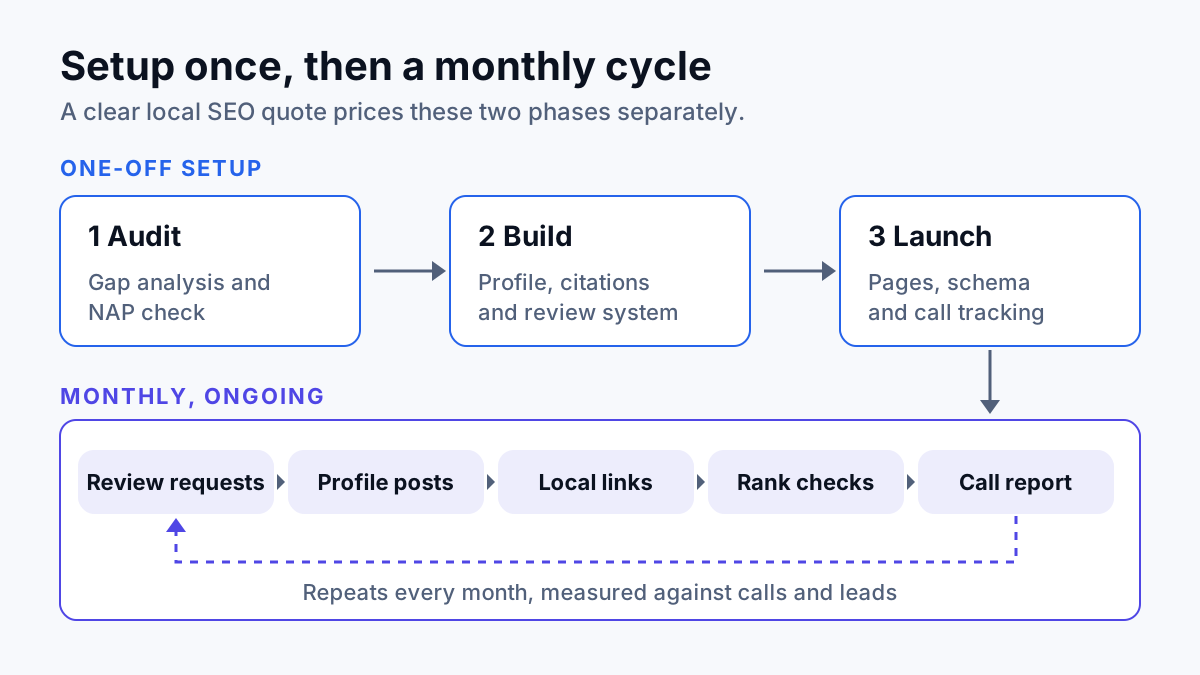
Local SEO has two cost phases, and a clear quote prices them separately. The setup is a project with an end: it builds the foundation the monthly work runs on. The monthly work keeps the profile active and keeps pace with competitors, who don't stop asking for reviews because you started.
Setup work, done once
- Local gap analysis: your profile, reviews and pages compared with the businesses beating you on the map.
- NAP audit and citation cleanup: every existing listing found, claimed where possible and corrected.
- Google Business Profile build-out: every field completed, categories and service areas set, a photo brief so you know what to shoot.
- Service and location pages: researched, written, built and linked to each other, with local business schema.
- Review system: request emails, a direct review link, QR material for on-site jobs and reply templates.
- Tracking: call and form tracking in place, plus a record of where you rank today to measure against.
Monthly work, ongoing
- Review requests going out, and every review answered.
- Profile posts and photo updates, each post pointing to the right page.
- New citations and local links, a few at a time.
- Map pack position checks across your service area.
- Page updates where rankings stall, and new area pages when demand justifies them.
- A monthly report that ties the work to calls and leads.
Some providers fold the setup into the retainer instead of billing it separately. That's fine if the quote says so. Ask how the setup tasks are scheduled inside the monthly fee, and what the monthly hours cover after they're done.
What a too-cheap local SEO package usually skips
A low price isn't the problem by itself. A small business in a thin market may need very little work. The problem is a price that is low because the hard line items were quietly removed. These are the ones I see go missing:
- The NAP audit. New listings get submitted while the old, wrong ones stay live, so there are now more versions of you, not fewer.
- Citation quality. A bulk submission to hundreds of directories nobody reads, in place of the sources that matter in your trade and town.
- Real profile work. A rewritten description and nothing else, with categories, services and service areas left untouched.
- A review system. A single please-review-us email, or worse, reviews that were bought.
- Unique location pages. One page cloned per town with the name swapped, so the pages compete with each other.
- Call tracking. Reports that show rankings checked from the office address and say nothing about calls or leads.
- Local links. Left out entirely, because earning links from local sites takes time and relationships.
How to compare local SEO quotes
Put two quotes side by side and ask each provider the same questions. The answers tell you more than the totals do.
- Is the price per location, per service area, or flat for the whole business?
- Which line items from the checklist above are included, and which are setup and which are monthly?
- How many existing listings will you audit, and will I get the list?
- How many service and location pages will you write, and who writes them?
- How are calls and form leads tracked and reported?
- Who owns the Google Business Profile, the tracking numbers and the listings if we stop working together?
The last answer should be you. Your profile, tracking numbers and listings belong in your accounts, with the provider added as a manager, so nothing is held back if you leave.
Your next step: count your locations and target towns, search your business name and check whether your listings match, then hold each quote against the checklist above. If you'd like that scoped for your market, this is how I work as a local SEO consultant, starting with a gap analysis against the businesses holding your map pack.