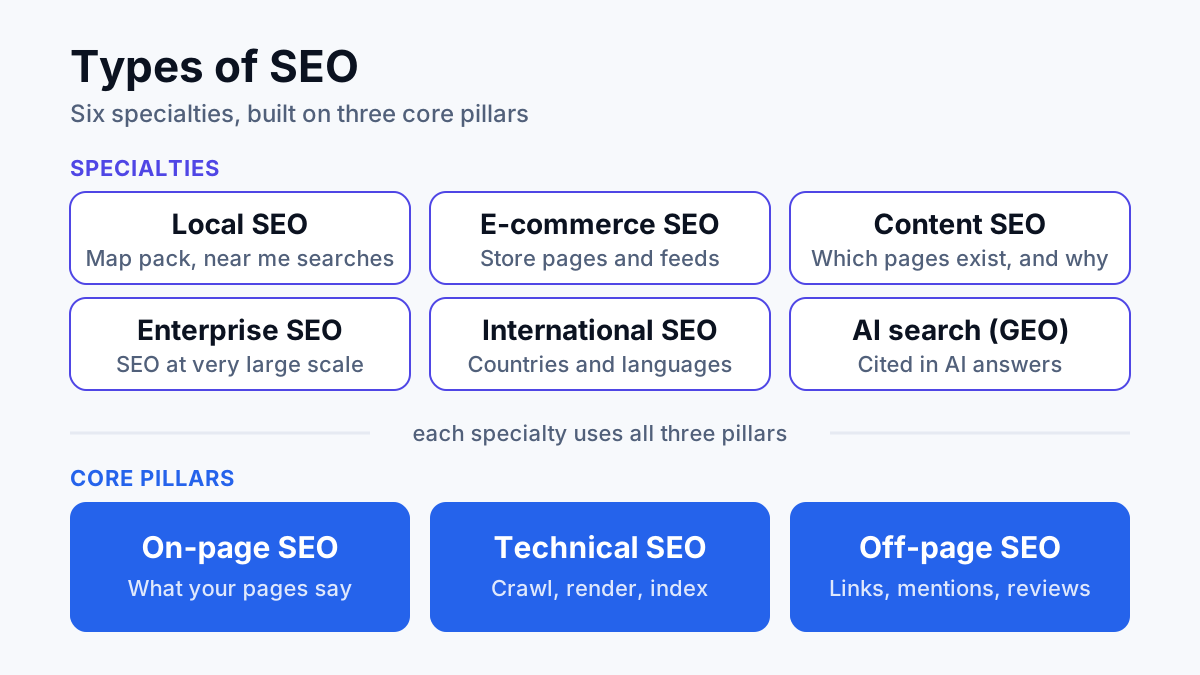
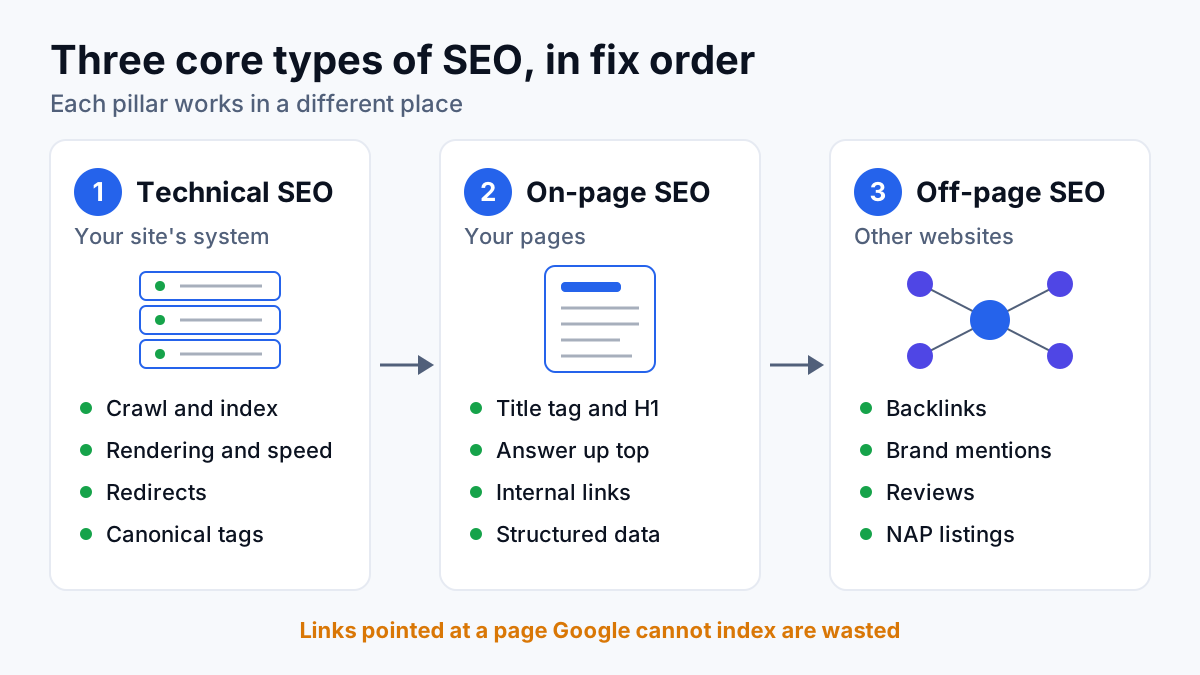
The main types of SEO are on-page SEO, technical SEO and off-page SEO. On-page covers what is on your pages, technical covers whether Google can crawl and index them, and off-page covers what the rest of the web says about you. Specialties such as local, e-commerce, content, enterprise, international and AI search SEO apply those three pillars to a particular kind of site or search result.
Below, each type gets one short section: what it is, who needs it, and where to read more. A comparison table and a symptom guide at the end help you match what is going wrong on your site to the type of SEO that fixes it. If the subject is new to you, start with what SEO is and how it works.
The three core types of SEO
Google judges a page on three things: what the page says, whether its crawler can reach and read it, and how much the rest of the web trusts it. Each of those is one pillar with its own skills and tools. An engineer would call them layers, and a weak layer underneath limits everything built above it.
On-page SEO
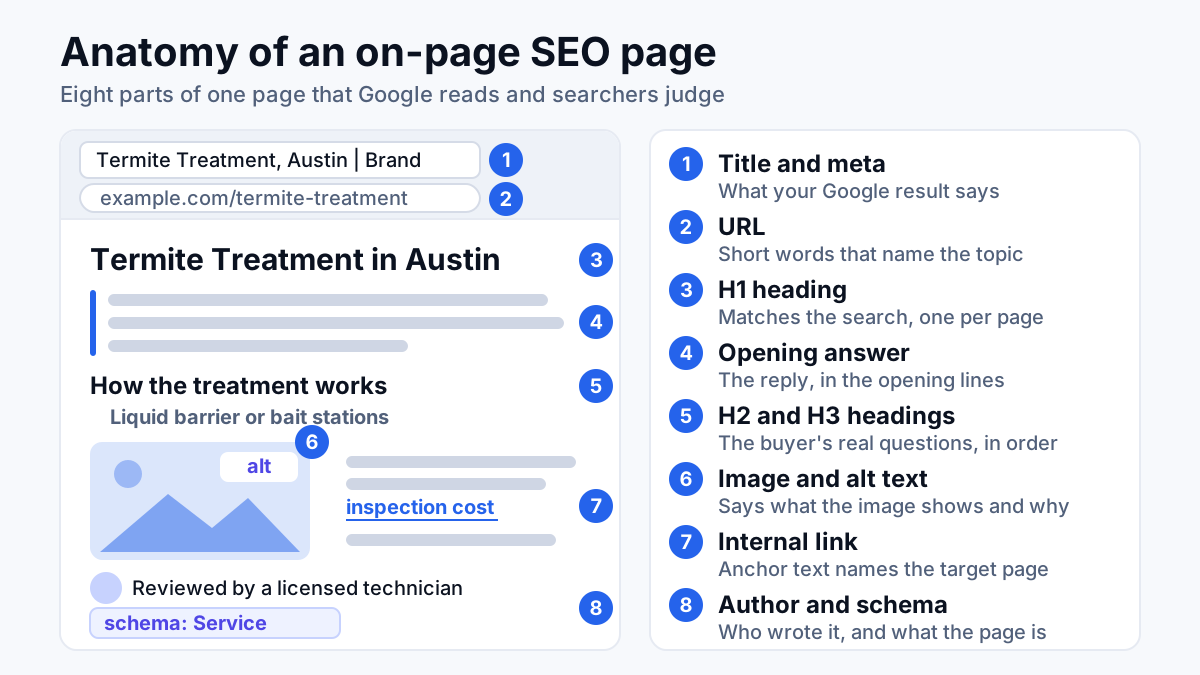
On-page SEO is everything you change on the page itself: the title tag (the blue headline in search results), the H1, the opening paragraph, subheadings, images, internal links and structured data (a small block of code that labels facts like price, rating or opening hours so machines can read them). The aim is one page per search, with the answer in the top few lines.
It suits sites whose pages are indexed but stuck on page two, or ranking for searches that never turn into calls. You control every word, so it is usually the quickest layer to change. My guide to on-page SEO walks through the full checklist.
Technical SEO
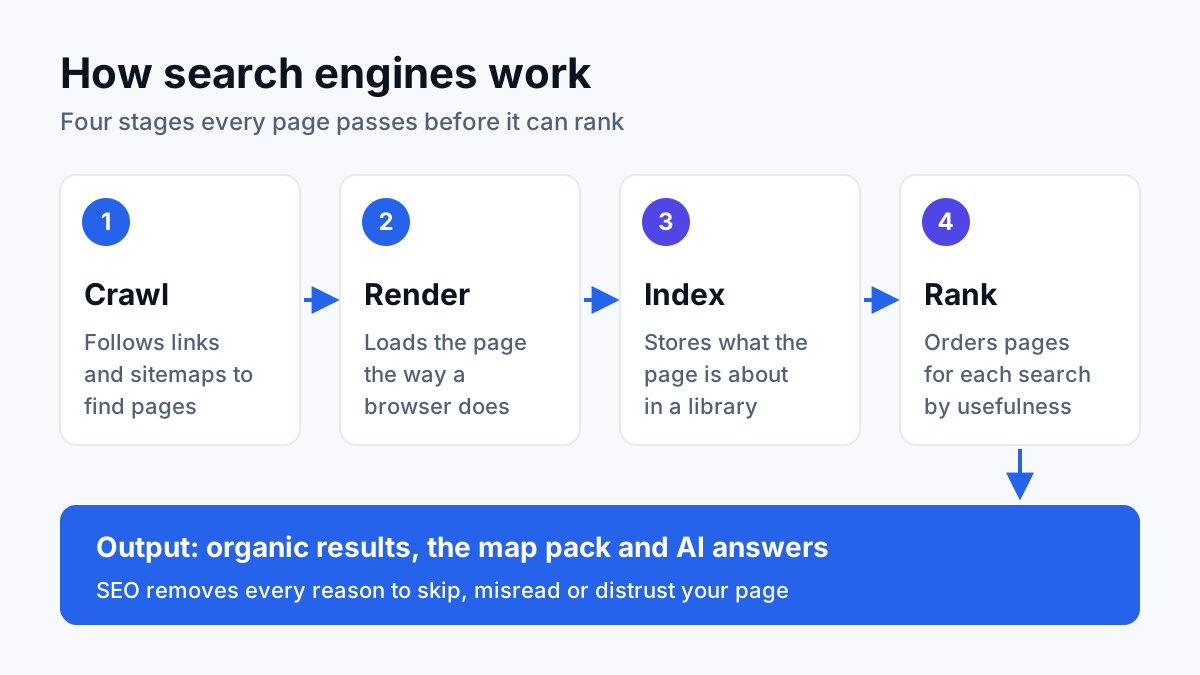
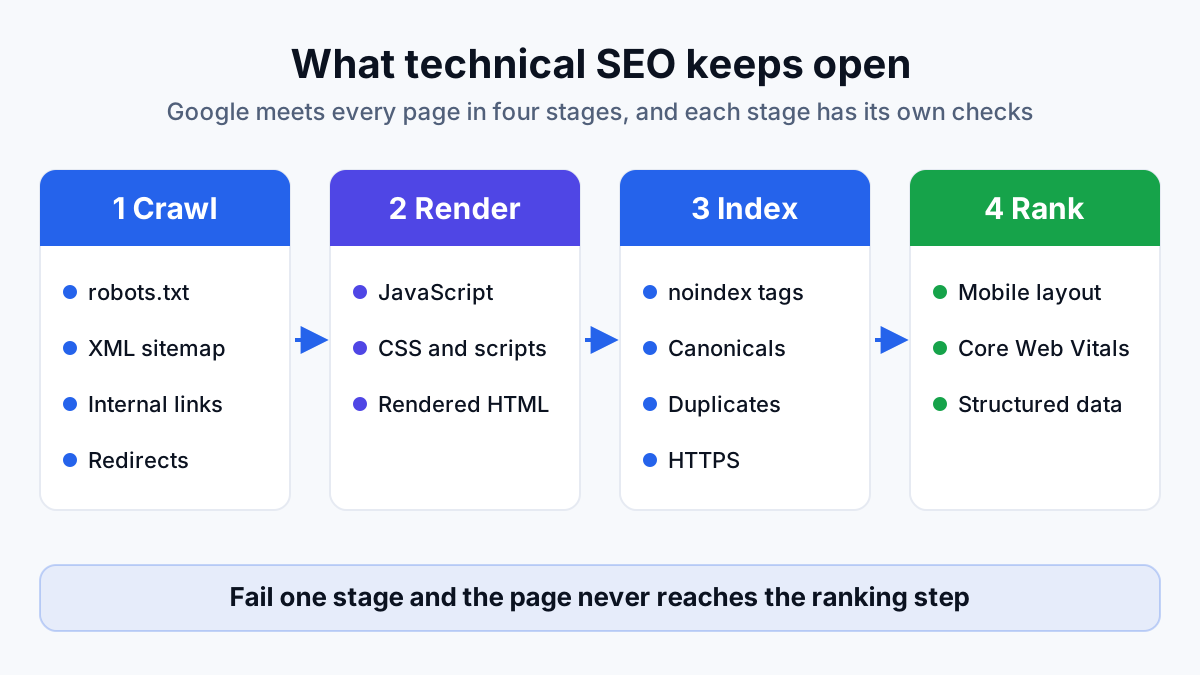
Think of technical SEO as the plumbing. It decides whether Google can crawl your site (follow links to find pages), render it (run the JavaScript to see the finished page) and index it (store it so it is eligible to appear in results). Site speed, mobile layout, redirects, canonical tags (a tag naming the main version when several URLs show the same content), XML sitemaps and crawl budget (how many URLs Google is willing to fetch from your site) all belong here.
Large sites, JavaScript-heavy sites, recently migrated sites and any site where good pages never show up in Google need it most. In audits I run, this layer gets checked before anything else. The longer explanation is in what technical SEO is.
Off-page SEO
Everything in off-page SEO happens on other people's websites. Backlinks (links from other sites to yours), brand mentions, reviews and directory listings are signs that someone besides you vouches for the business. Quality outweighs count: a few links from relevant, growing sites in your market do more than a bought package from sites nobody reads.
It is the pillar to work on when your pages match the competition's and still rank below them, which usually means those competitors have more trusted sites pointing at them. On one plumbing and HVAC site in California, Domain Rating (Ahrefs' 0 to 100 score for link strength) climbed from 10 to 38 over the engagement, with referring domains growing in every month reported. The two most recent months reported keyword positions and technical health only, so the latest trend could not be independently confirmed. My off-page SEO and link building work starts with a gap analysis against the sites you need to beat.
SEO specialties for different kinds of sites
None of the specialties below has its own separate rulebook. Each takes the three pillars and adds the tactics one business model or search feature demands. A plumber and a clothing store both need technical, on-page and off-page work; what changes is which pages matter, which part of the results page they compete for, and which signals carry the most weight.
Local SEO
Searches with a place in them, typed or implied, belong to local SEO: “plumber near me”, “dentist in Tampa”, or just “emergency electrician” on a phone. The main prize is the map pack, the block of three businesses under a map near the top of local results. It runs on a complete Google Business Profile, NAP consistency (your business name, address and phone number matching everywhere they appear online), a steady flow of real reviews, and location pages that tie each service to each area you serve.
Any business serving customers in a defined area needs it: trades, clinics, law firms, restaurants, home services. My local SEO checklist lists the tasks in the order I work through them.
E-commerce SEO
Online stores face problems a service site never meets. Category pages have to match specific searches like “women's wide-fit hiking boots”, product pages carrying the manufacturer's description read the same as every other stockist's, and faceted navigation (filters for size, color and price that create a new URL with each click) can spawn thousands of near-duplicate pages that eat crawl budget. Product schema and a clean Google Merchant Center feed decide whether products appear in Shopping results at all.
Stores with healthy traffic and disappointing orders are the usual candidates, on Shopify, WooCommerce or a custom build. My e-commerce SEO work starts from the pages closest to revenue: collection and product templates, then filters, feeds and checkout.
Content SEO
Content SEO decides which pages should exist and makes each one worth ranking. It starts from a topical map (a plan of the subjects your site should cover and how those pages link together), then gives each page one job: a service page wins the enquiry, a guide answers a question well enough to be quoted, a product page gets someone to the cart. Pruning belongs here too, meaning merging or removing thin pages that repeat what already ranks.
Sites that publish often and see little come of it need this more than they need more posts. On a UK hair-care store, thin blog content was cut from over 190 posts to under 80; over the next three months, clicks to product pages grew 46% and clicks to collection pages grew 43%. Site-wide clicks stayed roughly flat (5.84K to 5.73K) because of the deliberate cull, and that trade-off is the honest shape of the result. The SEO content writing service covers the planning, the writing and those keep, merge or cut decisions.
Enterprise SEO
Scale changes the job. Enterprise SEO covers sites with hundreds of thousands of pages, several brands or country sites, and a release process that runs through developers, legal and product teams. The tactics are familiar; the hard part is the system around them. Changes ship through templates rather than page by page, log-file analysis (reading server logs to see which URLs Googlebot actually requests) becomes routine, and a fix that takes ten minutes on a small site may need a ticket, a sprint and three sign-offs.
Large retailers, publishers, marketplaces and multi-location brands fit here. Most of the weight falls on the technical pillar and on process, so the work looks more like engineering management than marketing.
International SEO
Selling in more than one country adds a layer most sites never need. International SEO serves one business to searchers in several countries or languages, and its core tool is hreflang: a tag that tells Google which version of a page is meant for which language and region, so a searcher in Canada lands on the Canadian page and a searcher in the UK on the UK one. Around it come decisions on URL structure (country domains, subfolders or subdomains), translation that reads as if a native speaker wrote it, and links and reviews earned in each market. In a few countries the dominant search engine is not Google at all, which changes the playbook again.
Exporters, SaaS companies selling abroad and stores shipping to several countries need it. Having worked on sites across 9 countries, I see one mistake repeat: a single setting applied everywhere, such as one returns policy in Merchant Center, which lets product listings pass in the home market and quietly fail in the rest.
AI search SEO (GEO)
Ask ChatGPT or Google's AI Overviews a question in your field and the answer often names a few businesses or sources. Generative engine optimization (GEO) is the work of making yours one of them, in Perplexity, Copilot and Gemini as much as in Google. These tools rarely quote a whole page. They lift short passages, so each section has to answer its heading in the opening sentence or two, name the thing it is about, and back its claims with evidence. Mentions of your brand on other sites count here too, since AI tools lean on what the wider web says about you.
GEO extends SEO rather than replacing it: it builds on the content and off-page pillars, so a well-structured site starts ahead. Any business whose customers research before they buy (clinics, SaaS, B2B services, high-ticket products) should ask the AI tools its buyers use a few of those questions and see whose names come back.
Types of SEO compared
The table puts the nine types side by side. Read the middle column as the problem each one solves; if none of those problems describe your site, that type can wait.
| Type | What it fixes | Who needs it |
|---|---|---|
| On-page SEO | Pages ranking for the wrong search, or below the top results | Any site with indexed pages that underperform |
| Technical SEO | Pages Google cannot crawl, render or index; slow or broken templates | Large, JavaScript-heavy or recently migrated sites |
| Off-page SEO | An authority gap against stronger competitors | Sites with good pages still outranked by rivals |
| Local SEO | Missing from the map pack and “near me” results | Businesses serving a defined area |
| E-commerce SEO | Weak category pages, copied product text, filter bloat, feed errors | Online stores with traffic but few orders |
| Content SEO | Thin, overlapping or aimless pages | Sites that publish a lot and convert little |
| Enterprise SEO | Fixes that stall across big teams and templates | Very large sites, multi-brand and multi-location groups |
| International SEO | The wrong country or language version showing | Businesses selling in several countries or languages |
| AI search (GEO) | Being left out of AI answers | Businesses whose buyers research before buying |
Which one your site needs
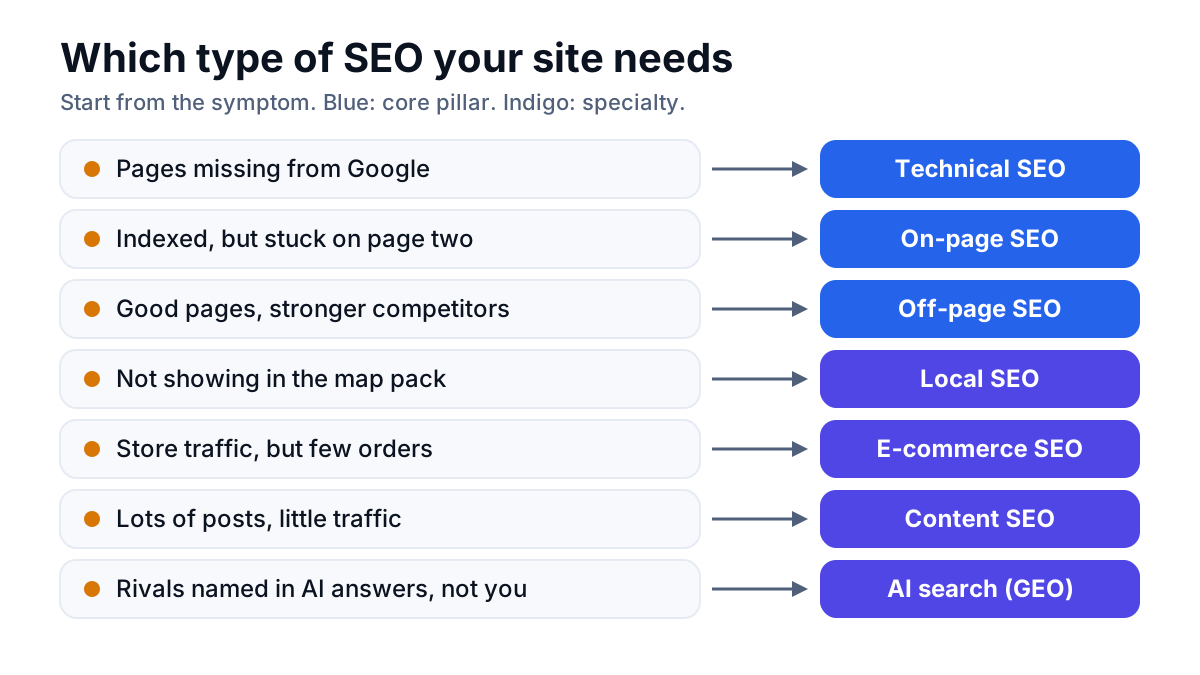
Start from the symptom, not the service menu. Across 200+ projects, the pattern I see most is one pillar holding back the others, and fixing that one makes the rest of the work count. Match what you see on your own site to the list below.
- New pages never appear in Google, or Search Console marks them “not indexed”: technical SEO.
- Pages are indexed but stuck on page two or three: on-page SEO, then a check on competitor authority.
- Your pages match the ones above you, and they still win: off-page SEO, starting with a link gap analysis.
- Competitors with fewer reviews show in the map pack and you don't: local SEO.
- Plenty of store traffic, not many orders: e-commerce SEO.
- You publish often and traffic doesn't follow: content SEO, with fewer and stronger pages.
- Traffic fell after a redesign or platform move: technical SEO, starting with redirects and indexing.
- Visitors from one country land on another country's pages: international SEO, starting with hreflang.
- AI tools name your competitors when asked about your field: AI search SEO (GEO).
- Every fix needs three teams and a quarter: enterprise SEO, where process is half the problem.
Recognizing two or three of these at once is normal. Most sites have one main problem and a couple of smaller ones, and the main one usually lives in a core pillar rather than a specialty. Check your site against the list, fix the root pillar, then add the specialty that matches your business. If you want that diagnosis done for you, my SEO services page lists each type I work on and what it includes.